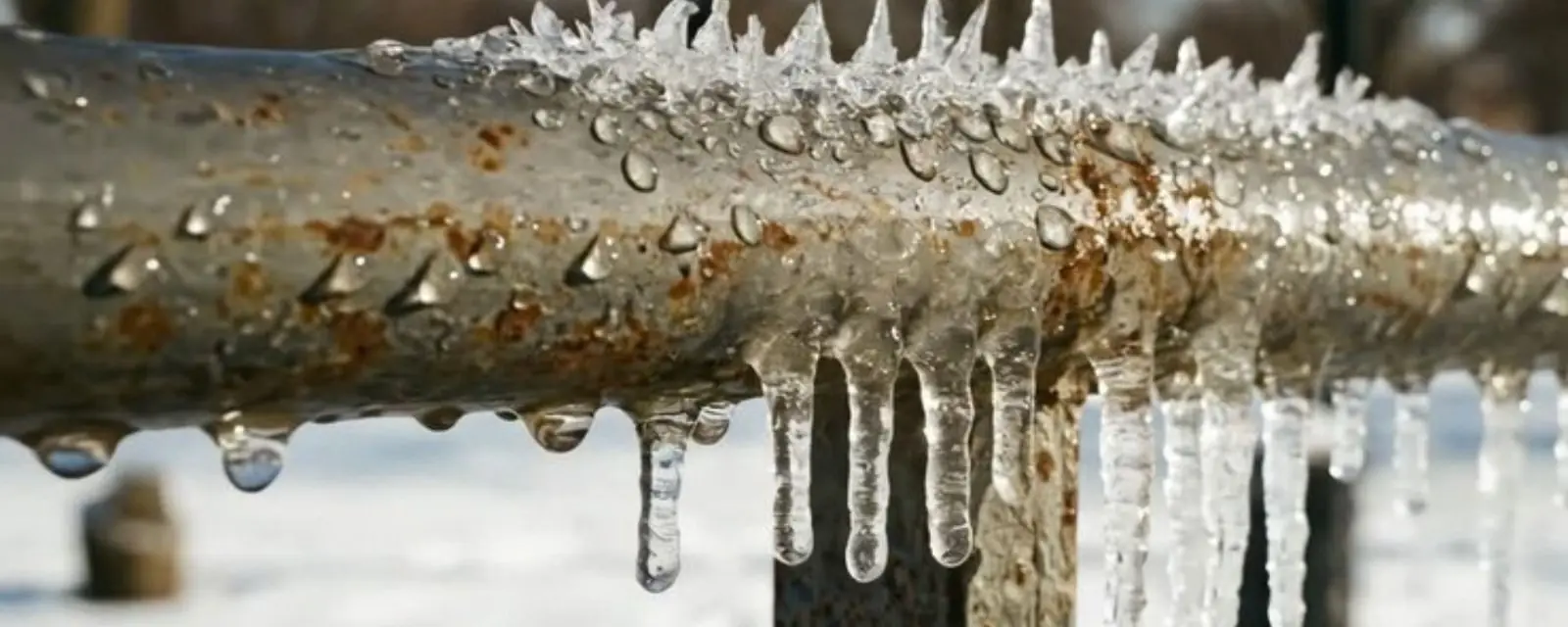
Open the tap nearest the frozen section. Then warm the pipe slowly with a hair dryer, a heating pad or warm towels. Start near the tap and work back toward the frozen spot. Never use a torch, a propane heater or any open flame, because a pipe can scorch the wall and start a fire before the ice melts.
Frozen pipes cost little to fix if nothing splits. A split pipe is different, since it adds repair work and water damage. The price depends on where the pipe is, how many sections failed and how much needs to be opened.
We cannot quote a number here because every house differs, but you will get a clear price before work starts. The rest of this guide covers how to tell what you have and how to prevent it.
How to Thaw a Frozen Pipe Safely
Patience protects the pipe. Fast heat can crack a pipe that survived the freeze.
Find the frozen pipe.
If one tap runs and another does not, trace the line to a cold spot such as an exterior wall, a garage or a crawl space.
Open the tap.
Leave the faucet open so melting water has a place to go and pressure can release.
Apply gentle heat.
Use a hair dryer, a heating pad or towels soaked in warm water. Keep heat moving along the pipe and away from flammable material.
Watch for leaks as it clears.
Look at joints and the wall as water starts to flow. A drip or spray means the pipe has split.
Keep water flowing a while.
Leave the tap running a bit after the ice clears so any remaining slush moves out.
If you cannot reach the frozen section, such as one behind a finished wall, call a plumber instead of cutting into the wall yourself.
Never Use an Open Flame
A blowtorch, a propane heater or a kerosene heater has no place near a frozen pipe. Flames ignite wood framing and insulation, and the heat can melt solder joints or cause a steam blast inside a sealed pipe.
Do not use a space heater without supervision either. Slow, low heat is the goal, and a hair dryer in your hand is safer than a heater you walk away from.
Replacing a split section of pipe is plumbing work under the state plumbing code, Minnesota Rules chapter 4714. Pipes in outside walls and unheated spaces should be insulated according to the manufacturer's guidelines for the material.
Frozen or Split: How to Tell
Ice blocks a pipe, and a split lets water out. The signs differ, and the difference decides what happens next.
| Sign | Likely frozen | Likely split |
|---|---|---|
| Water at the tap. | None or a trickle. | Normal at first, then a leak appears elsewhere. |
| Visible pipe. | Frost or a cold section. | Bulge, crack or beads of water. |
| Sounds. | Silent. | Hissing, dripping or running water. |
| After thaw. | Flow returns, no leak. | Water stains, drips or pressure loss. |
| Wall or ceiling. | Dry. | Damp patches, bubbling paint or a sag. |
A split pipe may stay hidden until it thaws. Check for leaks as the ice melts, and again after several hours.
If You Find a Split: Do These First
A split pipe floods fast once the ice melts. Act before you try to fix anything.
- Shut off the main.Close the main water valve so no more water reaches the split. Know where it is before an emergency.
- Open taps to drain the line.Opening faucets lets water drain from the broken section and relieves pressure.
- Switch off electricity if water is near it.If water reaches outlets, fixtures or the panel, keep clear and call a plumber and an electrician.
- Limit the damage.Move belongings, mop what you can and photograph the damage for your records.
- Call us.Our burst pipe repair service covers a split line. The dispatch line is answered 24/7.
Frozen line or a leak you can see?
Call the 24/7 dispatch line. We explain what to do while you wait, and give a clear price before work starts.
What Drives the Price of a Frozen Pipe Repair
Thawing alone costs far less than a split repair, and a split repair varies a lot. These are the factors.
We give a clear price before work starts. Ask your homeowner's insurance provider whether a sudden burst is covered, and keep photos of the damage.
Rosemount: Cold Snaps and Who to Call
The MN DNR's Twin Cities climate normals show January lows averaging about 9 to 11 degrees Fahrenheit at the airport station. That station is not Rosemount, but it shows how sharp the cold gets. Pipes in exterior walls, garages and crawl spaces are most at risk, so prepare before the cold sets in.
The City of Rosemount says Public Works can shut off service if a plumber advises it is necessary. If a split is flooding the house and your own main valve will not close, tell your plumber, who can say whether a shut-off at the city side is needed.
For after-hours water emergencies on the public side, such as a water main break, the city asks you to call 911, and the Dakota Communications Center alerts the right staff. We found no city page on frozen pipes, so do not expect one. Homeowners are responsible for the service line and the plumbing on their property.
Source: MN DNR Twin Cities Climate Calendar for January, 1991-2020 normals, average minimum, airport station. City of Rosemount FAQ (Public Works can shut off service if a plumber advises it is necessary), Public Works and Engineering page (after-hours emergencies through 911 and the Dakota Communications Center), and Service Line Inventory page (homeowner responsibility for the service line and on-site plumbing).
Prevention Before the Cold Arrives
Most frozen pipes are preventable with a little work in the fall and a few habits in the cold.
Insulate exposed pipes.
Wrap pipes in garages, crawl spaces and along exterior walls with foam sleeves. Seal gaps where cold air reaches the pipes.
Let a tap drip.
On the coldest nights, a slow drip from a tap on an exterior wall keeps water moving.
Open cabinet doors.
Open the doors under sinks on exterior walls so warm room air reaches the pipes.
Keep the heat on.
Do not let the house go cold, even when you are away. A low thermostat setting costs less than a burst pipe.
Disconnect hoses.
Remove outdoor hoses and shut off and drain outdoor faucets before freezing weather.
Know where your main water shutoff is, and show everyone in the house. That one habit limits the damage when something goes wrong.
Hidden Leaks After a Freeze
A pipe can split inside a wall and show no sign for days. Watch for rising water bills, damp spots, a musty smell or the sound of running water when everything is off.
Our leak detection service finds hidden leaks without tearing open every wall. Finding the exact spot keeps repairs small.
If you find a leak that you cannot place, close the main valve and call. Water behind a wall does damage even when you cannot see it.
Do It Yourself or Call a Plumber
Some freezes are simple. Others are a plumber's job from the start.
Reasonable DIY.
- A single exposed pipe you can reach.
- No sign of a leak as it thaws.
- Hair dryer or heating pad only.
- Shutoff valve works and is easy to reach.
Call a plumber.
- Pipe behind a wall, floor or ceiling.
- Any leak, spray or bulging pipe.
- Multiple frozen lines at once.
- A main valve that will not close.
We serve neighbors in Inver Grove Heights and Apple Valley with the same steps. Same-day appointments are available when the schedule allows.
Frozen pipe questions
It depends on whether the pipe split, where it is, how many sections failed and how much has to be opened. A thaw alone is a smaller job than a split repair with water damage. We give a clear price before work starts.
No. Open flame can set framing on fire and damage the pipe. Use a hair dryer, heating pad or warm towels, and keep the tap open.
Watch for dripping, hissing, damp spots and falling pressure as the ice melts. A split may only show after thawing, so check again several hours later.
On the coldest nights, yes, for taps on exterior walls. Moving water is harder to freeze. It is a small cost compared with a burst pipe.
Yes. Close the main valve, open taps to drain the line and call a plumber. If the valve will not close, tell the plumber right away.
The city says Public Works can shut off service if a plumber advises it is necessary. Tell your plumber if your own valve fails. For public-side emergencies after hours, such as a main break, call 911 and the Dakota Communications Center alerts staff.
We found no city page on frozen pipes. The city does list who handles public-side water emergencies after hours, and homeowners are responsible for their own service line and plumbing on the property.