If water is rising in a drain right now, stop using every fixture in the house and call us. The line is answered 24/7 for Rosemount drain emergencies, and the first thing we will ask is which drains are affected.
That question matters because it separates a small clog from a blocked sewer line. This page explains how to read the signs, what the different cleaning tools do, and what you can safely try before the plumber gets there.
The Clogged Drain Tells You What Is Wrong
One slow fixture almost always means a clog in that fixture's own pipe. A bathroom sink full of hair and soap scum, or a kitchen sink lined with grease, is the usual story. The blockage sits between the trap under the sink and the point where the branch joins a larger pipe.
Several fixtures acting up together is a different problem. If the tub gurgles when the washer drains, or the toilet bubbles when you run the kitchen tap, the blockage is past the branches, in the main drain or the sewer line. A cable in the sink will not fix that.
A floor drain that backs up is the clearest warning. The floor drain is the lowest opening in the house, so wastewater reaches it first when the main line is stopped downstream. Treat a basement floor drain backup as a main line problem until a plumber shows otherwise.
Clearing a clog is maintenance, but cutting into a drain line to add a cleanout or fix a bad section is plumbing work. That work follows the Uniform Plumbing Code (UPC) as adopted in Minnesota Rules chapter 4714, and it is one reason we describe a repair before starting it.
What to Do First While You Wait for the Plumber
These steps limit the mess and keep the clog from getting worse. They take a few minutes and need no tools.
- Stop adding water.Do not flush, run the dishwasher, or start laundry. Every gallon you send down has nowhere to go if the line is blocked.
- Note which drains are affected.Check the lowest fixtures first, then the others. Tell the dispatcher whether it is one fixture, several, or a floor drain.
- Keep people and pets out of any wet area.Backed-up wastewater carries bacteria. Keep children away from the basement and wear rubber boots if you have to walk through it.
- Move what you can off the floor.Lift rugs, boxes and stored items away from the floor drain. Do not run a wet vacuum on sewage.
- Do not pour in a chemical opener.It will sit in the pipe and make the plumber's job harder and less safe. The next section explains why.
If the clog is a single sink and nothing is overflowing, you can take a little longer. Same-day appointments are offered when available, and the line is answered nights and weekends as well.
Cable, Jetting or Camera: Which Tool Fits the Clog
Plumbers use three main approaches to blocked drains. The right one depends on what is blocking the pipe and how far away it is.
| Method | What it does | Best for | Limits |
|---|---|---|---|
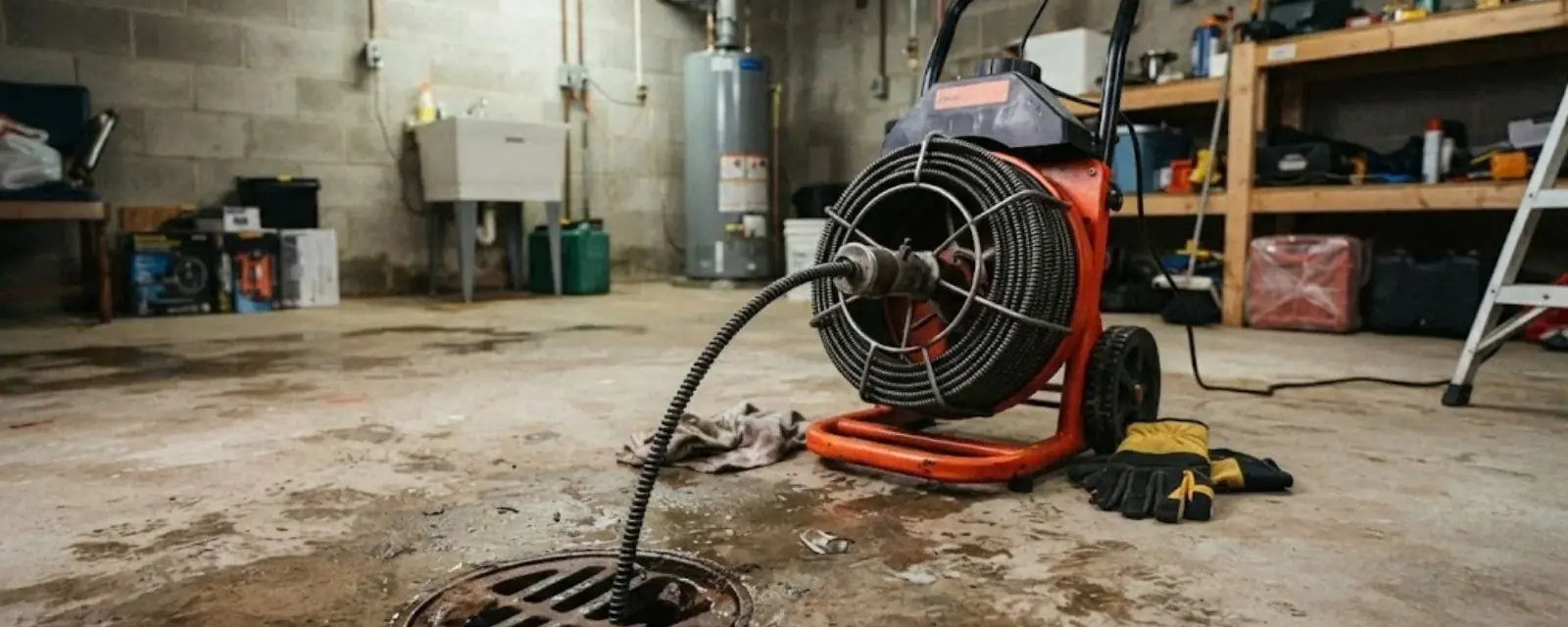
| Cable (drain machine) | A spinning steel cable with a cutting head breaks through or pulls out the blockage. | Hair, paper, soft clogs, and a root mass in a main line. | Leaves a coating of grease on the pipe wall, so grease clogs can return. |
| Hydro jetting | High-pressure water scours the inside of the pipe and flushes debris out. | Grease buildup, scale, and repeat clogs. See hydro jetting. | Not right for a cracked or collapsed pipe. |
| Camera inspection | A small camera on a cable shows the inside of the pipe on a screen. | Finding the cause of repeat clogs and checking pipe condition. | Shows the problem. It does not clear anything by itself. |
Often the plumber starts with a cable, then uses a camera to confirm the line is clear and sound.
Drain stopped and water rising?
Stop using the fixtures and call. The line is answered 24/7, and the plumber will tell you what to do before they arrive.
What You Can Try Yourself and What Makes It Worse
A single clogged sink or tub is a reasonable thing to try first. The key is to use methods that do not damage the pipe or put chemicals in the water.
Safe to try.
- A cup plunger on a sink or tub, with the overflow opening blocked by a wet cloth.
- A toilet plunger on a toilet, with steady pushes rather than quick jabs.
- Removing the stopper and pulling out hair with a bent wire or a plastic drain tool.
- Taking apart and cleaning the trap under a sink, with a bucket underneath.
- Flushing a kitchen drain with hot tap water after clearing it, never boiling water on a toilet bowl.
Makes it worse.
- Chemical drain openers, which can sit in a stopped pipe and burn skin, fixtures and a plumber's hands.
- Running a hardware store snake hard into a toilet, which can scratch the bowl or lodge a blockage deeper.
- Plunging a toilet or drain after a chemical opener, which can splash caustic liquid back at you.
- Testing the fixture again and again to see if it clears, which adds water to a blocked line.
- Cabling a floor drain or main line without a way to catch the overflow.
If a plunger fails twice, stop. The clog is deeper than the fixture, and more force will not reach it.
Signs the Clog Is Really a Main Line Problem
Some blockages look like drain clogs but sit farther down. These signs point to the main drain or the sewer line, which is the pipe that carries everything out of the house.
Floor drain backs up.
Water or sewage rises in the basement floor drain when you run a fixture upstairs.
Several fixtures slow at once.
Tub, sinks and toilets all drain poorly, not just one of them.
Gurgling in other fixtures.
Air pushed out of a stopped line escapes through the nearest trap, so the toilet bubbles when the sink drains.
Toilet clogs again right after clearing.
A repeat clog in the same toilet often means the line beyond it is partly blocked.
Sewer smell in the basement.
A persistent smell near the floor drain can mean wastewater is sitting in the line.
The clog keeps coming back.
Roots, a belly in the pipe, or a damaged section can restart the blockage every few months.
For these cases, see sewer line cleaning. If roots or a damaged pipe are involved, a camera look decides whether cleaning is enough or whether sewer line repair is the real fix.
What the City Asks Rosemount Homes Not to Flush
The city's Sanitary Sewer page lists what does not belong in the sewer. The list includes diapers, facial tissue, cotton balls and swabs, paper towels, cloth, kitty litter, dental floss and hair. It also names wipes of any kind, including the ones labeled flushable, and says a flushable label does not mean the product breaks down.
That one line explains a lot of avoidable clogs. A wipe that clears the toilet can still snag on a rough joint or a root hair a few feet down and gather everything behind it. Keep a lined trash can next to each toilet and the problem mostly disappears.
The same page says homeowners own the private pipe from the house to the street sewer main, and that owners are responsible for backups in that service line. So a clog caused by wipes is the homeowner's to clear and pay for, even when it sits near the property line.
Source: City of Rosemount Sanitary Sewer page (rosemountmn.gov)
What a Drain Cleaning Visit Involves
Here is how a typical drain cleaning visit goes. The details change with the clog, but the order stays much the same.
Find the scope.
The plumber asks which fixtures are affected, then checks the lowest drain and the cleanout to see how far the problem reaches.
Clear the blockage.
A cable or a jetter breaks up the clog. Hair and paper come out in pieces, and grease is scoured from the wall.
Confirm flow.
Water runs through the fixtures to prove the line drains freely, with a camera look when repeat clogs suggest a pipe problem.
Explain the cause.
You hear what caused it and what to change, such as grease habits, wipes or roots in the line.
Give the price before work starts.
If the first method does not reach the clog, the plumber says so and explains the next option before continuing.
What Affects the Price of Drain Cleaning
We give a clear price before work starts. These are the things that move it up or down.
Home insurance policies treat sewer and drain backups differently, and many exclude them unless a rider was added. Ask your insurer before you rely on coverage, and keep photos of any water damage.
Keeping Drains Clear in a Minnesota House
Most clogs are habits, not bad luck. Grease poured down the kitchen sink cools in the pipe and builds a coating that catches everything else. Wipe pans with a paper towel first and put the grease in the trash.
Bathroom drains clog with hair and soap, so a cheap hair catcher in the tub and the sink is worth installing. Run hot water for a minute after washing dishes to move loose residue along.
Garbage disposals are not magic. Coffee grounds, rice, pasta and fibrous vegetables settle in the line even when ground fine. If you want a deeper fix for kitchen lines that keep clogging, ask about hydro jetting when the plumber is on site.
Keep a slow drain from becoming an emergency. A drain that slows over weeks is easier and cheaper to clear than one that stops on a holiday weekend.
Drain cleaning questions from Rosemount homeowners
Yes. The line is answered 24/7, including nights, weekends and holidays. Stop using water in the house first, note which drains are affected, and then call.
It is best to avoid them. They can sit in a fully blocked pipe, damage fixtures, and splash caustic liquid at you or the plumber. If you have already used one, tell the plumber before work begins.
One slow fixture is usually a local clog. If several fixtures slow together, gurgle, or a basement floor drain backs up, the main line or sewer line is likely blocked.
Common causes are grease buildup, tree roots in the line, or a damaged section of pipe. A camera inspection shows which, and the plumber can explain whether jetting or repair is the better fix.
The city of Rosemount says no. Its Sanitary Sewer page lists wipes of any kind, including flushable ones, as items that should not be flushed.
The city says the pipe between your house and the street main belongs to you, and so does a backup that starts in it. A clog past the property line in the city main is the city's concern.
Yes, but a backing floor drain usually means a main line problem, so the plumber will check the cleanout and the line beyond it, not just the drain itself.