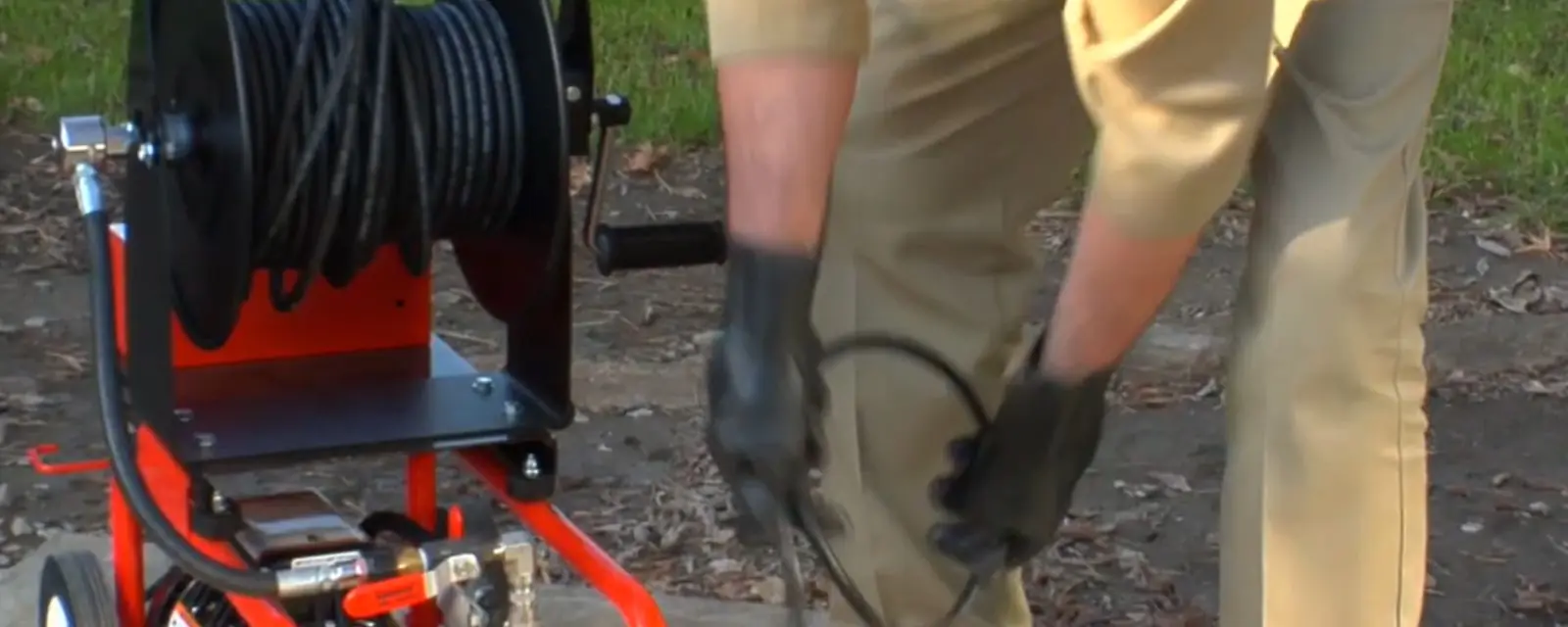
If a drain is backing up in your Rosemount home right now, stop running water and call. The line is answered 24/7, and we will ask which fixtures are affected so we can tell whether jetting is the right tool or a camera look comes first.
Jetting is not always the answer. It works very well on grease, scale and repeat clogs, and it is the wrong choice for a cracked or collapsed pipe. This page explains how to tell the difference.
Jetting Versus a Cable: When Each One Wins
A cable pokes a hole through a clog. A jetter cleans the pipe wall. That difference decides which tool fits your problem.
Jetting is the better choice for.
- Grease that has built up as a thick coating on the pipe wall.
- Mineral scale that narrows the pipe over time.
- Roots that coat the inside of a joint, after the main mass is cut out.
- Clogs that return every few months after a cable visit.
- Kitchen lines and restaurant-style loads of fat and food waste.
A cable is the better choice for.
- A single soft clog of hair or paper close to the fixture.
- A solid blockage that needs to be cut or pulled out.
- A pipe that is fragile, cracked or out of round.
- Lines with no good access point for the jetter hose.
- A quick opening of a blocked line before a camera look.
The two tools often work together. A cable opens a blocked line so water can flow, and the jetter then cleans what is left on the wall.
Why a Camera Look Comes Before the Jetter
Jetting moves a lot of water at high pressure. In a sound pipe, that is exactly what you want. In a pipe with a crack, a collapsed section or a loose joint, the pressure can make the damage worse and push water into the soil around the line.
That is why a camera look comes first on most jobs. A small camera on a cable shows the inside of the line on a screen, so the plumber can see the pipe material, any offset joints, roots, and how much buildup there is.
If the camera shows damage, the plumber will explain that jetting is not the right step and talk through the repair paths on the sewer line repair page. If the pipe is sound, jetting goes ahead and the camera is used again afterward to check the result.
Jetting does not change your pipes, but the repairs it uncovers do. Any line replaced afterward is plumbing work under the state plumbing code in Minnesota Rules chapter 4714, which is built on the UPC, and the camera pass beforehand is how you know what needs that kind of repair.
If a Line Is Backing Up Right Now
Backups do not wait for business hours, and neither does the line. Here is what to do while you wait for the plumber.
- Stop all water use.No flushing, no dishwasher, no washer. Water you send down a blocked line has nowhere to go but up.
- Check the lowest drain.Look at the basement floor drain and the lowest tub or shower. Tell the dispatcher what you see.
- Keep everyone out of wet areas.Backed-up water can carry bacteria. Keep children and pets away and do not wade through it barefoot.
- Skip the chemicals.A chemical opener in a stopped line sits there and can splash back on the plumber. Leave it on the shelf.
- Find the cleanout if you can.A capped pipe in the basement or yard is the cleanout. Do not open it while the line is full, but tell the plumber where it is.
Same-day appointments are available when the schedule allows, and the line is answered nights and weekends too. If the backup is only a slow drain, you have a little more time, but the cause usually gets worse, not better.
Not sure if jetting is right for your line?
Call and describe the symptoms. The 24/7 line will tell you whether to start with a camera, a cable or a jetter.
How a Hydro Jetting Visit Works
Here is the sequence on a typical jetting job. The order matters more than the machine.
Look first.
A camera goes into the line so the plumber can see the pipe and the buildup before any pressure is used.
Open the line if it is blocked.
If water cannot pass, a cable opens a path so the jetter can work.
Set up at the cleanout.
The jetter hose goes in through the cleanout or another access point, with a nozzle chosen for the pipe size and the buildup.
Jet from the far end back.
The nozzle pulls itself along the pipe, scouring the walls and pushing debris toward the access point or the main.
Check the result.
A second camera pass confirms the pipe wall is clean and shows any problem the buildup was hiding.
The plumber then explains what was found and what to do about it, such as whether regular maintenance cleaning makes sense.
Problems Jetting Is Good at Solving
Jetting earns its price when the problem is buildup on the pipe wall rather than a single object in the pipe.
- Grease buildup.Fat cools and hardens along kitchen and main lines. A cable can punch a hole, but only water scours the wall clean.
- Scale and mineral deposits.Rosemount's city water is hard, which the city puts at 17 grains per gallon. Hard water can leave mineral deposits in lines over time, and jetting removes loose scale.
- Slow drains with no single clog.When every drain runs slowly but nothing is fully blocked, the pipe is often narrowed by buildup.
- Root-coated lines.Roots are cut out first. Jetting then clears the fine root hairs and debris left on the wall.
- Clogs that keep coming back.A line that clogs every few months usually needs a full cleaning of the wall, not another quick opening.
- Preventive cleaning.Some lines with a known history of grease or roots are jetted on a schedule so they do not back up at a bad time.
Older Rosemount Neighborhoods and What Is Underground
The city's 2040 plan describes the older, pre-1940s neighborhoods as the grid streets west of South Robert Trail, north and south of 145th Street West. If your house sits in that area, the pipes under the street and yard are some of the oldest in town, and a camera look is the way to learn what material and condition you actually have.
The same plan's 2016 American Community Survey table puts about 4.3 percent of Rosemount homes as built before 1960. Most of the city is newer than that, so the lateral serving a typical house is more likely a later pipe than an original one. Age alone does not tell us the material, and only a camera does.
In older Minnesota homes, cast iron and clay sewer lines are common, and both can corrode, crack or shift over decades. Jetting a damaged old line can do harm, so a camera look is the first step whatever the age of the house. The homeowner owns the private pipe from the house to the street main, which means the decision and the bill sit with you.
Source: City of Rosemount 2040 Plan, Chapter 4 Housing (2016 ACS table), and the city Sanitary Sewer page
What the Camera Finds and What Happens Next
The camera result decides the next step. This table shows the common findings and the usual response.
| What the camera shows | Is jetting right? | Usual next step |
|---|---|---|
| Grease or scale coating, pipe intact | Yes | Jet the line, then a second camera pass. |
| Roots in joints, pipe intact | Yes, after cutting roots | Cut roots, jet, and plan regular cleaning. |
| Cracked or offset pipe | Not as a first step | Discuss repair. See sewer line repair. |
| Collapsed or crushed section | No | Repair or replacement, since cleaning cannot fix it. |
| Low spot holding water | Sometimes | Clean it, then monitor. Repair if it keeps clogging. |
Every finding is explained before any pressure work is done, and the price is given first.
Why Jetting Prices Differ From Job to Job
We give a clear price before work starts. These factors explain why two jetting jobs can cost different amounts.
Insurers often treat drain and sewer backups as separate coverage. Check your policy, and keep the camera recording and the work description in case you need them for a claim.
Hydro jetting questions
Yes. The line is answered 24/7. If a line is backing up, stop using water, keep people out of the wet area, and call. The plumber will tell you what to expect.
On a sound pipe it is safe. On a cracked, collapsed or loose pipe the pressure can make things worse. That is why a camera look comes first.
A cable cuts through a clog and leaves the wall coated. Jetting uses high-pressure water to scour the wall clean, which is better for grease, scale and repeat clogs.
No. It cleans the inside of a pipe, and it cannot repair a crack or a collapse. If the camera finds damage, the plumber will explain repair options.
Yes, in older neighborhoods the pipe material and condition are less certain. A camera look tells us the material and whether the line can take jetting.
Only as often as the buildup returns. Some kitchen lines with heavy grease are cleaned on a schedule, while many lines need it once and then simple habit changes.