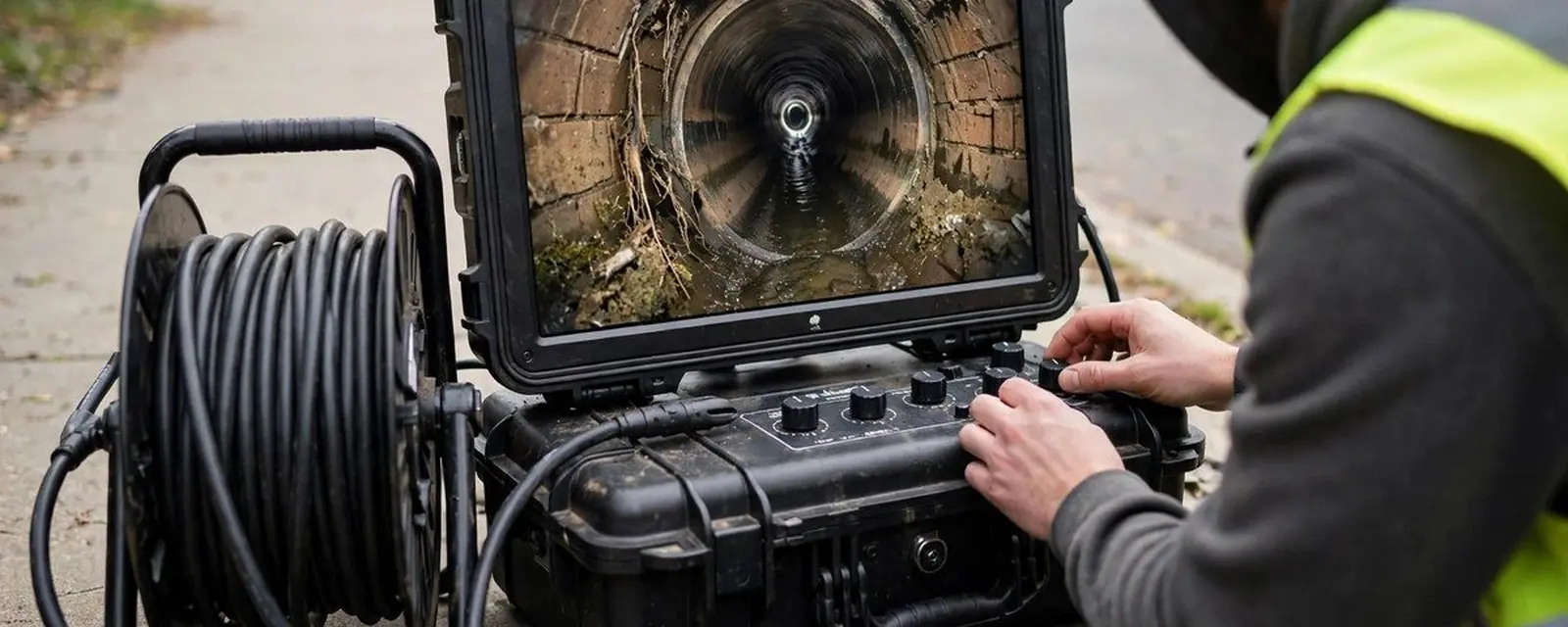
Most sewer problems cannot be seen from the surface. A small camera on a flexible cable goes into the line through a cleanout and shows the pipe on a screen, so the plumber can see cracks, roots, offsets and buildup instead of guessing.
Rosemount homeowners usually call for one of two reasons: a repair decision or a home purchase. This page explains what the camera shows, what the recording is for, and what it cannot tell you.
Why Look Inside the Pipe Before You Decide
A sewer line is buried, so symptoms are the only clue most people get. A slow drain, a smell or a soggy spot in the yard could come from a dozen causes. Digging to find out costs far more than looking with a camera.
A camera look turns a guess into a plan. It tells you whether the pipe needs cleaning, a small repair, or nothing at all. It also stops you from paying for a repair the pipe does not need.
The decision is yours because the private pipe from the house to the street main belongs to the homeowner, according to the city. See sewer line repair for what happens when the camera finds damage.
What a Camera Inspection Shows
The camera moves along the pipe from the access point toward the street. These are the main things the plumber looks for.
Pipe material.
Plastic, cast iron, clay or another material, which affects how long it may last and how it should be repaired.
Cracks and breaks.
Hairline cracks, broken sections and holes that leak or let soil in.
Offset or separated joints.
Sections that have shifted apart or sit out of line, which catch waste and let roots in.
Roots.
Where roots enter, how heavy they are, and whether the pipe around them is damaged.
Low spots and bellies.
Sections that sag and hold water, which cause repeat clogs.
Buildup.
Grease, scale and debris that narrow the pipe.
What the Recording Is Used For
The recording is more than a look. It is a record of the pipe on the day of the inspection.
| Use | How the recording helps |
|---|---|
| Choosing a repair | The plumber uses it to match the repair to the damage, from spot repair to replacement. |
| Confirming a cleaning worked | A look after cleaning shows the line is clear and exposes what the blockage was hiding. |
| Negotiating a home purchase | A recording of a damaged lateral gives you facts for a price or repair discussion with the seller. |
| Comparing quotes | You can show the recording to another contractor so every price is based on the same evidence. |
| Documenting for insurance | If damage causes a loss, a dated recording helps show the condition of the pipe. |
Ask for the recording when you schedule, so it is saved for you.
Buying a house or chasing a repeat clog?
Call to schedule a camera look. We explain what it shows and give a clear price before work starts.
If the Line Is Blocked, Cleaning Comes First
A camera cannot pass a blockage. If the line is full of water or packed with debris, the plumber has to clear it before the camera can go through. That may mean a cable or a jetter, and the price for that step is explained before it begins.
This is also why an inspection after a backup often includes cleaning. The camera shows the cause behind the blockage, whether roots, grease or a damaged section. See sewer line cleaning for how that is done.
If the line is clear and drains normally, no cleaning is needed and the camera goes straight in.
Buying a 1990s or 2000s House in Rosemount
The city's 2040 plan says Rosemount added nearly 400 new dwellings a year between 1999 and 2005. It also says a little under 20 percent of homes are over 35 years old, based on a 2016 American Community Survey table, and expects that share to double within a decade of the plan.
For a buyer, this means many homes that felt new are now getting old enough for problems. A house from the 1990s or 2000s is not necessarily in trouble, but its sewer lateral has been in the ground for decades. An inspection tells you the condition rather than assuming it is new.
Because the homeowner owns the private pipe from the house to the street main, a defect transfers to you at closing. Schedule the camera look during your inspection period, and ask for the recording so you have it after the purchase. Ask your inspector or agent about timing.
Source: City of Rosemount 2040 Plan, Chapter 4 Housing (2016 ACS table), and the city Sanitary Sewer page
What a Camera Can Show and What It Cannot
A camera inspection is a strong tool, and it has limits. Knowing them helps you read the results.
What it can show.
- The inside surface of the pipe, along its length from the access point.
- Pipe material, cracks, offsets, roots and buildup.
- Whether water flows or pools at low spots.
- The approximate location of a problem along the line.
What it cannot show.
- The condition of the soil around the pipe or a void under it.
- A pipe past a full blockage or a collapse the camera cannot pass.
- Whether the city main in the street is sound, beyond the connection.
- How long a pipe will last, which is an informed opinion and not a measurement.
If the camera cannot pass a point, the plumber will tell you where it stopped and what that suggests.
What Happens During the Visit
A sewer camera inspection is usually a short visit, though the time depends on the line and whether it needs cleaning first.
Find the access point.
The plumber locates the cleanout, or removes a toilet or opens a floor drain if there is none.
Run the camera.
The camera moves along the pipe toward the street while you or the plumber watch the screen.
Mark and record.
Problem spots are noted along the line, and the video is saved.
Explain the findings.
You hear what was seen, whether it needs action, and what the options are.
Give the price for any next step.
If cleaning or repair is needed, the price is explained before any further work.
What Changes the Price of a Sewer Inspection
We give a clear price before work starts. These are the factors that move it.
A home purchase inspection may be split from the rest of the inspection, so ask your agent how to schedule it. Insurers differ on sewer coverage, so check the policy before you rely on it.
Sewer inspection questions
It shows the inside of the pipe: material, cracks, offsets, roots, low spots and buildup. The plumber explains what each finding means and whether action is needed.
It is a sensible step, especially for a house built in the 1990s or 2000s that was once new and now has an aging lateral. The homeowner owns the private pipe to the street main, so its condition becomes yours at closing.
No. A blocked line has to be cleared first, by cable or jetter, so the camera can pass.
Ask for it when you schedule. A saved recording helps with repair decisions, price comparisons and a purchase discussion.
The camera shows your private line up to the connection. The city inspects its own mains on its own schedule.
Not exactly. It shows present condition, and the plumber can say what looks worn, but no one can promise a pipe's remaining life.