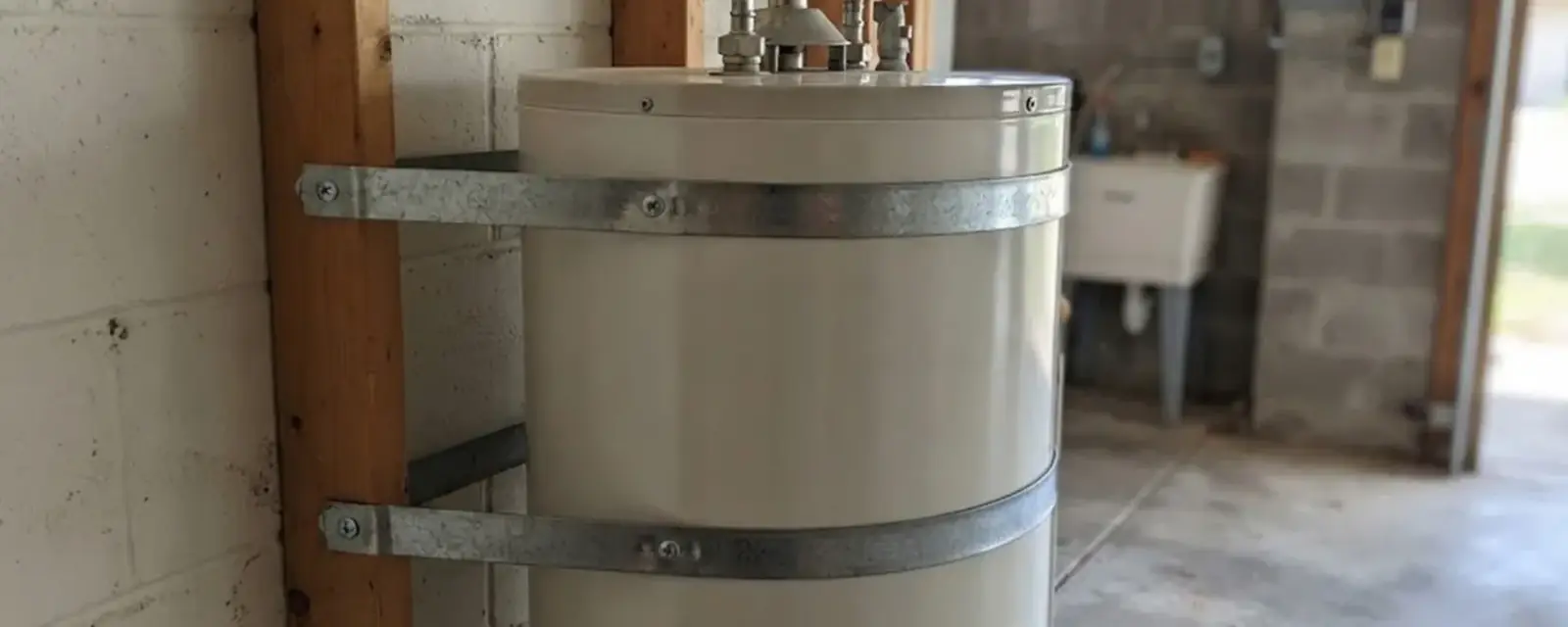
When the hot water quits in Rosemount, the line is answered 24/7, and the first step is a quick safety check. If you smell gas, leave the building and call from outside. If water is pooling under the tank, close the cold supply valve and call.
Most heater problems fall into a small set of symptoms, and each symptom points at a short list of causes. Below you will find a table that sorts them, the checks a homeowner can safely do, and the point where a plumber needs to take over.
No hot water right now? Safe checks to make first
These checks take a few minutes and need no tools. They rule out the simple causes and keep you safe while you wait for a visit.
- If you smell gas, stop.Do not flip switches or try to light anything. Leave the building and call from outside. Minnesota Energy Resources customers can call the leak line at 800-889-4970. Xcel Energy customers should call 911 once outside.
- Look for water around the tank.A wet floor means a leak. Close the cold supply valve on the pipe entering the top of the heater and switch off power to an electric unit.
- Check the breaker on an electric unit.A tripped breaker is the most common cause of an electric heater going cold. Reset it once. If it trips again, leave it off, because the cause is likely a failed element.
- Look at the temperature setting.Thermostats get bumped. If the dial or display is set low, raise it to a normal setting and wait for the tank to recover.
- Call and tell us what you saw.Describe the symptom, the fuel and any sounds or leaks. That lets us bring the right parts and often schedule a same-day visit.
Do not relight a gas pilot or reset a gas control yourself. That work belongs to a plumber or the gas utility.
Symptom, likely cause and who should handle it
Find the row closest to what you see. The last column shows where a homeowner can check safely and where it is a plumber's job.
| Symptom | Likely cause | Who handles it |
|---|---|---|
| No hot water at all, electric tank. | Tripped breaker, failed element or a tripped high-limit switch. | Homeowner checks the breaker once. Plumber for anything beyond that. |
| No hot water at all, gas tank. | Pilot or igniter trouble, a failed gas control or a safety shutoff. | Plumber. Do not relight it yourself. |
| Lukewarm water. | Burned-out upper or lower element, a worn thermostat or a dip tube problem. | Plumber. |
| Hot water runs out fast. | Sediment filling the tank or one dead element. | Plumber, and a flush may help. |
| Banging or rumbling. | Sediment on the tank floor trapping water that boils. | Plumber. A flush can help on a sound tank. |
| Dripping from the relief valve pipe. | High pressure, high temperature or a worn valve. | Plumber. Do not cap the pipe. |
| Water at the base of the tank. | A leaking fitting, or a failed tank. | Homeowner shuts off the supply. Plumber confirms. |
| Rust-colored hot water. | Corroding tank interior or a spent anode rod. | Plumber. Often a sign of replacement. |
| Smell of gas. | A gas leak. | Leave and call from outside. Never a homeowner job. |
A relief valve that drips is protecting the tank. Capping it removes that protection and is unsafe.
Why a Minnesota winter exposes a weak heater
The Minnesota DNR Twin Cities climate normals list a January average low of about 9 to 11 degrees Fahrenheit. These are figures from the Twin Cities airport station, not from Rosemount itself. In a cold stretch like that, incoming water is much colder than in summer, and the heater has to lift it further.
For your repair decision, this means a tank that was merely tired in August can fall behind in January. A half-dead element, a thermostat that has drifted or a tank full of sediment all show up as lukewarm showers when the supply water is cold. If the problem appears only in deep winter, it still points at the heater, not at the weather.
It also means the worst time for a failure is the time you can least afford a cold house. If you have a heater with known problems going into winter, repairing it or planning a replacement in the fall beats an emergency in a cold snap.
Replacing a relief valve, a gas control or a dip tube is plumbing work under the state's Uniform Plumbing Code (UPC) adoption in Minnesota Rules chapter 4714. The relief valve in particular is a safety device, so a dripping one should never be capped or plugged as a fix.
Source: Minnesota DNR Twin Cities Climate Calendar, January 1991 to 2020 normals, airport station.
Heater went cold in Rosemount?
Call the 24/7 line, describe what you see, and we will tell you what to check while we arrange a same-day visit when available.
Gas, electric and hybrid heaters fail in different places
The fuel type tells us where to look first. Here is where each kind tends to give trouble.
Gas tank.
Trouble sits in the pilot or igniter, the thermocouple or flame sensor, the gas control and the vent path. A gas smell or a yellow, lazy flame means stop and call. Soot or scorch marks at the top of the unit are a warning sign.
Electric tank.
The usual suspects are the breaker, the two heating elements and the thermostats. An element can burn out while the other still works, which gives lukewarm water instead of none.
Hybrid or heat pump tank.
These add a compressor, a fan and an air filter on top of the electric backup elements. Poor airflow, a clogged filter or a blocked condensate drain can stop the heat pump side, leaving the slower electric elements to do the work.
A hybrid or heat pump unit also needs space around it for airflow. A closet with no clearance makes it work harder and can hide the real problem.
What a repair visit looks like
The plumber works from your symptom outward, so the visit stays short when the cause is simple.
Test and confirm.
The plumber checks power or gas, the thermostats, the safety controls and the water temperature at the tank and at a tap.
Explain the fix and the price.
You get a plain explanation of what failed and a clear price before the repair starts.
Repair, then verify.
The part is replaced, the tank is checked for leaks and the heater is run to temperature before the visit ends.
Where repair stops making sense
We would rather tell you honestly when a repair is not worth it than sell you a fix that fails again next month.
Repair is worth it when.
- A single part has failed, such as an element, thermostat or valve.
- The tank is dry and not rusted at the base.
- The unit is not old and has no history of leaks.
- The repair is small next to the cost of a new tank.
Replace instead when.
- Water is leaking from the tank body, not from a fitting.
- The hot water runs rust-colored and the tank is old.
- The tank is badly scaled and keeps overheating or rumbling.
- The repair needs several parts on a unit near the end of its life.
If it comes to a swap, our page on water heater replacement shows how a same-day change works. For planned changes to venting or fuel, see water heater installation.
What decides the repair bill
A repair price is not one number. It depends on what failed, what it takes to reach it and how soon you need it.
If a leak soaked a floor or wall, take photos before cleanup and ask your insurer how it treats the loss. Keep the failed part if the plumber offers it.
A flush and a check can save a repair call
Rosemount's city water is hard, and sediment builds up in any tank over time. Draining a few quarts from the tank's drain valve once or twice a year clears loose sediment and shows you what the inside looks like. If the water that comes out is full of grit, the tank is working hard.
Check the relief valve pipe, the base of the tank and the connections whenever you are in the room. A drip you notice early is a cheap fix. A drip you miss for weeks can become a rusted shell.
If you have a gas unit, keep the area around it clear and look for scorch marks or soot. Do not store paint, solvents or cleaners nearby.
Heater trouble sometimes starts with a leak elsewhere in the house. Our page on leak detection explains how a hidden leak gets found.
Water heater repair questions
Yes. The line is answered 24/7, including nights and weekends. First close the cold supply valve if there is a leak, and switch off power to an electric unit. If you smell gas, leave the building and call from outside.
On an electric tank, a tripped breaker, failed element or thermostat is the usual cause. On a gas tank, look to the pilot, igniter, flame sensor or gas control. A plumber should diagnose anything beyond a breaker reset.
A burned-out element, a worn thermostat or a failed dip tube is the most common cause. Sediment also cuts the volume of hot water. The table on this page lists the usual causes.
Sediment sits on the tank floor and traps water that boils. A flush can help on a sound tank, but heavy noise on an old tank often points toward replacement.
It means the valve is releasing pressure or heat, or the valve is worn. Do not cap the pipe. Call a plumber, because the valve protects the tank.
No. If the unit smells of gas, leave and call from outside. Pilot relighting and gas control resets are plumber or utility work.
A leak from the tank body, rust-colored hot water on an old tank, or a repair needing several parts usually points to replacement. A single failed part on a sound tank is worth repairing.
We give a clear price before work starts. The price depends on the failed part, the fuel type, access and the condition of the tank.