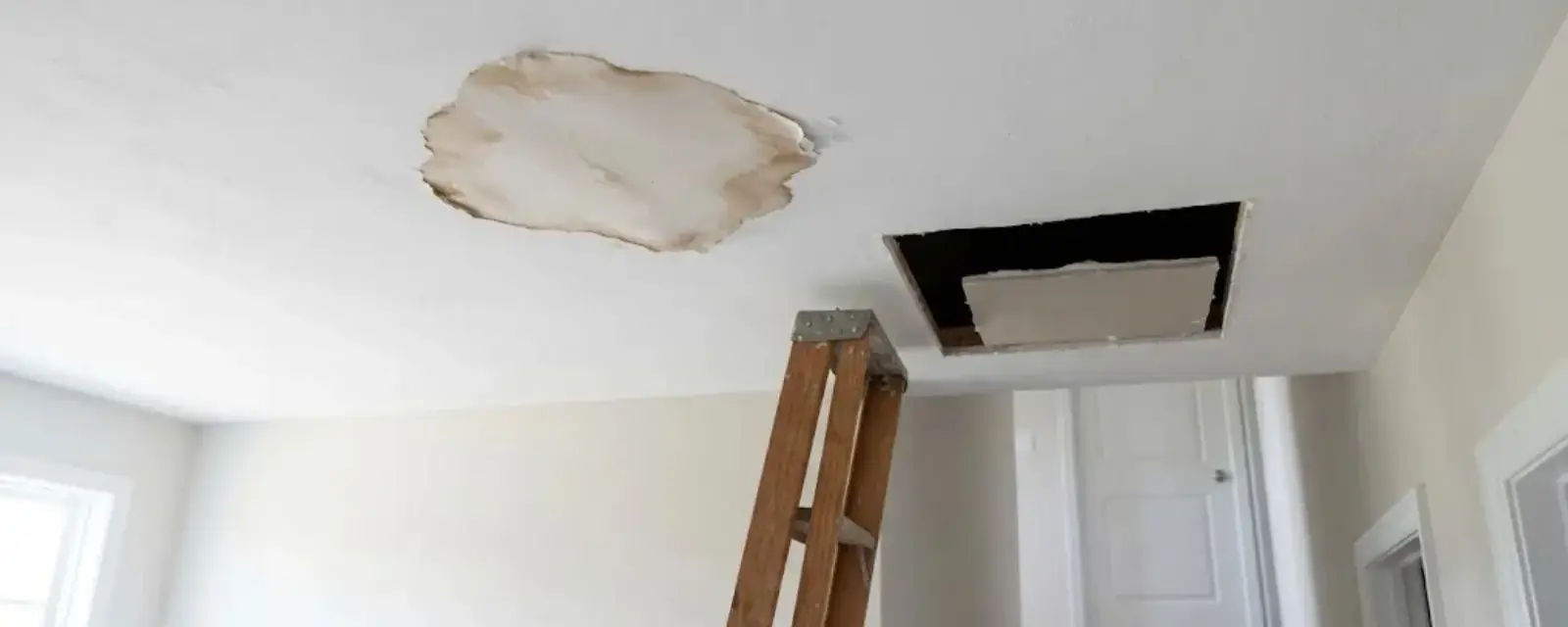
If you hear water running with every tap closed, or a ceiling is dripping now, our line in Rosemount is answered 24/7. Close the main shutoff valve first, then call us. Stopping the water protects the house while we work out where it is escaping.
Most hidden leaks do not announce themselves. They show up as a bill that creeps up, a stain that appears and dries, a warm patch on the floor, or a meter that keeps moving. This page covers how to confirm a leak yourself, how plumbers find it without demolition, and who to call for which part of the problem.
If You Think Water Is Escaping Right Now
Do these things first, in this order. They take a few minutes and they limit the damage before anyone arrives.
- Close the main shutoff.Turn the main valve where the water line enters the house, usually near the meter or water heater. If the stain stops growing, the leak is on the house side.
- Keep electricity away from wet areas.If water is dripping through a light fixture or soaking an outlet, switch off that circuit at the panel only if the panel itself is dry and you can reach it safely.
- Catch and move.Put a bucket under a drip and move rugs, boxes and furniture off a wet floor. Wet drywall sags fast, so clear the space below a stained ceiling.
- Photograph everything.Take dated photos of stains, wet materials and the meter dial before you clean up. You may want them later for an insurance conversation.
- Call us.Tell us what you see, what you shut off, and whether the meter is still moving with the valve closed. That answer tells us a lot before we arrive.
A plumber can often schedule a same-day visit when the calendar allows. Nights and weekends go through the same line.
The Meter Test That Tells You If There Is a Leak
You can confirm a leak in about an hour with no tools. The meter measures every drop that enters the house, so it cannot be fooled.
Turn off every fixture and appliance that uses water. Stop the dishwasher and washing machine, make sure no one flushes, and pause the ice maker if you can. Then read the meter and note the number or the position of any small sweep dial or triangle.
- Wait at least thirty minutes, and longer if you can spare it, without using any water.
- Read the meter again. If the dial moved or the numbers advanced, water is leaving somewhere.
- Close the main shutoff at the house and check the meter once more. If it still moves, the leak is between the meter and the shutoff, which is the service line.
- If the meter stops when the main is closed but moves when it is open, the leak is inside the house.
A toilet that runs on and off is the most common false alarm, so drop a little food coloring in each tank and wait fifteen minutes. A water softener that regenerates overnight can also move the meter, which is worth knowing in a city where the water is hard.
High Water Bill in Rosemount: Who to Call for What
The city has a clear split of duties. According to the city FAQ, Public Works repairs water meters and can shut off service if a plumber advises it is necessary. City employees make meter repair visits at no charge during normal business hours.
That tells you where to start. If the meter itself looks broken, cracked or stuck, call Public Works during the day. If the meter behaves normally and the leak test shows water moving on your side, it is a plumbing problem and a plumber is the right call.
When a plumber finds that service must be shut off at the street, say so to Public Works so they can act. Keep the plumber's finding handy when you call, because the city's wording ties a shutoff to a plumber's advice.
Source: City of Rosemount FAQ, Public Works, water meters and shutoff.
Hear a Drip You Cannot Find?
Describe what you see and what the meter is doing. We will tell you whether this needs a same-day visit or a scheduled one.
Signs a Leak Is Hiding in Your House
These are the clues we ask about first. One alone is not proof, but two together usually mean it is time to test.
A bill that keeps climbing.
Usage rises while the household routine stays the same. Slow leaks add up quietly over several billing cycles.
A stain that grows or returns.
A brown ring on a ceiling or wall that dries, then darkens again after use, points to a supply or drain line above it.
Warm spots on the floor.
A patch of floor that feels warm can mean a hot water line leaking under the slab or in the subfloor.
Sound with everything off.
A faint hiss or trickle at night, when the house is quiet, often means pressurized water is escaping.
Musty smell or peeling paint.
Moisture inside a wall lifts paint and brings a damp smell long before a stain breaks through.
A soft or wet lawn strip.
Green, soggy ground between the street and the house suggests the service line is leaking outdoors.
How Plumbers Find a Leak Without Opening Walls
Detection is a sequence of narrowing steps. Each one rules out part of the house so the final opening, if any, is small.
Pressure test.
We isolate sections of piping and watch gauges. A pressure drop in one section tells us which part of the system to focus on.
Listen.
Acoustic listening gear picks up the sound of water escaping a pipe through floors, slabs and walls.
Thermal and moisture scan.
A thermal camera and a moisture meter show cool or damp areas behind finished surfaces without cutting into them.
Camera and tracing.
For drain leaks, a camera on a flexible line shows cracks and joints. Tracing tools follow a pipe's path through concrete.
Confirm, then open small.
We confirm the spot from more than one angle, then open the smallest section of drywall or floor needed to make the repair.
Where Hidden Leaks Start and How They Show Up
The location of the leak decides which tools we use and how invasive the repair becomes.
| Location | Typical sign | How we usually confirm it |
|---|---|---|
| Inside a wall. | Stain, musty smell, soft drywall. | Moisture meter, thermal scan, pressure test of that run. |
| Under a slab. | Warm floor spot, constant meter movement. | Isolation test, listening, line tracing. |
| Ceiling below a bathroom. | Stain that grows after showers. | Moisture reading, then test the tub, shower and drain separately. |
| Service line outdoors. | Wet strip of lawn, drop in pressure. | Meter test with main closed, then listening along the route. |
| Water heater area. | Damp floor, rust at fittings. | Visual check, then pressure test of the connected lines. |
Every house is different, so the order of steps changes with what we find.
If the problem turns out to be the line from the street, our page on water service line repair and replacement explains who owns that pipe and what the work involves.
Slab and Under-Floor Leaks in Practice
Many Rosemount homes were built during the fast growth of the 1990s and 2000s, and most have basements. That means a lot of the plumbing is accessible from below, which helps. A leak in a basement ceiling is easier to reach than one under a poured slab.
When a line does run under concrete, we test it before anyone picks up a hammer. Sometimes rerouting a line through a wall or ceiling costs less than breaking the slab. We explain both options and the price before we start.
What Drives the Price of Leak Detection
Detection work is priced on the effort of finding the problem, then the repair is priced separately. You hear the price before work starts.
If you plan to file a claim, keep the findings from the detection visit and your photos together. Insurers often ask what caused the loss and where it started.
Leak Detection Questions
Yes. The line is answered 24/7. Close the main shutoff first, take photos of any damage, and call. We schedule same-day visits when the calendar allows.
Usually yes. Pressure testing, listening gear, moisture meters and thermal cameras narrow the location so only a small opening is needed for the repair.
Turn off every fixture and appliance, read the meter, wait at least thirty minutes, and read it again. If it moved, water is leaving the system somewhere.
Per the city FAQ, Public Works repairs water meters, with no charge for meter repair visits by city employees during normal business hours.
The city says Public Works can shut off service if a plumber advises it is necessary. A plumber can tell you when that step is needed.
Signs include a warm floor spot, a meter that moves with the main closed at the house, and a hissing sound. A test of each line confirms it.
Yes. We explain what we found and give a clear price before work starts.