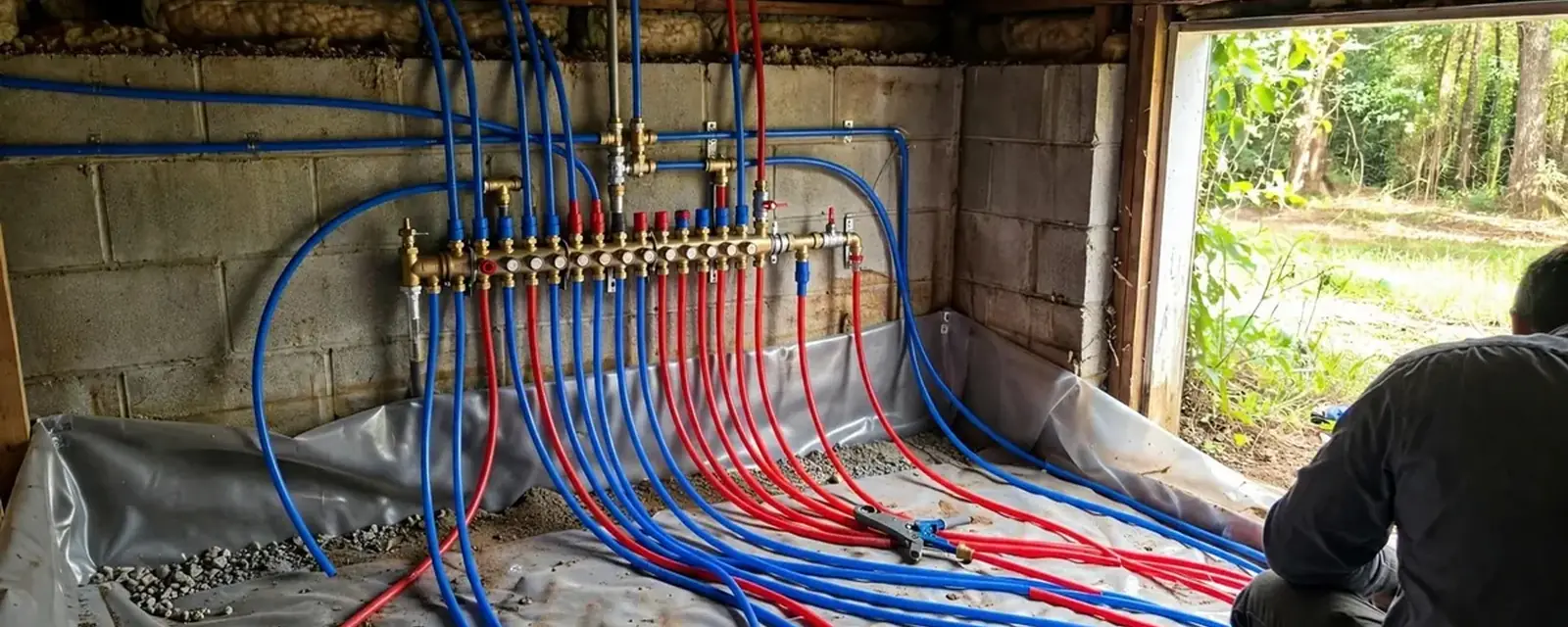
Most Rosemount homes do not need repiping. Many were built in the last few decades, and a single leak is usually a single repair. When leaks keep coming back, or the water turns brown, or pressure falls house-wide, new supply lines can be the honest fix.
This page explains how to tell a repair from a replacement, how PEX and copper compare, how the work is staged so you are not without water for days, and what moves the price. We would rather test than assume, and we say so when a repair is enough.
When Repiping Is the Right Call
Repiping makes sense when the pipes themselves are failing, not just one joint. The clearest case is repeated pinhole leaks. A second or third pinhole in different spots shows the metal is thinning along its length, and patching each one only chases the next.
Two other patterns point the same way. Rust-colored water that returns after flushing the lines suggests aging galvanized steel corroding from inside. Low pressure at every fixture, while the water heater and street supply test fine, suggests mineral and rust buildup narrowing the pipe.
A repipe touches every supply line in the house, so it falls under Minnesota's plumbing code (Rules chapter 4714), which incorporates parts of the Uniform Plumbing Code (UPC) and normally includes inspection and testing of the new piping. Ask the plumber how the inspection is scheduled before the walls are closed.
- Repeated pinholes or leaks in different parts of the house.
- Discolored water from the pipes that returns after flushing.
- Low pressure at many fixtures, with the supply and meter checked.
- Visible corrosion, green crust or flaking on exposed pipe.
- Pipes that were damaged by freezing more than once.
One leak in an otherwise sound system is not a reason to repipe. A single repair costs far less, and we will say so.
PEX or Copper for a New Supply System
Both materials are used in modern homes and both can last. The right choice depends on your house, your budget and your preference.
PEX.
- Flexible plastic tubing that bends around corners.
- Fewer joints and fittings, which means fewer places to leak.
- Easier to run through walls without opening much drywall.
- Tolerates some freezing better than rigid pipe, though a hard freeze can still damage it.
- Must be protected from sunlight and not used outdoors unprotected.
Copper.
- Rigid metal pipe with a long record in homes.
- Soldered joints need more labor and careful workmanship.
- Handles heat well and resists sunlight.
- Material cost can be higher and fluctuates.
- Can corrode in some water conditions and may split when frozen.
We lay out both options for your house. Neither is the right answer for every home, and some homes use a mix.
Hard Water, Softeners and Your Pipe Choice
The city says Rosemount water measures 17 grains per gallon, which it describes as hard. Some homeowners run a water softener to deal with scale.
The city's 2025 water report lists pros and cons of home softening. Among the disadvantages it names is that softened water can corrode your pipes. The city does not recommend or ban softeners.
Tell your plumber if you have a softener. Pipe material, softener maintenance and any discoloration all belong in one conversation, so the new lines are chosen with your water in mind. Our water softener and filtration page explains how softeners work.
Source: City of Rosemount FAQ (hardness) and 2025 Drinking Water Report (softening pros and cons).
Not Sure Repiping Is Needed?
Call and describe the leaks or the color of the water. We will tell you whether a test or a repair comes first.
Do Older Rosemount Homes Need Repiping?
The city's 2040 plan lists housing by decade built, using survey data. It shows that older homes are a small share.
| Decade built | Share of homes | What it means for piping |
|---|---|---|
| Built in the 1960s | About 6.9 percent | Older supply pipe is possible, so test before deciding. |
| Built in the 1970s | About 7.4 percent | Material varies, so a camera or pressure test decides. |
| Built in the 1980s | About 13.5 percent | Usually newer than the troublesome eras, but check your own lines. |
| Homes 1990s and 2000s | About 63.5 percent combined | Most homes here are newer, so repiping is rarely the first answer. |
Figures are from Table 4.10 of the city's 2040 plan, which cites 2016 survey data.
So most older piping in town is a minority case. Do not assume your pipes are bad from the decade alone. A pressure test shows whether the lines hold, and a camera shows what is inside accessible pipes.
How a Repipe Is Staged to Keep Water On
You should not need to live without water for days. A good plan works in stages.
Plan the route.
We walk the house, find the main, the water heater and each fixture, and choose where new lines will run.
Install new lines alongside the old.
New piping is run through the basement, walls and floors while the old supply keeps working.
Switch over in one visit.
We shut water off briefly, tie the new system to the main and restore service.
Connect fixtures.
Sinks, tubs, toilets and appliances are reconnected one by one.
Test and flush.
The system is pressure tested, flushed and checked at each fixture before we close up.
Every house is different, so the schedule depends on size and access. Ask us how long the water will be off before we start.
Drywall, Access and Cleanup
Opening walls is the part homeowners dread. Where the plumbing is exposed in a basement ceiling or crawl space, new lines run with almost no drywall damage. Finished walls need access holes, usually small and placed behind fixtures, closets or cabinets where we can.
Patching drywall and paint is a separate trade. We plan access to keep holes small and tell you in advance where they will be. If you want the patching done well, line up a drywall contractor for after the plumbing is tested.
Moving furniture and clearing the areas around fixtures helps. Plan for dust, noise and some days of disruption, even when the work goes smoothly.
What Drives the Price of Repiping
The price is given clearly before work starts. These are the factors that decide it.
Coverage varies by policy. Ask your insurer before you decide, and keep photos and our findings.
Repiping Questions
Repeated pinhole leaks, discolored water that returns, and low pressure at many fixtures are the main signs. A pressure test or camera inspection confirms it.
Neither is better in every house. PEX is flexible and uses fewer joints. Copper is rigid and heat tolerant. The right choice depends on your house and budget.
Not for the whole job. New lines are installed alongside the old ones, and the switchover takes a short period.
We plan access to keep holes small. Exposed basement or crawl space plumbing needs little or none.
Rosemount's 2025 water report lists corrosion of pipes as a disadvantage of softened water. Tell your plumber if you have a softener.
Not automatically. The city's plan shows these are a small share of homes, so testing decides rather than the build year.
It depends on house size, access, material and related work. We give you a clear price before work starts.