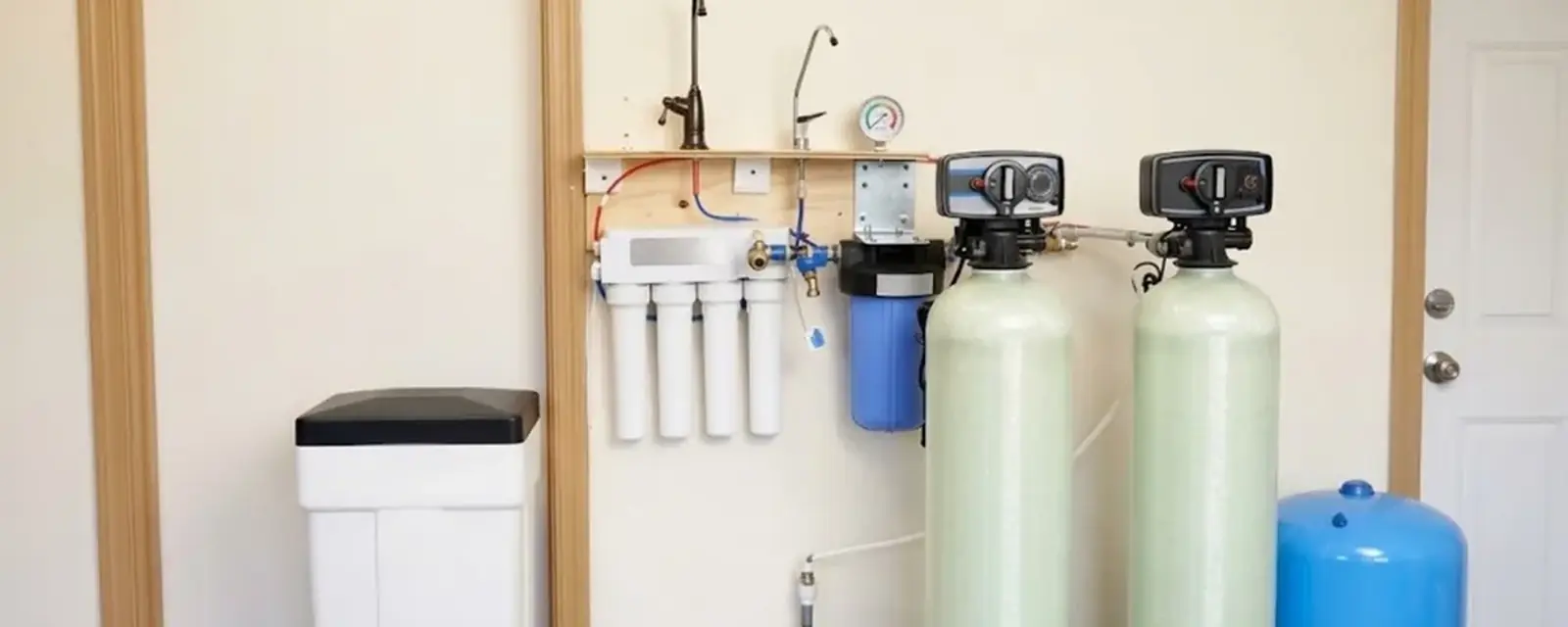
A softener, a filter and a reverse osmosis tap do three different jobs. A softener trades hardness minerals for sodium or potassium. A carbon filter handles taste and odor. A reverse osmosis unit cleans a small amount of drinking water at the kitchen sink.
We install and service these systems and tell you plainly when you do not need one. A clear price comes before any work starts, and we offer same-day appointments when available.
Do You Need a Softener? Test Your Tap First
The city of Rosemount says the hardness of its water is 17 grains per gallon. That is the city's figure from its FAQ and Water page, and those pages carry no date. Treat it as a starting point and test your own tap, because the number at your house can differ.
The practical meaning is simple. Water at that level tends to leave white scale on faucets and glass, build up inside a water heater, and make soap less effective. If you see those signs, a softener is worth pricing. If your fixtures stay clean and you do not mind the spots, you may not need one.
Installing a softener connects it to the supply and to a drain, and both follow the UPC provisions Minnesota carries in Rules chapter 4714. The drain connection needs an air gap or similar protection so brine water cannot flow back into the house.
A home test strip kit or a lab test will give you a number for your tap. Bring that number to the conversation and we can size equipment from it. A softener sized to a guess wastes salt.
How a Softener Fits Into Your Plumbing
A softener sits on the cold water line where it enters the house. This is how it connects.
Supply and bypass.
Water enters through an inlet and leaves through an outlet. A bypass valve lets you route water around the unit when you service it, and it is the first thing to check if something goes wrong.
Resin tank.
Hard water passes through resin beads that hold hardness minerals. When the beads are full, the unit runs a cleaning cycle.
Brine tank.
Salt dissolves in a second tank to make brine. The brine washes the resin so it can work again.
Drain line.
The cleaning cycle sends wastewater to a floor drain, a laundry standpipe or a sump. The drain line needs a proper path and height.
Air gap.
The drain line must end with an air gap above the drain so dirty water cannot be pulled back into the softener. This is a basic plumbing detail that is easy to get wrong.
We also confirm that the softener sits near power, a drain and a place to refill salt, and that the home keeps an unsoftened cold tap for outdoor use if you want one.
Ready to test your tap?
Call with your hardness reading or ask us how to get one. We can tell you whether a softener or a reverse osmosis tap fits your plumbing.
The City's Pros and Cons of Home Softening
Rosemount's 2025 water report lists advantages and disadvantages of home softening. The city does not recommend or ban softeners, and it treats the decision as the homeowner's choice.
Pros listed by the city.
- Less scale in pipes, fixtures and hot water heaters.
- Longer life for some appliances.
- Fewer mineral spots and less soap film.
Cons listed by the city.
- Can corrode your pipes.
- Adds sodium to the water.
- Needs regular testing and maintenance.
- Salt use has an environmental impact.
- About 5 percent of the water through a softener is not usable.
Sodium detected in the city's water is 5.04 ppm, and softening adds to that. If someone in your home is on a sodium-restricted diet, ask their doctor and ask us about a separate unsoftened cold tap or reverse osmosis.
Gross Alpha and Choosing Certified Equipment
The city's 2025 water report records a gross alpha MCL violation issued 1/15/2026. The report says this is not an emergency and that certified water softening, reverse osmosis and distillation reduce gross alpha. If you buy treatment equipment, ask that it be certified, and ask what certification the model carries.
Source: City of Rosemount 2025 Drinking Water Report.
Softener, Filter and Reverse Osmosis Compared
These three are often confused. This table shows what each is for.
| System | What it does | Where it goes | Upkeep |
|---|---|---|---|
| Water softener | Removes hardness minerals from the whole house | Main water line | Salt refills, resin and bypass checks. |
| Carbon filter | Improves taste and odor | Whole house or single tap | Cartridge changes on a schedule. |
| Reverse osmosis | Cleans drinking water at one faucet | Under the kitchen sink | Filters and membrane changes, tank checks. |
| Sediment filter | Catches sand and rust particles | Main line before other equipment | Cartridge changes. |
A filter is not a softener and a softener is not a drinking water purifier.
If hot water output has dropped, scale in the tank may be the reason, and our water heater repair page covers that.
Reverse Osmosis at the Kitchen Tap
A reverse osmosis system sits under the sink and feeds its own small faucet. Water is forced through a membrane that holds back most dissolved material, and the clean water collects in a small tank. It makes a small amount at a time, which suits drinking and cooking.
The system needs a cold water line, a drain connection with an air gap and a hole in the sink or counter for the faucet. Filters and the membrane need changing on a schedule. We install and service these, and we can pair one with a softener if you want soft water through the house and filtered water to drink.
Softener Care Checklist
A softener needs a few minutes of attention every few weeks. This is what to look at.
- Salt level.Keep the brine tank at least a third full. Check it once a month.
- Salt bridge.A hard crust can form in the tank and leave a gap above the water. Break it carefully and tell us if it keeps happening.
- Bypass valve position.Make sure it is set to service and not bypass. A bypass left open means unsoftened water.
- Drain line and air gap.Look for a kink, a loose line or water pooling near the drain.
- Hardness at the tap.Test now and then. If scale returns, the unit may need service.
- Resin age.Resin wears out over time. Falling performance despite salt and settings can mean it is spent.
Discolored Water or Low Pressure? Check the Bypass
The city's FAQ says a malfunctioning softener can cause discolored water. It also says low pressure may be a softener that needs service, and it points owners to check the bypass valve.
Turn the bypass to the bypass position. If pressure or color returns to normal, the softener is the cause and needs service. If the problem remains, call the city Public Works office or us. Spring hydrant flushing can also cause temporary cloudiness, so run the cold taps for a few minutes first.
What Sets the Price of a Softener or Reverse Osmosis Job
We give a clear price before work starts. These are the factors.
Ask us to write down the model and the settings when the job is done, so you can find them the next time the unit needs service.
Water softener and filtration questions
The city's FAQ and Water page give a figure of 17 grains per gallon. Those pages are undated, so test your own tap.
No. The city treats softening as the homeowner's choice. Its 2025 water report lists pros and cons for you to weigh.
Softening does add sodium. If you are on a restricted diet, ask a doctor and consider reverse osmosis at the kitchen tap.
Yes. We install and service under-sink reverse osmosis units, including the drain connection with an air gap.
The bypass valve may be partly closed, or the unit may need service. Turn the bypass to the bypass position to see if pressure returns.
Check the brine tank monthly and keep it at least a third full. Use the salt type the manufacturer lists.
Softeners are normally installed on the cold line at the main so every fixture benefits. We can explain the options for your layout.