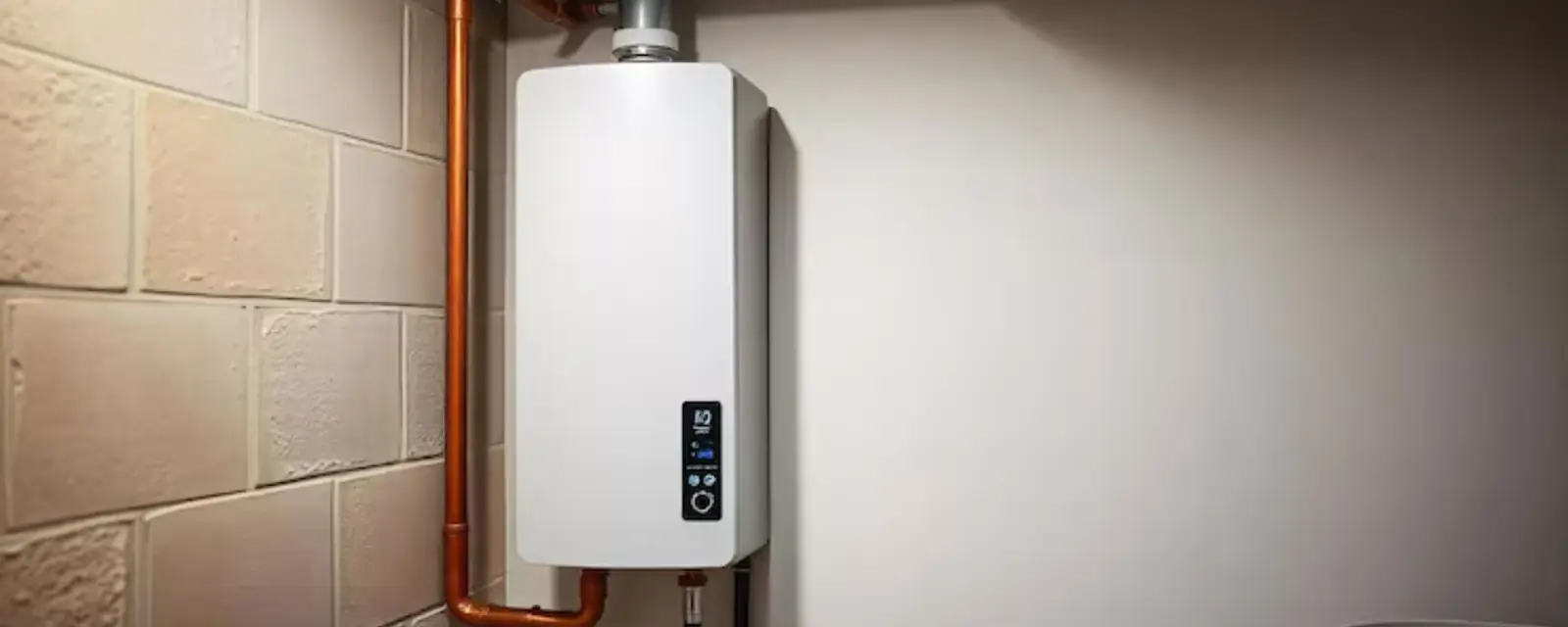
A tankless water heater heats water as it flows, so there is no tank to run out. That sounds simple, and the sales pitch usually stops there. In a Rosemount home, the real questions are how many fixtures run at once, whether the gas line can feed the unit and how the hard city water will treat the heat exchanger.
This page walks through those questions in the order a plumber would ask them. By the end you should know whether tankless is a good fit, a poor fit or worth a closer look.
Does tankless suit a Rosemount house?
Often it does, if the household's hot water demand is predictable and the gas supply is strong enough. It suits a house where long showers back to back are the usual trouble, because a tank runs out and a tankless unit keeps going.
It suits less well where several big draws happen together, where the gas line is small or where the venting route is hard to build. The unit also costs more to install than a tank in most cases, so the benefit has to be real for you.
A short call tells us a lot. Tell us the fuel you have, how many bathrooms, what runs at the same time and where you would like the unit. We can say honestly whether tankless is worth a closer look.
How fixtures running together add up
A tankless unit is sized by flow, not by gallons. The question is how much hot water you draw at the busiest moment of the day.
| What is running | Demand on the heater | What to check |
|---|---|---|
| One shower. | Moderate, and easy for most units. | Temperature rise in winter. |
| Two showers at once. | High, and the main sizing case for a family. | Unit rating against both showers together. |
| Shower plus dishwasher. | Moderate to high. | Whether the dishwasher draw overlaps the shower. |
| Shower plus washing machine. | High if the machine uses hot water. | Machine cycle settings and a cold wash habit. |
| Tub fill. | Sustained high demand for several minutes. | Whether the unit can keep up through a full tub. |
| Kitchen sink alone. | Low, but short draws can be an issue. | Minimum flow needed to fire the unit. |
Flow ratings come from the maker's data for the model you choose. We size against your busiest hour, not an average.
Gas line, venting and the right utility to ask
Tankless units draw a lot of gas for a short time. The supply and the exhaust path are where many installs run into trouble.
Gas line size.
A tankless unit can draw more gas at once than the tank it replaces. If the existing pipe is too small, it may need upsizing, and that adds work.
Meter and regulator capacity.
Whether the meter and regulator can supply the added load is a question for your gas utility. Residential Rosemount is served by two, Minnesota Energy Resources and Xcel Energy, so ask the one that serves your address.
Venting.
These units vent to the outside through a pipe that follows the manufacturer's rules. The run length and the number of bends are limited, so the location matters.
Condensate.
High-efficiency units produce acidic condensate that needs a drain. A floor drain or a condensate neutralizer is part of the plan.
Electrical.
Even a gas unit needs an outlet for the fan and controls. We check for a nearby, correct power source.
If you smell gas at any point, leave the building and call from outside. Minnesota Energy Resources customers can call the leak line at 800-889-4970. Xcel Energy customers should call 911 once outside.
Thinking about tankless in Rosemount?
Call and describe your fixtures and your gas supply. We will tell you honestly whether tankless fits and give a clear price before work starts.
Seventeen-grain water and a heat exchanger
The City of Rosemount lists its water hardness at 17 grains per gallon, and calls it hard. A tankless heat exchanger has narrow passages, and scale from hard water can narrow them further. That reduces flow and efficiency and can trigger error codes.
For your decision, this makes scale control part of the purchase, not an afterthought. Many tankless owners in hard-water areas plan to descale the unit on a schedule, and some add a softener or a scale inhibitor ahead of it.
The city's own water report lists the pros and cons of softening, including added sodium and the need for maintenance. Our page on water softener and filtration covers the decision in detail.
Source: City of Rosemount FAQ and Water page (hardness, undated), 2025 Rosemount Drinking Water Report (softening pros and cons).
Tank versus tankless, trade-offs without the hype
Neither type is better for every house. Here is how they differ in daily use.
Tank water heater.
- Stores a set amount of hot water and then needs time to recover.
- Simple to install and to repair.
- Works with existing gas lines and vents in most houses.
- Sediment builds up on the tank floor over time and the unit eventually fails.
Tankless water heater.
- Heats on demand, so hot water does not run out during a long draw.
- Takes less floor space and can be wall-mounted.
- May need a larger gas line and a special vent.
- Needs regular descaling in hard water.
If a tank is the better fit, see water heater installation for how a planned install goes. If yours has failed, our page on water heater replacement covers the swap.
Cold winter water makes the unit work harder
A tankless unit must raise incoming water to the set temperature as it passes through. In a Minnesota winter, the incoming water is at its coldest, so the unit has the most work to do. A unit sized for easy summer conditions can fall short in January.
That is why we size against winter conditions, not summer ones. A unit that delivers a comfortable shower in July may give only warm water in January if it is undersized.
Tell us if you want a second bathroom or a tub added later, because that changes the size we recommend.
A descaling and upkeep habit that fits hard water
A tankless unit is not maintenance-free. A short routine keeps it running as designed.
- Descale on a schedule.Flush the heat exchanger with a descaling solution through the service valves. In hard water, plan on doing this on a regular schedule set by the maker.
- Clean the inlet filter.A small screen at the water inlet catches debris. A clogged screen cuts flow and triggers errors.
- Watch for error codes.A repeated code often means scale or a venting problem. Do not ignore it.
- Keep the vent clear.The intake and exhaust terminations must stay free of snow, leaves and nests.
- Have it inspected.A plumber can check gas pressure, combustion and the condensate drain during a service visit.
If the unit stops heating, do not try to relight or adjust gas parts yourself. Call a plumber.
What shapes the price of a tankless install
We give a clear price before work starts. These are the items that move it.
Ask the manufacturer for the installation requirements of the exact model before you buy, because they set the gas, vent and clearance needs.
When a tank is the better choice
If your household uses little hot water, a tank is cheaper to buy and install. If the gas line is small and upsizing is costly, a tank may be the wiser spend. If the venting route is hard, a tank avoids that problem.
A tank is also easier for most plumbers to repair, and parts are widely available. If you plan to sell the house soon, a standard tank usually meets a buyer's expectations.
We would rather tell you that on the phone than install a unit that does not suit your house.
Tankless questions for Rosemount homeowners
It can be, if the flow rate, gas supply and venting line up and you will keep up with descaling. It is less suitable where demand is high at the same moment or the gas line is small.
By flow rate against the most fixtures running at once, using winter incoming water temperature. A plumber adds up the draws at your busiest time and chooses a unit that covers them.
It may need upsizing, because tankless units can draw more gas at once. Ask your gas utility about meter and regulator capacity. Residential Rosemount is served by Minnesota Energy Resources or Xcel Energy, depending on the address.
Most units vent through a sealed pipe to the outside. The run length, the number of bends and the termination location all matter, and the location of the unit decides the route.
Scale narrows the heat exchanger, cutting flow and efficiency. The city lists Rosemount's hardness at 17 grains per gallon, so plan on descaling and consider water treatment.
Follow the maker's schedule for your model, and expect it to be more frequent in hard water. A plumber can do it or show you how to flush the unit.
Most units need electricity for the fan and controls, so they will not run without power. Ask us about backup options if that matters to you.
Minnesota law allows owners to do plumbing work in their own occupied home unless a local ordinance forbids it. Gas and venting are safety-critical, so most owners hire a licensed contractor.