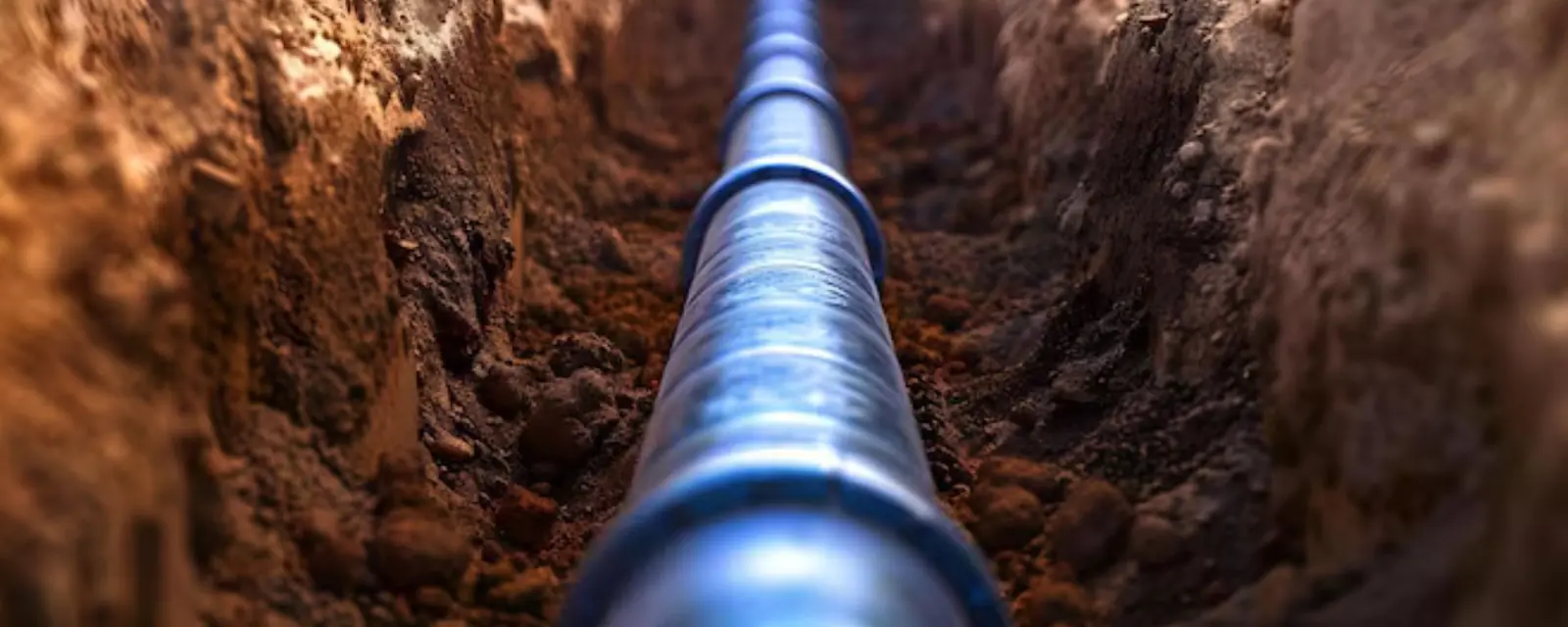
If water has stopped or a stream is running across your Rosemount lawn, close the main shutoff inside the house and call. Our line is answered 24/7. Closing the valve keeps the basement dry while we find where the line failed.
A water service line failure is different from a leak inside the house. The pipe is buried, it crosses your yard, and in Rosemount the city says homeowners are responsible for it. This page explains the warning signs, who owns what, how repair and replacement are done, and what the city's recent line inventory means for you.
Signs the Line From the Street Is Failing
A buried pipe hides its problems. These signs usually show up before the line fails completely.
Pressure drops.
Showers weaken and faucets sputter at every fixture, not just one. A pressure loss throughout the house points toward the supply.
A wet strip in the lawn.
A soggy or unusually green line between the street and the house can mark a leak in the line, even in dry weather.
A meter that will not stop.
If the dial turns with every fixture off, water is escaping. If it still turns with the house valve closed, the leak is outside.
Discolored water.
Rust-colored water can come from corroded pipe, though the city notes hydrant flushing in spring can cause temporary discoloration.
No water at all.
A full break or a frozen line can cut off flow. Check whether neighbors also lost water before you call.
Sinking or heaving ground.
Soil washed away by a leak can leave a dip in the lawn or soften a driveway edge.
When the Line Fails, Do This First
Act quickly if water is surfacing or flooding. These steps keep damage small until a repair crew can dig.
- Close the main shutoff in the house.The valve is usually near the meter. Closing it stops flow into the house from a broken line.
- Stay clear of the wet area.Keep children and pets away from saturated soil and pooling water, and keep electrical cords away from it.
- Check with neighbors.If the whole street has no water, the problem may be a main break, which is the city's job to fix.
- Call the right number.A problem on your side goes to a plumber. The city says after-hours public side emergencies such as a main break go through 911.
- Photograph the scene.Capture the wet ground, the meter and any damage so you have records for insurance or the city.
We take calls at night and on weekends, and same-day visits are possible when the schedule allows.
Whose Responsibility Is the Water Line?
The city's service line inventory page says it maintains the water system and water mains. Homeowners are responsible for the service line and all plumbing on site.
In practice, that means a leak in the main under the street is a city repair, and a leak in the pipe running to your house is yours. A neighbor with the same symptoms is a hint that the problem might be public, but the meter test settles it for your house.
The water service line is plumbing work under the plumbing code the state adopted in Minnesota Rules chapter 4714, and the dig requires a Gopher State One Call locate under Minnesota Statutes chapter 216D. Call 811 at least 48 hours ahead, not counting weekends and holidays.
- Water at the curb with the meter dial turning slowly may be the line.
- Low pressure on the whole street suggests the main.
- A wet strip between the meter and the house is on your side.
For leaks inside the house, our leak detection page explains the meter test and non-invasive tools in more detail.
Line Down or Pressure Gone?
Close the house valve and call. We answer 24/7 and can schedule same-day visits when available.
What the City's Line Inventory Means for Owners
The city's 2025 water report lists its service line inventory as of 10/20/2025: 0 lead, 2 galvanized requiring replacement, 721 unknown material, and 8,662 non-lead lines. The city also asked owners of homes built before January 1, 1985 to identify what their line is made of.
That 721 unknown count is the number that matters to you. If your home predates 1985 and you have not reported your line, find where it enters the house and note the pipe material. The city offered staff help to book a visit through Public Works, and a plumber can also identify the material when the line is exposed.
If you learn yours is galvanized, plan for replacement. The city lists the two galvanized lines as requiring replacement, and galvanized pipe corrodes from the inside over time.
Source: City of Rosemount 2025 Drinking Water Report and Service Line Inventory page.
Trench or Trenchless Water Line Replacement
Both methods end in a new pipe from the street to the house. The right one depends on what is above the line and how the soil is.
Open trench.
- Excavate along the whole route to expose the old pipe.
- Allows you to see the pipe condition and fix connections at both ends.
- Often simpler and lower in cost when the route is clear lawn.
- Digs up grass, landscaping and sometimes a driveway or sidewalk.
- Needs restoration afterward.
Trenchless.
- Digs small pits at each end instead of a continuous trench.
- Pulls or pushes a new line through the old path.
- Protects driveways, walks, patios and mature trees.
- Depends on soil, pipe condition and straight alignment.
- May cost more than a trench on a short clear route.
We look at the route, the access at both ends and what lies in between before recommending one. The choice is explained in plain terms, and the price is clear before we start.
Call 811 Before Anyone Digs
Underground lines for gas, electric and communications cross yards in unpredictable places. Minnesota requires a locate request before excavation.
Request a locate.
Call 811 for Gopher State One Call. The Minnesota Department of Public Safety says calling before you dig is the law.
Wait for marks.
The state says to give at least 48 hours, not counting the day of the call, weekends or holidays.
Respect the colored marks.
Paint and flags show where utilities run. Dig carefully near them and hand dig close to a marked line.
Dig and replace.
Crews excavate or bore, set the new line and reconnect it at the house and the street.
Test and restore.
The new line is pressure tested, then soil and surfaces are restored.
In a true water emergency we shut things down and schedule the dig once marks are in.
Repair Choices for a Failing Service Line
The condition of the pipe decides how much to replace.
| Condition | Likely fix | Notes |
|---|---|---|
| One clean break in sound pipe | Spot repair at the break | Works when the rest of the line is in good shape. |
| Multiple leaks along the line | Full replacement | More repairs usually follow when a line is leaking in several places. |
| Galvanized or badly corroded pipe | Full replacement | Corrosion continues inside the pipe, so a patch will not last. |
| Failure at the house wall | Replace the entry section | A good connection through the foundation matters. |
| Unknown pipe material | Identify it first | Knowing the material tells you what repair is right. |
Pipe material is verified when the line is uncovered, so the plan can change.
What Changes the Price of Water Line Work
A clear price is given before work starts. These are the factors that move it.
Coverage for a buried water line varies from one homeowner policy to the next. Ask your insurer before work starts, and keep our notes on what failed.
Water Line Questions
Yes. The line is answered 24/7. Close the main shutoff in the house first, then call. We schedule same-day visits when the calendar allows.
The city says it maintains the water system and mains. Homeowners are responsible for the service line and all plumbing on site.
Signs include a drop in pressure, a wet lawn strip, and a meter that keeps turning with the house valve closed.
That points to a main break. The city says after-hours public side emergencies go through 911 and the Dakota Communications Center.
No. It protects driveways and landscaping, but a clear lawn route can be simpler to open trench. We explain both.
Yes, before any digging. Minnesota law requires it, and the state asks for at least 48 hours notice, not counting weekends and holidays.
The city's 2025 inventory lists 0 lead lines and 721 unknown. If your home predates 1985 and you have not identified your line, do so.