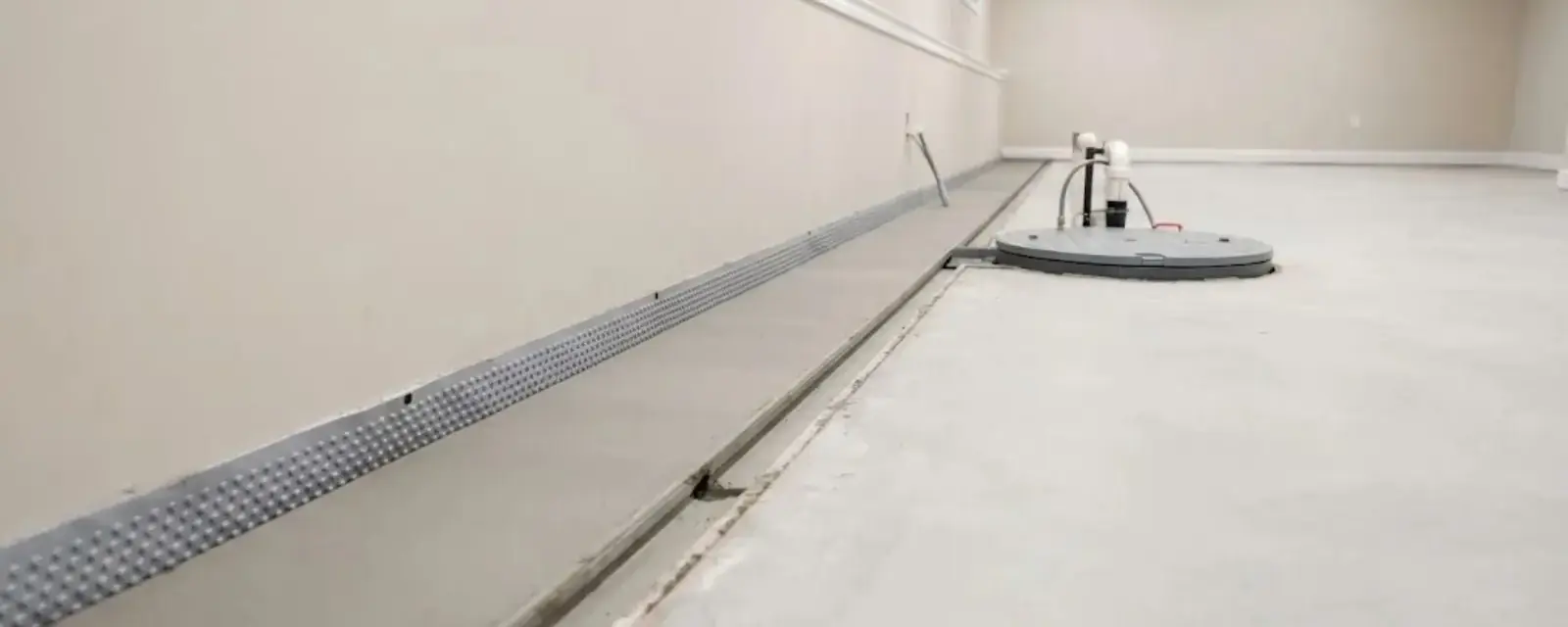
Basement waterproofing is a bundle of different jobs. Some are plumbing, such as an interior drain, a sump pit and pump, and a floor drain that backs up. Others belong to a foundation or masonry contractor, such as sealing a structural crack or digging out and coating an exterior wall.
We handle the plumbing side and tell you plainly when the problem is outside it. A clear price comes before any work starts, and the line is answered 24/7 if water is coming in now.
Groundwater, Condensation or a Plumbing Leak?
Getting this wrong is the most expensive mistake in basement work. Use these checks before you call anyone about drain tile.
- Tape a square of foil to the wall.Leave it for a day or two. Moisture on the room side of the foil points to humid air condensing. Moisture under the foil points to water coming through the wall.
- Note when it gets wet.Water that appears after heavy rain or snowmelt and dries in dry weeks is usually groundwater. Water that shows up on a dry day is more likely a pipe.
- Look at where it appears.Water at the floor and wall joint often means groundwater pressure. Water under a bathroom, laundry or water heater suggests a supply or drain leak.
- Check the water meter.With every fixture off, watch the meter dial for a few minutes. If it moves, water is leaking somewhere in the supply, and our leak detection page explains how we trace it.
- Smell and feel.A musty smell with damp, cool walls and a dehumidifier that fills fast points to humidity. A sewer smell near a floor drain points to a drain issue.
If the foil test and the timing both point to the ground, you likely need drainage. If they point to a pipe or to humid air, drain tile will not help and we will say so.
Interior Drain Tile or Exterior Excavation
These are the two big approaches to groundwater. Crack injection is a third, narrower repair.
Interior drain tile and sump.
- A channel is cut along the inside edge of the slab and a perforated pipe is set in gravel.
- Water that reaches the wall base flows to a sump pit and out through a pump.
- Done from inside, so no yard damage and less dependence on weather.
- Manages water that is already coming in, does not stop it entering the wall.
Exterior excavation and membrane.
- The soil is dug down along the outside of the wall to expose the foundation.
- The wall is cleaned, coated and fitted with a drain and fresh backfill.
- Tries to keep water out before it touches the wall.
- Costs more, disturbs the yard, and is foundation work more than plumbing.
Crack injection seals a single leaking crack with resin or similar material. It works best on a stable crack with a clear source and does little for water that seeps through the whole wall.
Not sure what is wetting the basement?
Call and describe where and when the water shows up. We will tell you if it sounds like a plumbing job or one for a foundation contractor.
Why Digging Outside Is Costly Here
Minnesota Rule 1303.1600 sets the minimum footing depth due to freezing at 3 1/2 feet in Zone II, and Dakota County is in Zone II. That is a building footing rule and not a water line rule. It means foundation footings sit well below the frost line, so digging down to the footing exposes a tall stretch of wall.
That depth is part of why exterior work is expensive and why interior drain tile and a sump pit are common choices. Before anyone digs in your yard, call 811. Gopher State One Call needs notice before excavation, and the state sets a 48 hour notice window that does not count weekends and holidays.
Rosemount's older homes sit in grid neighborhoods built before 1940, according to the city's 2040 plan. They are west of South Robert Trail on both sides of 145th Street West. Foundations from that era can differ in material and condition from newer ones, so a contractor should look at the wall itself before promising a fix.
Source: Minnesota Rule 1303.1600, MN Dept of Public Safety Gopher State One Call page, City of Rosemount 2040 Plan Chapter 4 Housing.
Basement Water Fixes Side by Side
This table compares the common fixes and who usually does the work.
| Fix | What it handles | Who usually does it | Main limit |
|---|---|---|---|
| Sump pit and pump | Water collected at or under the slab | Plumber | Needs power and a safe discharge. |
| Interior drain tile | Water seeping at the wall and floor joint | Plumber or waterproofing contractor | Manages water and does not seal the wall. |
| Crack injection | One leaking crack | Foundation or waterproofing contractor | Weak against general seepage. |
| Exterior excavation and membrane | Water at the outside face of the wall | Foundation contractor | High cost and yard disruption. |
| Gutter and grading fixes | Roof and surface water near the wall | Landscaper or general contractor | Does not help deep groundwater. |
| Dehumidifier and ventilation | Condensation and musty air | Homeowner or HVAC trade | Will not stop seepage. |
| Supply or drain pipe repair | Leaks from pipes | Plumber | Only helps if a pipe is the source. |
The right mix depends on what the wall, the floor and the soil are doing.
Most wet basements need more than one item. A sump pump from our sump pump service often pairs with grading outside.
What a Plumber Does and What a Foundation Contractor Does
A plumber works on pipes, drains, sump pits, pumps, check valves and discharge lines. We can set a pit and pump, connect a floor drain, and fix a supply leak that is soaking the wall. We also recommend a backup pump when power loss is the weak link.
A foundation contractor works on the structure: cracks that move, bowed walls, wall coatings, and exterior excavation. If your wall is bulging or a crack is widening, call a foundation contractor first. We will say so when we see it and would rather lose the job than sell you the wrong one.
What Drives the Price of Basement Water Work
Prices vary widely because the jobs are so different. We give a clear price before work starts, and these are the main drivers.
Check your policy for what it says about groundwater and sump failure, because coverage differs. If you need a report of what we found, we can describe it in plain language.
How We Start a Wet Basement Visit
We work in this order so you get a clear answer before a large bill.
Walk the water.
We look at where it enters, how fast and when. We also check pipes, the water heater, the laundry and floor drains.
Separate the causes.
We use the foil test, the meter and the timing to rule out condensation and plumbing leaks.
Explain the options.
You hear what the plumbing side can do, what a foundation contractor would do, and the price for our part before we begin.
Basement waterproofing questions
It depends on the cause. Interior drain tile manages water that has reached the wall base and is usually less disruptive and less costly. Exterior work tries to keep water out but needs deep digging, and a foundation contractor should lead it.
A pump removes water from a pit. It helps when water is collecting under or beside the slab. It does not seal cracks or stop condensation.
Tape a square of foil to the wall for a day or two. Moisture on the room side points to condensation, and moisture under the foil points to water through the wall.
Structural cracks and wall coatings are generally foundation contractor work. We handle the plumbing side and will tell you if your problem is the foundation.
Yes. Minnesota law says to call 811 before you dig. The state asks for at least 48 hours notice, not counting weekends and holidays.
Yes. A leaking supply line or drain can soak a wall and floor. Watching the water meter with everything off is a quick test.
The line is answered 24/7, and we offer same-day appointments when available. If water is rising, stay out of it and call.