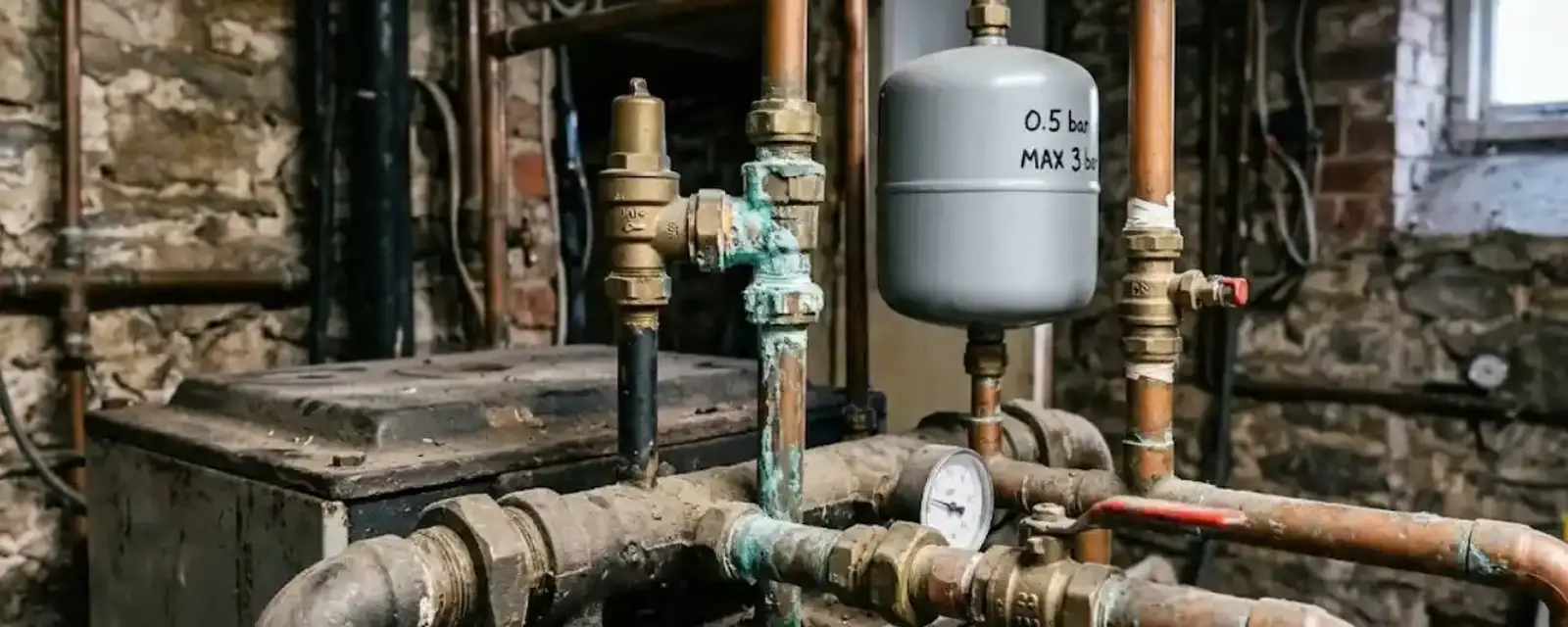
Is water coming from the boiler body? Turn the boiler off at its switch and stop adding water. A crack in those parts almost always means replacement, not repair, and we will say so plainly once a plumber has confirmed where the water is coming from. Our line is answered 24/7, and same-day appointments are available when the schedule allows.
Not every boiler leak is a crack. Valves, pump flanges, fittings and expansion tanks leak far more often, and those are repairable. A plumber needs to find the real source before anyone talks about replacement.
Two safety notes come first. If a carbon monoxide alarm sounds, leave the building and call 911. If you smell gas, leave and call from outside, as the local section below explains.
What to Do First, Before the Plumber Arrives
Take these steps in order. They protect you and limit the damage to the floor and the equipment.
- Leave if there is gas or carbon monoxide.A gas odor means leave at once and call from a safe place. An alarm for carbon monoxide means leave the building and call 911. Do not stop to investigate.
- Turn the boiler off.Use the boiler's own power switch. Do not touch any gas valve, pilot or control beyond that.
- Keep clear of the water.Boiler water can be very hot. Do not reach into a steaming leak, and keep children and pets away.
- Do not refill again and again.Repeated refilling pours fresh water onto hot metal and feeds the leak. It also hides the pressure loss a plumber needs to see.
- Protect the floor and the area.Place a tray or towels, keep electrics out of puddles and note where the water appears.
Photograph the leak and the pressure gauge before you call. That helps the dispatcher understand what is going on.
How a Crack Shows Itself
A crack rarely announces itself with a dramatic spray. It usually shows as one of these slower signs.
Water at the boiler's base.
Seams between cast iron sections can weep. You may find a damp spot or a steady puddle under the boiler.
Pressure that keeps falling.
The gauge drops over hours or days and the auto-fill valve keeps making up water. A hidden crack leaks into the firebox or the floor.
Rust trails or mineral crust.
Orange streaks or white crust along the sections mark a path where water has been escaping for a while.
Sizzling or steam at the burner.
Water reaching the flame area hisses. This points to a leak into the combustion chamber and calls for shutdown.
Rising water bills or constant refilling.
A system that needs frequent makeup water is losing it somewhere.
Each of these also has simpler causes. A weeping valve or a leaking pump flange gives the same puddle and costs far less to fix.
Why a Crack Usually Means Replacement
A cast iron boiler is built from sections that hold water and heat. A crack in one section cannot be welded back to reliable strength, and sections that have cracked once often crack again as the metal heats and cools. A heat exchanger in a modern boiler is a thin sealed part, and it is not made to be patched.
Parts for older boilers can be hard to find, and replacing a section can mean taking the whole boiler apart. When the cost of that work approaches the cost of a new boiler, replacement is the sensible move.
A crack also means the boiler has been under stress for some time. Other parts are probably worn too, and that is part of the decision.
Boiler piping, relief valves and expansion tanks are plumbing work under the UPC chapters in Minnesota's plumbing rules, chapter 4714. Replacing a cracked boiler is a larger job that involves the heat source as well, so confirm who is licensed for each part.
Boiler leaking? Call the 24/7 line
Describe where the water is and what the gauge shows. We schedule same-day appointments when available and give the price clearly before work starts.
About Temporary Patch Products
Stores sell sealers and putties marketed to stop boiler leaks. They are not a repair. At best they slow a leak for a short time, and at worst they clog small passages inside the boiler and the radiators.
Using one can also hide the problem from a plumber and add cleanup work. If you need to get through one cold night, shutting the boiler off and using safe supplemental heat is a better plan than a sealant.
Repairable Leak or Cracked Boiler?
A plumber sorts leaks into two groups. The group decides what happens next.
Usually repairable.
- Leak at a valve, fitting or union.
- Leak at the circulator pump flange.
- Relief valve that drips under pressure.
- Failed expansion tank or fill valve.
Usually replacement.
- Leak between cast iron sections.
- Cracked heat exchanger.
- Water inside the combustion chamber.
- Repeat leaks at several sections.
If the leak turns out to be a fitting, our boiler repair service handles it. If the leak sits in the boiler body, you have a decision to make about replacement.
Rosemount: January Cold and Two Gas Utilities
The MN DNR's Twin Cities climate normals for January list average lows of about 9 to 11 degrees Fahrenheit at the airport station. That is not a Rosemount reading, but it shows how long a cold snap lasts. A boiler failure in January can leave a house without heat and put pipes at risk, so act the same day.
The City of Rosemount says residential areas are served by two gas utilities, Minnesota Energy Resources and Xcel Energy. Which one serves you depends on your address. If you smell gas, leave at once.
For a gas odor, Minnesota Energy Resources customers call 800-889-4970 from a safe place. Xcel customers leave and call 911 once outside. Do not relight or touch any gas appliance.
Source: MN DNR Twin Cities Climate Calendar for January, 1991-2020 normals, average minimum, airport station. City of Rosemount Utilities page (rosemountmn.gov/149/Utilities): two residential gas utilities. Minnesota Energy Resources emergency page: gas odor line and carbon monoxide guidance. Xcel Energy customer safety brochure: leave and call 911.
Choosing Between Repair and Replacement
Once the leak source is confirmed, the decision usually follows five checks.
Confirm the source.
A plumber finds where the water comes from, with the boiler off and cool.
Judge the boiler's age and state.
An old boiler with cracking in one place often has more wear elsewhere.
Price both paths clearly.
Ask for the repair option, if there is one, and the replacement option side by side.
Weigh the heat in the house.
A repair that fails again in January costs more in the end than a replacement now.
Check the rest of the system.
Look at the radiators, piping, expansion tank and controls. They may need work with a new boiler.
What Changes the Price of Replacement
We do not post numbers because they differ with each house. These are the factors that move the price.
The price is given clearly before work starts, with the repair and replacement options explained. Ask your homeowner's insurance provider whether a sudden leak is covered, since policies differ.
When the Leak Spreads: Frozen or Burst Pipes
A dead boiler in a cold house can lead to frozen and split pipes. If the house has gone cold, open cabinet doors on exterior walls, keep the main living space as warm as you safely can and watch for any water in places that should be dry.
If a pipe has already split, shut off the water main and call right away. Our burst pipe repair service covers that work.
We also serve neighbors in Hastings and Farmington, and the same first steps apply there.
Quick Triage Table
Use this table when you are trying to decide how urgent the situation is.
| What you see | How urgent | What to do |
|---|---|---|
| Carbon monoxide alarm sounding. | Emergency. | Leave the building and call 911. |
| Gas smell. | Emergency. | Leave and call the utility or 911 from outside. |
| Steady leak from the boiler body. | Same day. | Boiler off, clear the area, call a plumber. |
| Slow pressure loss, damp spot. | Soon. | Watch the gauge and call a plumber. |
| Drip at a valve or pump. | Soon, usually minor. | Call for a repair. |
Cracked boiler questions
Rarely. Cracked cast iron sections and cracked heat exchangers are generally replaced, not repaired. A plumber should first confirm the leak is a crack, since valves, fittings and pump flanges leak more often and can be fixed.
They are not a repair. They may slow a leak for a short time and can clog small passages in the boiler and radiators. Shut the boiler off and call a plumber instead.
It can be. Hot water and steam are a burn risk, and a crack can let water reach the burner area. If a carbon monoxide alarm sounds, leave and call 911. If you smell gas, leave and call from outside.
No. Repeated refilling feeds the leak and hides how fast pressure is dropping. Turn the boiler off and have a plumber find the source.
A valve or pump leak shows up at that part. A crack shows between sections or at the heat exchanger, often with falling pressure. Only a plumber can tell for sure.
The city says two utilities serve residential Rosemount. Minnesota Energy Resources customers call 800-889-4970 from a safe location. Xcel customers leave the building and call 911 from outside. Never relight or touch a gas appliance.
The MN DNR reports January lows averaging about 9 to 11 degrees Fahrenheit at the Twin Cities airport station. A cold house in that weather puts pipes at risk of freezing, so same-day action matters.