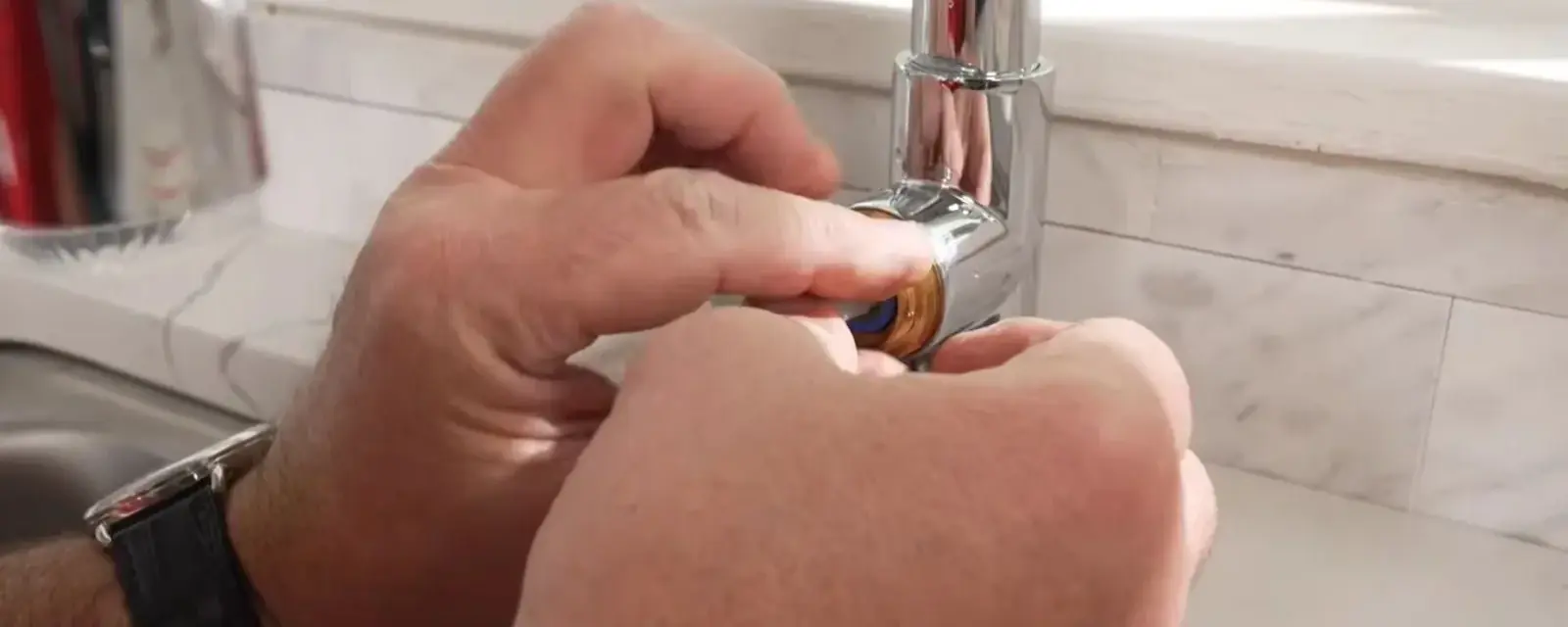
A dripping spout and a handle that wobbles usually point at the cartridge inside the faucet body. Weak flow usually points at the aerator, the small screen at the tip of the spout, or at debris pushed in from the supply lines. A hose that sticks or will not retract is its own simple repair.
This guide walks through each symptom in the order a plumber would check it. It also covers how to match the right replacement parts to your faucet, what Rosemount's hard water and spring hydrant flushing do to a kitchen faucet, and when the better choice is to replace the faucet instead of repairing it.
What the faucet is telling you
Start with the symptom. Each one narrows the cause before you touch a tool.
Dripping from the spout.
The cartridge is not sealing when the faucet is off. Wear or mineral scale on the sealing surfaces lets water creep past.
Loose or wobbly handle.
A set screw or retaining nut has backed off, or the cartridge has worn. Tightening is the first step.
Weak or uneven flow.
A clogged aerator is the most common cause. Debris in the supply lines or a half-closed stop valve is next.
Hose sticks or sags.
The pull-down hose may be kinked, the weight may have slipped, or the connection under the sink may be loose.
Water at the base.
Worn seals around the cartridge or spout base let water seep out where the spout swivels or the handle meets the body.
Two symptoms at once, such as a drip and a loose handle, usually mean the cartridge is the main suspect.
Dripping spout: look at the cartridge
Inside most single-handle kitchen faucets is a cartridge that opens and closes the flow and mixes hot and cold. When its sealing surfaces wear or scale over, water slips through even with the handle down. That is the drip you hear at night.
Replacing the cartridge is a common repair. Turn off both stop valves under the sink, open the faucet to relieve pressure, then remove the handle and retaining parts to pull the cartridge. Take the old cartridge to match against the new one, and photograph how everything sits before you take it apart.
Follow the manufacturer's guidelines for your faucet's cartridge and hose parts, because Grohe models vary. Work beyond the faucet itself, such as supply lines and drains, follows Minnesota Rules chapter 4714 and the UPC it adopts.
If the cartridge looks fine and the spout still drips, the valve seats inside the body may be damaged. That is the point where a repair starts to cost more than the faucet is worth.
Low flow: work from the tip back to the valve
Check the cheapest, easiest causes first. This order saves the most time.
Clean the aerator.
Unscrew the aerator from the tip of the spout. Rinse out grit and rub off the scale, or soak the parts in vinegar for a while and brush them clean.
Run the faucet without it.
With the aerator off, run the water into the sink. If flow is strong now, the aerator was the problem. If not, keep going.
Check the stop valves.
Make sure both valves under the sink are fully open. A partly closed valve restricts flow and is easy to miss.
Look at the supply lines.
Flex hoses can kink behind the cabinet. Debris can also lodge where the line meets the faucet. Disconnect carefully and flush into a bucket.
Suspect the cartridge or hose.
If everything upstream is clear, a scaled cartridge or a collapsed inner hose is the likely cause. Call a plumber if you do not want to take the faucet apart.
Check whether the weak flow is at only one faucet or at every tap in the house. If it is every tap, the problem is not your Grohe.
Scale and spring flushing in Rosemount
The City of Rosemount lists its water at 17 grains per gallon and calls it hard. Hard water leaves mineral scale on aerators and inside cartridges, which is why many kitchen faucets here clog or start to drip before they look worn. A habit of cleaning the aerator now and then slows that buildup.
The city flushes every hydrant in spring, and its Public Works FAQ says a temporary drop in pressure and some discoloration are normal when that happens. If your faucet suddenly runs weak or sputters after flushing, grit may be sitting in the aerator. Run the cold taps for a few minutes until the water clears, then clean the aerator before you blame the faucet.
The city also suggests holding off on laundry until the water runs clear. Treat your kitchen faucet the same way: let it clear, then check the screen.
Source: City of Rosemount Water page and Public Works FAQ (hardness, 17 grains per gallon, spring hydrant flushing, temporary pressure drop and discoloration, running cold faucets until clear).
Faucet still dripping after you tried?
Call and describe what you have already checked. A plumber can tell you whether it is the cartridge, the seats or time for a new faucet.
Repair it yourself or call a plumber
Some jobs suit a careful homeowner. Others are worth a phone call.
| Problem | Homeowner-friendly? | Call when |
|---|---|---|
| Clogged aerator | Yes, with basic hand tools | Flow stays weak with the aerator removed. |
| Loose handle | Yes, after a quick look at the set screw | The handle stays loose after tightening. |
| Dripping spout | Possible if you are comfortable closing the stop valves and removing a cartridge | The drip continues with a new cartridge. |
| Hose will not retract or leaks under the sink | Possible | You find a split hose or a leaking connection and cannot trace it. |
| Stop valve will not close or leaks | No | Always, because forcing the valve can cause a leak you cannot stop. |
If the stop valves will not shut off fully, stop work and call. Do not take the faucet apart with water still reaching it.
Pull-down hose and handle problems
The pull-down hose runs from the spout down through the sink to a connection under the counter. A small weight on the hose helps it slide back. If the hose sticks, check for tangled supply lines behind it and make sure the weight sits where the instructions put it.
A leak under the sink during use often means the hose connection has worked loose or the hose has split. Tighten the connection by hand where the design allows it, and look for a seal that is missing or flattened.
For a loose handle, find the set screw, which often hides under a cap or trim piece. Snug it up and test. If the handle still wobbles, the cartridge or its retaining nut is the next stop.
How to match the right parts to your Grohe
Parts are not interchangeable across models, so match before you buy.
- Look for the model markings.Check the faucet body, under the sink and on the supply connection for a model number or marking.
- Find the manual.If you kept the paperwork, the parts list is there. Manufacturers also post manuals online for most models.
- Bring the old part.Take the old cartridge or hose with you and compare it side by side with the replacement before you leave.
- Check the finish and hose style.Hose style, finish and spray options vary by model, so confirm each one.
- Stop if you cannot confirm a match.A wrong cartridge can seal poorly or not fit. If you are guessing, call for help.
We do not list part numbers here because they change by model and year. Your faucet's own markings and manual are the reliable source.
What decides repair versus replace
There is no single answer, and we do not guess a figure without seeing the faucet. These factors move the decision.
A clear price is given before any work starts, so you can decide on a repair or a new faucet with the facts in front of you.
When to call a plumber
If the faucet keeps dripping after a new cartridge, or the stop valves will not hold, our faucet repair visit gets to the cause and gives you a clear price before we start. When the fixture is past saving, a plumber can handle plumbing installation of a new faucet and check the shutoffs and supply lines while the cabinet is open.
We serve Rosemount and nearby towns, including Farmington and Inver Grove Heights. Same-day appointments are available when the schedule allows.
Grohe faucet repair questions
The cartridge is the usual cause. Its sealing surfaces wear or collect scale and let water pass when the faucet is off. Replacing the cartridge fixes most drips. If a new cartridge does not help, the valve seats in the body may be damaged.
Check the aerator first. Unscrew it, rinse out the grit and clean off scale. If flow is still weak without the aerator, look at the stop valves and supply lines before suspecting the cartridge.
Match the model from the faucet's markings or the manual, then compare the old cartridge to the new one before you install it. Do not rely on a guess, because cartridges differ by model.
Rosemount's Public Works says a temporary drop in pressure and some discoloration are normal during spring hydrant flushing. Grit can collect in the aerator. Run the cold taps for a few minutes until the water clears, then clean the aerator.
Look for a tangle in the lines under the sink, and check that the weight on the hose is positioned as the instructions show. A kinked or split hose will need to be replaced.
Sometimes. If the body is sound and parts are easy to find, a repair can be sensible. If the finish is failing, the body is corroded or it keeps leaking at the base, a new faucet is usually the better choice.
Yes. The line is answered 24/7 for emergencies. Close the stop valves under the sink to stop the water and call if they do not hold.