If water is running under your sink and you cannot stop it, turn the oval valve on the supply line clockwise. If it will not turn, shut the main valve on the house and call us. Our line is answered 24/7, nights and weekends included.
Most faucet trouble is slower than that. A drip, a thin stream or a handle that grinds usually points to one worn part, and the fix is often small. Rosemount Express Plumbing repairs faucets and sinks in Rosemount and nearby towns, and we give you a clear price before work starts.
Below you will find what each symptom means, how cartridge, ball and ceramic disc faucets differ, and when a new faucet is the better buy. You will also see how hard local water leaves scale in faucets and what to clear before you pay for a visit.
Water under the sink: shut it off first
Stopping the water takes a minute and saves the cabinet, the floor and often the ceiling below. Work through these in order.
- Close the fixture valve.Turn the oval handle on the supply line clockwise by hand. Do not put a wrench on an old valve, because forcing it can snap the stem and make the leak worse.
- Use the main valve if the fixture valve fails.Find the main shutoff where the water line enters the house, often in a basement or utility area. Close it fully, then open a low faucet to let the pipes drain.
- Protect the space.Empty the cabinet, lay down towels and set a bucket under any drip. Keep your hands and tools away from wet outlets.
- Cut power near standing water.If water reached an outlet or a disposal, leave that circuit off at the panel until a plumber has looked at it.
- Call the 24/7 line.Tell us what you shut off and whether the water has stopped. We will tell you whether this can wait for a same-day appointment when available or needs a visit right away.
A burst supply line is the true emergency in this trade. Braided lines can fail at the crimped end with no warning and release full house pressure into a cabinet. Everything else on this page can usually wait until a scheduled visit.
Four faucet complaints and what each one means
The symptom narrows the cause before anyone opens the faucet. Here is how we read each one.
Drip from the spout.
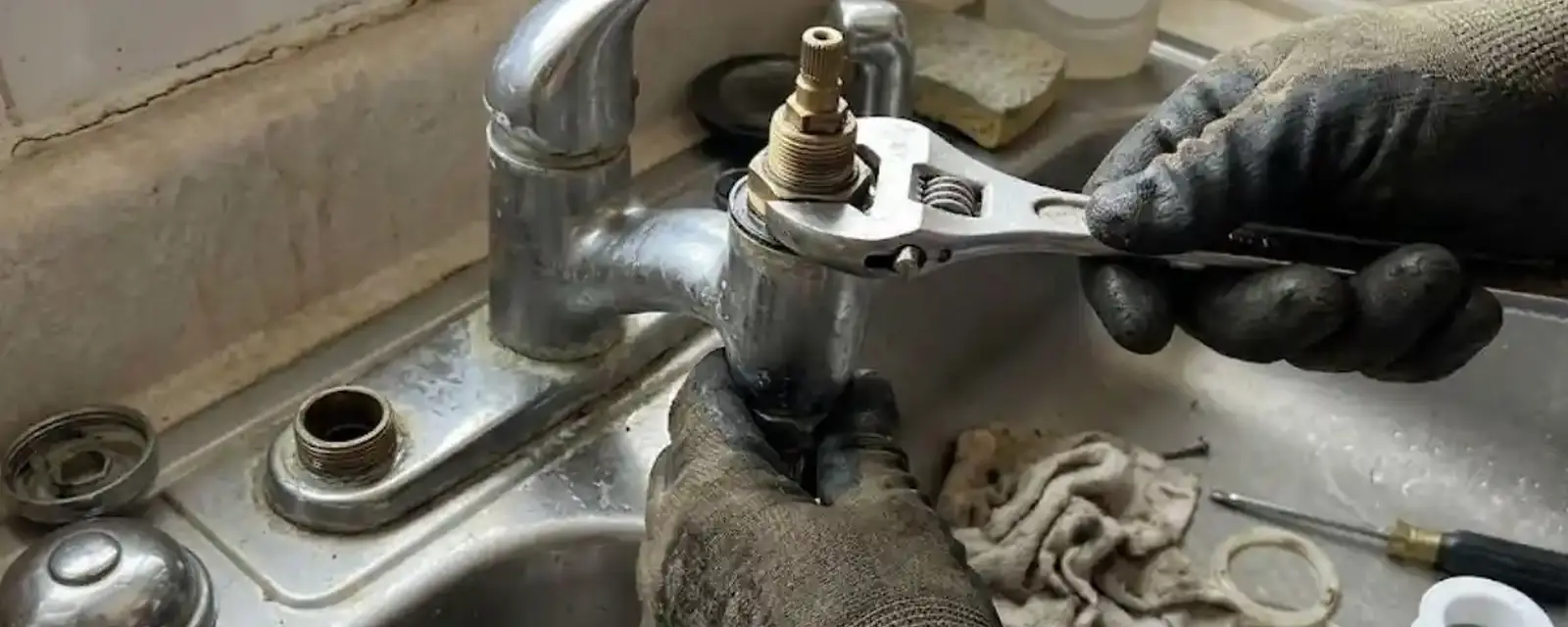
Water is slipping past a worn seal, seat or cartridge when the handle is off. A drip wastes water all day and wears the part further, so it is worth fixing soon.
Spray or seep at the handle or base.
This points to worn O-rings or a cracked body. Water at the base of the faucet can also mean a loose mounting nut, so we check that before replacing parts.
Low flow or a split stream.
A clogged aerator is the usual cause on a single faucet. If hot and cold are both weak at every tap in the house, the problem is upstream of the sink.
Shutoff valve that will not close.
Old valves seize when they sit unused. Forcing one can break it, so we replace the valve once the main is closed and the line is drained.
Cartridge, ball, ceramic disc and washer faucets compared
The inside of the faucet decides what fails and what the repair involves. This table keeps it in plain terms.
| Faucet type | Where you see it | How it usually fails | Usual repair |
|---|---|---|---|
| Cartridge | Single-handle kitchen and bath faucets | Worn seals cause a drip or a stiff handle | Swap the cartridge. |
| Ball | Older single-handle kitchen faucets with a rounded cap | Worn seats and springs leak at the base | Replace seats, springs and ball. |
| Ceramic disc | Single-handle faucets with a wide cylinder | Scale between the discs or a chipped disc | Clean or replace the disc cylinder. |
| Washer and stem | Two-handle faucets with separate hot and cold | Hardened washers and pitted seats drip | New washers, seats or stems. |
Parts for older or discontinued faucets can be hard to find. That is one reason replacement sometimes beats repair.
Why Rosemount water leaves scale in aerators and cartridges
The city lists Rosemount water at 17 grains per gallon and calls it hard. As that water evaporates at the spout, minerals stay behind. They crust over the aerator screen and collect inside cartridges and between ceramic discs, which is why a weak stream or a stiff handle shows up in so many local kitchens.
The city also flushes all of its hydrants each spring. It says a temporary drop in water pressure and some discoloration is normal afterward. If every faucet in the house runs weak or cloudy at that time, run the cold taps for a few minutes and wait before you replace any part.
Swapping a faucet is a light job, yet changes to supply lines and shutoffs still fall under the Uniform Plumbing Code (UPC) as adopted in Minnesota Rules chapter 4714. A licensed plumber knows where a quick swap ends and a code question begins.
Faucet spraying or a valve stuck open?
Call the line, tell us what you shut off, and we will say whether it can wait for a same-day appointment when available.
Clear the aerator before you pay for a visit
This takes ten minutes and fixes a large share of low-flow complaints. Clear the aerator first, because it costs nothing and rules out the simplest cause.
Unscrew the aerator.
Turn the small cap at the tip of the spout counterclockwise. Wrap a cloth around it if you need pliers, so the finish does not scratch.
Soak and brush it.
Let the screen sit in white vinegar for an hour, then scrub off the loosened scale with an old toothbrush.
Flush the spout and refit.
Run the water with the aerator off to clear loose grit, then screw it back on snug by hand.
If the stream is still weak with a clean aerator, the cause is inside the faucet or in the supply line. That is the point where a plumber's visit pays off. If scale keeps returning, our page on water softeners and filtration explains the longer-term options.
Supply lines and shutoff valves live under the sink
The flexible supply lines and the oval valves under a sink do the quiet work that a faucet depends on. Replace a line when it kinks, bulges, or shows rust stains at the fittings. A valve that has not moved in years may weep at the stem or refuse to close, and that is the moment to swap it.
A leak that returns after a dry-looking cabinet check may be coming from somewhere you cannot see. Our leak detection service tracks down hidden wet spots. If a line has actually burst, see burst pipe repair for how we handle it.
Adding a new sink or moving one calls for new supply and drain connections. That work belongs under plumbing installation, not a faucet repair.
Repair or replace: how we decide
A repair is not always the smart spend. We tell you which side your faucet is on before work starts.
Repair usually wins when.
- The faucet body is sound and only a cartridge, seat or washer is worn.
- Parts are easy to get for the make.
- The finish is in good shape.
- The problem is a single drip or a stiff handle.
Replacement usually wins when.
- The body is cracked or corroded at the base.
- Parts are discontinued or cost close to a new faucet.
- The finish is flaking or pitted.
- You are already redoing the counter or sink.
The same sink often hides other trouble. If the disposal beside the faucet is humming or leaking, see garbage disposal repair. For a toilet in the same bathroom, our toilet repair page covers the usual faults.
What decides the price of faucet and sink repair
We do not quote numbers on a web page, because the faucet in front of us decides the work. Here is what moves the price.
You hear the price before any work begins, with parts and labor explained, so you can say yes or no. If a repair does not make sense, we tell you that instead of selling a visit.
Faucet and sink repair questions from Rosemount homes
Yes. The line is answered 24/7. Close the valve under the sink or the main valve on the house first, then call and tell us what you shut off.
Overtightening a handle crushes the seal and often makes a drip worse. The drip usually means a worn cartridge, seat or washer that needs replacing.
Many people can swap a cartridge or washer with the right part and the water shut off. Call a plumber if the valve will not close, the body is corroded or the faucet is a model with no easy parts.
A clogged aerator is the most common reason, and hard water makes it likely. Unscrew it and clean it before you assume the faucet needs work.
A slow drip can wait for a scheduled visit once the valve is closed. A steady stream or spray is an emergency, so shut the main valve and call right away.
Yes, and we recommend it when a valve is stiff or a line is kinked or stained. Replacing both during a faucet visit often costs less than coming back later.
Yes. We serve Rosemount and nearby towns, and the same 24/7 line covers them. Tell us your address when you call.