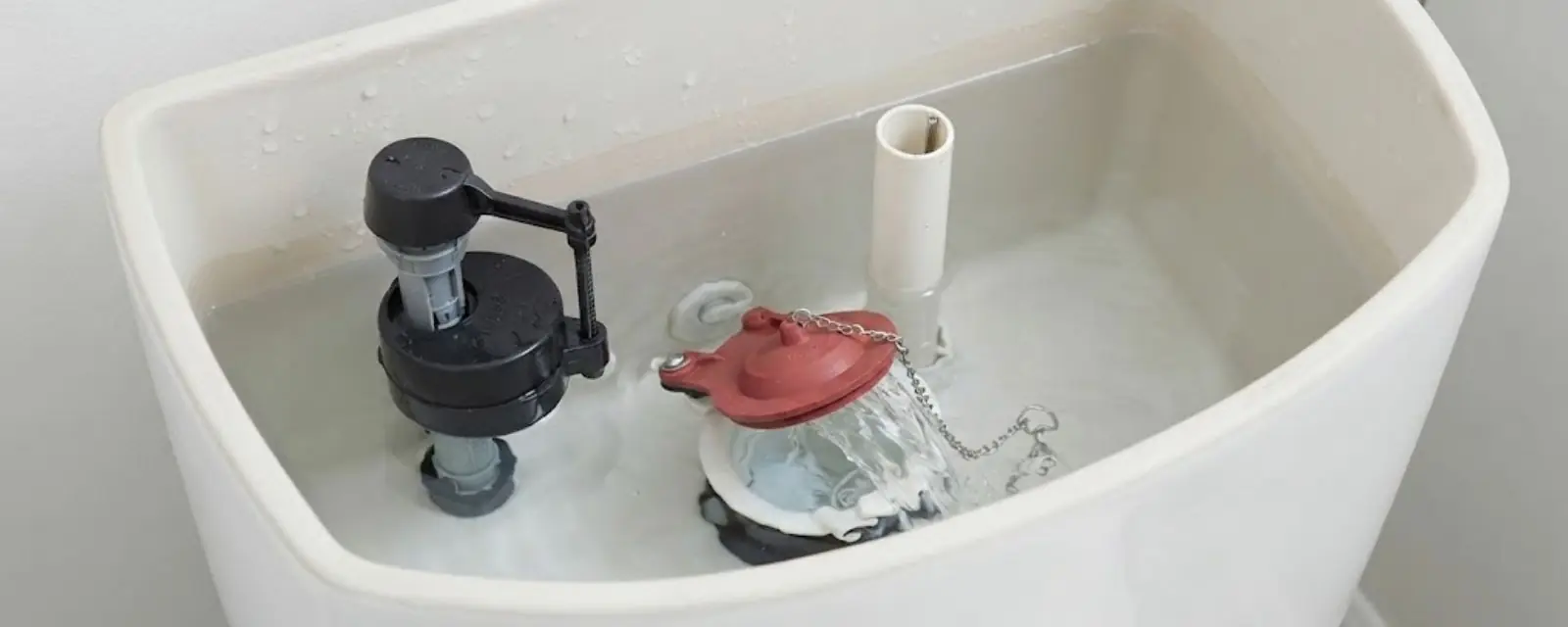
If water is rising in the bowl, reach behind the toilet and turn the small supply valve clockwise until it stops. That cuts the refill and usually stops an overflow. Then call us, because our line is answered 24/7 and we can tell you what to do next.
Not every toilet problem is a rush. A tank that runs, a handle that sticks or a base that rocks can wait for a same-day appointment when available, and many have simple causes. Rosemount Express Plumbing repairs and installs toilets in Rosemount and nearby towns, with a clear price before work starts.
This page covers how to read each symptom, how a wax ring and flange work, and when a stubborn clog is really a sewer line issue. It also explains where the city's sewer rules stop and your own pipe begins.
Toilet overflowing: stop the water first
Every second of refill adds water to the floor. Do these in order and do not flush again.
- Close the supply valve.Turn the oval or round handle on the wall or floor behind the toilet clockwise. Hand pressure is enough on most valves.
- Lift the tank lid if the bowl is still filling.Push the rubber flapper down into the drain opening, or lift the float up. This stops water leaving the tank.
- Do not flush or plunge a full bowl.A second flush adds more water. Wait for the level to drop before using a plunger.
- Contain what spilled.Lay down towels and keep children and pets out of the room. Treat the water as dirty, wear gloves and wash up afterward.
- Call the 24/7 line if water keeps rising.If the bowl fills again after the valve is closed, or other drains gurgle, the blockage may be in the line past the toilet. Call us and tell us what else is backing up.
Sewage on a floor is a health matter as well as a mess. If water is coming up in a tub or floor drain at the same time, stop using every fixture in the house. A same-day appointment when available suits the quieter faults, but a live overflow should not wait.
Running, weak, rocking and leaking: reading the symptom
Most toilet faults fall into a handful of patterns. Each points to a different part.
Running tank.
The flapper is not sealing, the fill valve is worn, or the chain is tangled. A constant trickle wastes water and often sounds like a faint hiss from the tank.
Weak or incomplete flush.
Clogged rim jets, a low tank water level or a partial clog in the trap all cause this. Mineral scale in the rim holes is common with hard water.
Rocking base.
A loose bolt, an uneven floor or a failed wax ring lets the toilet move. Movement breaks the seal and can leak slowly under the base.
Water at the floor.
This can come from a failed wax ring, a loose tank bolt, a bad supply connection or sweating. Finding the source takes a dry-towel check at each joint.
Clogs, wipes and the pipe you own
The City of Rosemount says wipes of any kind must not be flushed, including ones labeled flushable. Its Sanitary Sewer page adds that a flushable label does not mean the wipe is biodegradable. The same do-not-flush list names diapers, facial tissue, paper towels, cotton balls and swabs, dental floss, hair and kitty litter. If your toilet clogs often, check what is going down it before you blame the toilet.
The city runs the public sewer, and the Metropolitan Council treats the flow. Homeowners own the private pipe from the house to the street main, and the city says property owners are responsible for backups in that service line. A clog in that pipe is yours to clear. That is why a repeated backup deserves a look at the pipe, not another plunge.
Setting a toilet on a new flange or relocating one involves drain connections that follow the Uniform Plumbing Code (UPC) as adopted in Minnesota Rules chapter 4714. A simple reseat is repair, while moving a drain is a permit and inspection conversation.
Signs the clog is past the toilet
A bowl clog clears with a plunger or an auger. These signs point further down the line.
- More than one drain is slow.If the tub, sink or washer drain gurgles when the toilet flushes, the shared line is restricted.
- The bowl bubbles.Air pushed back through the trap means a blockage is trapping it downstream.
- Plunging gives no lasting relief.The water drops, then rises again within minutes of the next flush.
- The floor drain in the basement backs up.The lowest drain in the house shows a sewer blockage first.
A line clog calls for drain cleaning or sewer line cleaning. If a camera shows damage or roots, sewer line repair may follow. We explain which one applies before work starts.
Toilet overflowing or backing up?
Close the valve behind it, then call. The 24/7 line is answered and we will tell you what to do next.
Installing or replacing a toilet: the wax ring and flange
A toilet sits on a flange and seals with a wax ring. Getting that joint right matters more than the toilet model.
Shut off, drain and remove.
Close the supply valve, flush to empty the tank, and disconnect the line. Unbolt the old toilet and lift it away.
Inspect the flange.
The flange is the ring on the floor that the toilet bolts to. A cracked or low flange is the most common reason a new toilet leaks.
Set a new wax ring and the toilet.
Place the ring, lower the toilet straight down and press it to seat the seal. Tighten the bolts evenly so the porcelain does not crack.
Reconnect, test and check for rocking.
Open the valve, flush several times and look for drips at every joint. A properly set toilet does not move when you lean on it.
Caulk and finish.
Seal the base if you want, and we check that the handle and fill valve work as they should.
Installing a toilet in a new spot means new drain and supply connections. That work falls under plumbing installation.
Where each toilet leak shows up and what causes it
The location of the water tells us where to look. This is the order we check.
| Where the water appears | Likely cause | Typical fix |
|---|---|---|
| Around the base | Failed wax ring or loose bolts | Reset the toilet with a new wax ring. |
| Under the tank | Worn tank-to-bowl gasket or loose bolts | Replace the gasket and tighten the bolts. |
| At the supply connection | Loose or worn supply line | Replace the supply line or valve. |
| Down the outside of the tank | Condensation from cold water in a warm room | Check the fill valve or add an insulated liner. |
Always confirm the water is clean supply water and not a slow drain leak before choosing a fix.
What drives the price of toilet repair and installation
A flapper swap and a full replacement are very different jobs, so we do not publish numbers. These factors set the price.
You get a clear price before work starts, with the parts and labor explained. If your toilet is old and a repair would not last, we say so and show the replacement option.
Toilet repair and installation questions
Yes. The line is answered 24/7. Turn the supply valve behind the toilet clockwise to stop the refill, then call us.
A worn flapper or fill valve is the usual cause. Both are inexpensive parts, and a plumber can replace them in a short visit.
No. The City of Rosemount says wipes of any kind should not be flushed, and a flushable label does not make them biodegradable. They are a common cause of toilet and line clogs.
It may be, even if the floor looks dry. A rocking toilet has usually lost its wax ring seal, so it should be reset before it leaks under the floor.
If other drains gurgle or back up when you flush, the blockage is past the toilet. We check the private sewer line and explain the options.
Yes. We remove the old toilet, check the flange, set a new wax ring and test the new toilet for leaks and movement.
The city says the owner holds the private pipe between the house and the street main, including any backup that starts in it. The city handles the public sewer main.