Glacier Bay is a house brand. Big-box stores sell it, and many other brands install the same way. Whatever you bought, follow the instructions in the box. Models differ in bolt layout, tank hardware and fill valve, so the manual wins over any general guide.
This article covers the work in the order you will do it, how to decide between a wax ring and a wax-free seal, what to look for at the flange, and what a toilet that clogs right after installation may be telling you. It also covers what the City of Rosemount says about wipes, and who owns which part of the sewer line.
Gather these before you touch the old toilet
A toilet swap goes badly when you stop halfway for a missing part. Lay everything out first.
- The new toilet and its box contents.Check the bowl, tank, seat, bolts and tank hardware against the parts list in the box before you start.
- A new seal.Use a new wax ring or a wax-free seal. Never reuse the old one.
- Closet bolts and a new supply line.Old bolts are often corroded. A fresh supply line removes one more leak risk.
- Basic tools.An adjustable wrench, a putty knife, a level, a small bucket, a sponge and rags will cover most of it.
- A helper for lifting.A bowl is heavy and awkward. A second pair of hands protects your back and the flange.
Also keep a flashlight handy. The flange and the floor around it are easier to judge with good light.
Removing the old toilet
Take your time here. Rushing is how people crack a flange or soak a floor.
Shut off the water and empty the tank.
Close the stop valve behind the toilet, flush, and hold the handle until the tank is nearly empty. Sponge out what remains.
Disconnect the supply line.
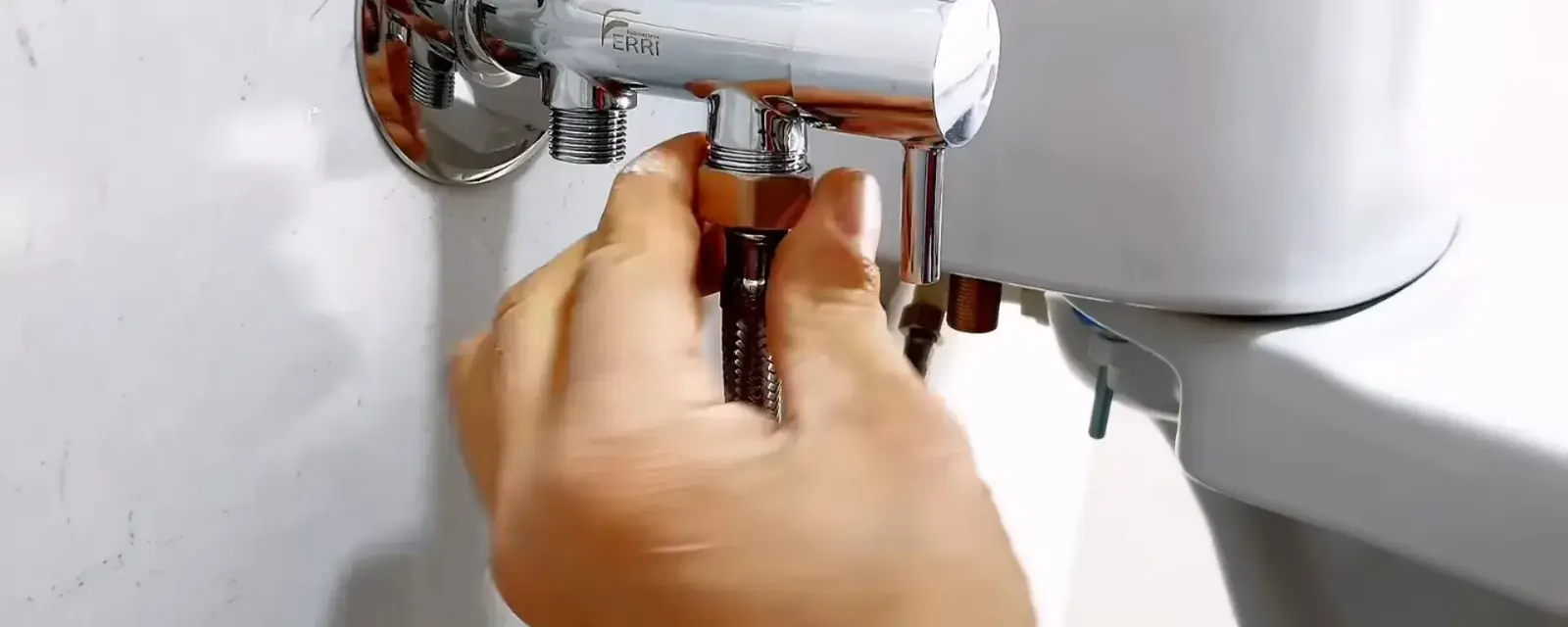
Loosen the connection at the tank with a bucket underneath. Some water will drip out.
Unbolt the tank if it is separate.
On a two-piece toilet, remove the bolts that hold the tank to the bowl, then lift the tank off and set it aside.
Remove the closet bolts and lift the bowl.
Take off the nuts at the base, rock the bowl gently to break the seal, and lift straight up. Tip it into a bucket or onto old towels because water will spill out.
Scrape and plug the opening.
Remove the old seal from the flange with a putty knife. Stuff a rag in the pipe opening to block sewer gas while you work, and take it out before you set the new bowl.
Do not set the old bowl down on a finished floor without protection. Old seal residue stains easily.
Check the flange before you set anything
The flange is the ring on the floor that the toilet bolts to and that carries the drain. It must be firmly attached, sound and at a height that lets the bowl sit solid. If the flange is cracked, rusted or loose, fix it before you install the new toilet.
Look at where the flange sits compared to the finished floor. If new flooring was added since the last toilet went in, the flange can end up too low and the seal will not compress properly. A flange repair or spacer may be needed, and the right choice depends on the flange material and how it was installed.
Setting a toilet on an existing flange is a task Minnesota Statutes section 326B.46 allows an owner to do on a home they live in, unless a local ordinance forbids it. New drain connections follow the UPC chapters adopted in Minnesota Rules chapter 4714.
If you see rot in the subfloor, a bent flange or a drain pipe that seems loose, stop and get the problem looked at. A new toilet on a bad flange will leak.
Stuck halfway through a toilet install?
Call and tell us where you stopped. Same-day appointments are available when the schedule allows.
Wax ring or wax-free seal
Either can work. Pick one and follow the maker's instructions for that seal.
Wax ring.
- Familiar and widely sold.
- Needs a straight, careful set-down, because you cannot lift and reposition without risking the seal.
- Should be replaced if the bowl ever comes up again.
- Works best on a flange at the proper height.
Wax-free seal.
- Often forgiving if you need to adjust the bowl after setting it.
- Can be reused in some cases if the maker says so.
- Comes in styles meant for different flange heights.
- Read the packaging, because fit varies by style.
Whichever you choose, do not stack a new seal on top of an old one. Remove the old one completely.
Setting the new toilet
This is the part that decides whether the toilet leaks, so slow down.
Install the closet bolts.
Slide new bolts into the flange slots so they stand upright, and position them to line up with the holes in the bowl base.
Place the seal.
Set the wax ring on the flange, or on the bowl horn if the box says so. For a wax-free seal, follow its own directions.
Lower the bowl straight down.
Line the holes up with the bolts and set the bowl down in one motion. Press down with steady body weight and give it a slight twist.
Check level and tighten evenly.
Use a level on the bowl rim. Add washers and nuts and tighten a little at a time on each side. Stop when the bowl is snug and level, because overtightening cracks porcelain.
Attach the tank and supply line.
Fit the tank to the bowl with the gasket and bolts that came in the box. Connect the supply line, open the stop valve slowly and let the tank fill.
Flush several times and watch the base, the tank bolts and the supply connection for any drip. Run a dry paper towel around each joint to catch a slow leak.
Rosemount's wipes rule and who owns the drain
The City of Rosemount says wipes of any kind, including ones labeled flushable, do not belong in the toilet. The city also says a flushable label does not mean the product is biodegradable. A new toilet will clog on wipes as quickly as an old one, so keep a small trash can next to it.
The city runs the public sewer, and the Metropolitan Council treats the flow. You own the private pipe that runs from your house to the street main. If a new toilet clogs again and again and the bowl is not the cause, the blockage may be upstream in that private line.
That is a different job from the toilet install. A camera inspection of the private line shows whether the problem is a clog, a bellied section or a root intrusion, and it lets you decide what to fix before the next backup.
Source: City of Rosemount Sanitary Sewer page (do-not-flush list, flushable wipes statement, homeowner ownership of the private pipe from house to street main, city and Metropolitan Council roles).
If the new toilet misbehaves
Small problems after install are common and usually easy to trace.
| What you notice | Likely cause | What to try |
|---|---|---|
| Water at the base | Seal not compressed or bowl rocking | Check level, tighten the bolts evenly and look at the flange height. |
| Tank sweats or drips at the bolts | Gasket or bolt seat not tight | Snug the tank bolts evenly without cracking the tank. |
| Weak flush | Fill level, flapper or partial clog | Compare the water level to the manual and test the flapper. |
| Toilet runs after flush | Fill valve or flapper misadjusted | Adjust per the manual and check the chain slack. |
| Clogs again and again | Wipes, a drain issue or a partial blockage downstream | Stop using wipes. If it continues, have the private line checked. |
If a toilet drains slowly and other fixtures gurgle, the issue is probably in the drain line and not the toilet.
When to hand the job to a plumber
A rotted floor, a damaged flange, a stuck closet bolt that will not budge or a toilet that keeps leaking at the base are all good reasons to call. Our toilet repair visit covers leaks, running tanks and clogs. For a new fixture, bad flange or a full swap, our plumbing installation work covers it from the old bowl to the new seal.
We serve Rosemount and nearby towns, including Apple Valley and Inver Grove Heights. You get a clear price before work starts.
Toilet installation questions
Many homeowners do. It is a house brand sold at big-box stores, and the box has its own instructions, which you should follow for bolts, tank hardware and fill valve. The flange and the seal matter most.
Yes, with a wax ring. Never reuse one after the bowl has been lifted. A wax-free seal may be reusable in some cases, but only if the maker says so on the packaging.
It should be solid, free of cracks and level with or slightly above the finished floor. If it is loose, rusted, broken or too low, fix it before setting the new bowl.
The seal may not be compressed, the bowl may be rocking or the flange may be at the wrong height. Check the level, tighten the nuts evenly and look at the flange before you replace the toilet again.
No. The City of Rosemount says wipes of any kind, including those labeled flushable, do not belong in the toilet. The city also says the label does not mean the product is biodegradable.
Not necessarily. Rule out wipes and heavy paper first. If it keeps happening, the problem may be in the drain upstream. In Rosemount, the owner is responsible for the private pipe from the house to the street main.
Yes. The line is answered 24/7 for emergencies. If a toilet is overflowing, close the stop valve behind it and call.