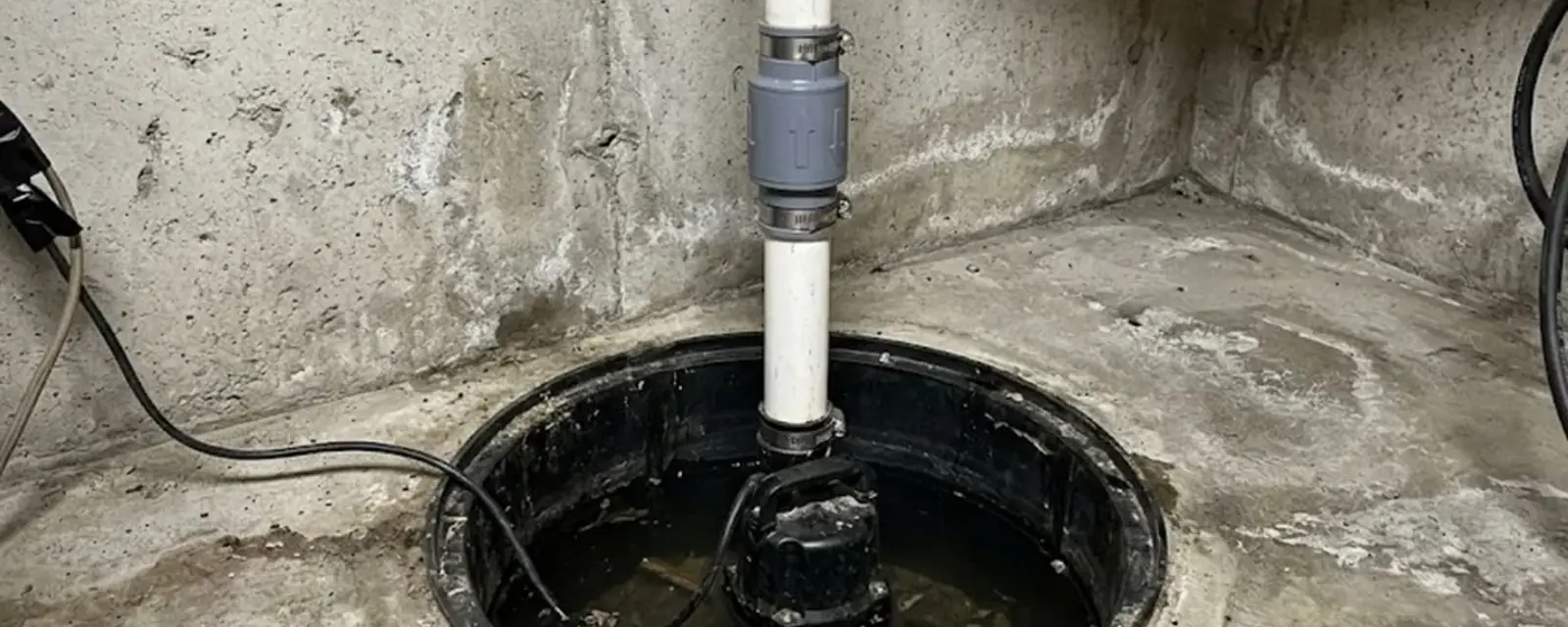
If water is rising in the basement now, do not reach into it. Standing water near a plugged-in pump and outlets is an electrical hazard. Keep clear, lift belongings off the floor and call us. The line is answered 24/7, and a dead pump is a same-day job when available.
For a planned install, this guide covers every part in order: the pit and basin, the pump, the check valve, the discharge line, the power and the test. We say plainly where DIY works and where it does not. Rosemount has no published sump discharge rule that we could find, so where the water goes needs a call to the city.
Where DIY makes sense and where it does not
Swapping a failed pump for a matching one in a clean pit takes a few hours with basic tools. You unplug, disconnect the discharge, lift the old pump and set the new one. A new check valve and a quick test finish the job.
Everything beyond that has more ways to go wrong. A new pit means breaking and patching concrete. A new discharge line means digging, routing and checking where the water ends up. New power may mean an electrician. Pick the part you are confident in and hand over the rest.
Minnesota Statutes section 326B.46 lets an owner do compliant plumbing on a home they live in unless a local ordinance forbids it. Compliance means meeting the standards in the Uniform Plumbing Code (UPC) as adopted by the state.
Which jobs are fair DIY
Match your project to the row. If it falls in the last column, call.
| Job | DIY fit | Why | Hire when |
|---|---|---|---|
| Replace a pump in an existing pit. | Good. | Same footprint, same discharge, short job. | The pit is cracked, silted up or too small. |
| Replace a check valve. | Good. | Cut, clamp, test. | The discharge line is hard to reach or rusted. |
| Install a battery backup pump. | Fair. | Second pump and a controller, needs care in the pit. | Space is tight or the system is unfamiliar. |
| Cut a new pit in the slab. | Hire. | Heavy breaking, dust, patching, correct depth and level. | Always, unless you have done it before. |
| Run a new buried discharge line. | Hire or plan carefully. | Needs 811, slope, outlet choice and a check that the destination is allowed. | Any doubt about where the water goes. |
| Add an outlet or circuit near the pit. | Hire an electrician. | Wet location, protection and code. | Always. |
A pit with a pump that runs constantly may have a drainage problem, not a pump problem. That calls for a visit, not a swap.
Choosing a pump and basin
The pump has to fit the pit and the job. A bigger pump is not always better.
Submersible or pedestal.
A submersible sits in the water, runs quietly and fits a covered pit. A pedestal has its motor above, is easier to service and is louder.
Float switch type.
A vertical float needs less width. A tethered float needs room to swing. A stuck float is the most common cause of a pump that will not start.
Pump power and head.
Match the pump to the height and length it must lift water. A short, low run does not need the biggest motor, and an undersized pump runs constantly.
Basin size and lid.
The basin sets how long a cycle runs. A sealed lid keeps debris and odor out. Gravel under the basin keeps it level and draining.
Backup option.
A battery backup or water-powered unit helps in an outage, which often comes with the storm. Consider it for a basement that has flooded before.
Installing the pump, step by step
This assumes an existing pit that is sound. If the pit is cracked or tiny, stop and call.
Prepare the pit.
Unplug the old pump, bail out the water and clear silt and stones. Check the basin for cracks and set a layer of gravel if the bottom is soft.
Set the new pump.
Thread the discharge pipe and set the pump on a flat base, not on loose stones. Keep the float free of the wall and of the cord.
Fit the check valve.
Install it on the discharge pipe above the pump with the arrow pointing out. A small relief hole in the pipe below it prevents an air lock.
Connect the discharge.
Join the pipe to the discharge line with fittings rated for the pipe. Keep the run short and the slope away from the house.
Power and test.
Plug into a ground-fault protected outlet. Pour in water until the float lifts, watch the pump run, and confirm the pit empties and the check valve holds.
Our sump pump installation and repair service covers all of these steps and the harder jobs around them, including pit work and discharge routing.
Not sure the install is yours to do?
Call us. We will tell you which parts are fair DIY and which to leave, with a clear price before work starts.
Power, GFCI and the discharge line
The pump should plug into its own ground-fault protected outlet within reach of the cord. Do not use an extension cord. If there is no outlet near the pit, an electrician should add one. Test the GFCI button monthly, since a tripped GFCI is a common reason a pump quits.
The discharge line should carry water away from the foundation, not back toward it. It should not freeze shut and it should not send ice across a walkway or onto a neighbor's lot. Winter ice at the outlet can back water up into the pit, so plan an outlet that stays open.
Call 811 before you dig a trench for a buried line. Minnesota law requires notice, with at least 48 hours not counting weekends and holidays. A new run also affects where water ends up, so confirm the plan before you cut.
What Rosemount says, and does not say, about discharge
We looked for a Rosemount rule on where a sump pump may discharge and found none published on the city's utility, sewer or stormwater pages. Discharge rules are set locally, and connecting a sump to the sanitary sewer is commonly restricted. Do not assume a floor drain or a laundry tub is an allowed outlet.
Call the city Building Permits and Inspections office at 651-322-2024 and ask where your discharge may go and whether your project needs a permit. A city sewer plan from 2007 describes sump pumps as inflow into the sanitary system that the city wants to reduce. That is a plan, not an ordinance, but it shows the city's concern.
Minnesota Statute 326B.46 lets owners do compliant plumbing on a home they own and occupy, unless a local ordinance forbids it. Twin Puddles Park on Dodd Boulevard is named for the lack of storm sewer in that neighborhood. Some Rosemount areas have no storm sewer to receive discharge, so ask the city where yours can go.
Source: City of Rosemount Sanitary Sewer, Stormwater, Building Permits and Inspections pages and Twin Puddles Park page (rosemountmn.gov), 2007 Rosemount sanitary sewer system plan, Minnesota Statutes 326B.46 (Revisor of Statutes).
Test it before you trust it
A pump you have never tested is a pump you hope works. Run through these once you are done and again each season.
- Pour water in the pit.The float should lift, the pump should start and the pit should empty without short cycling.
- Watch the check valve.When the pump stops, water should not fall back into the pit. Frequent restarts mean the valve is stuck or missing.
- Check the outlet.Walk outside while the pump runs and watch the discharge. Water should leave cleanly and move away from the foundation.
- Press the GFCI test button.It should cut power and reset cleanly. If it trips on its own, there is a moisture or wiring issue.
- Look at the float and pit.Remove silt, stones and debris so nothing blocks the float.
When to hire, and what neighboring towns say
Hire us when the pit needs cutting, the discharge route is unclear or the pump keeps running. Those cases often point to a bigger drainage question, which our basement waterproofing work addresses. You get a clear price before work starts.
Neighboring towns publish their rules. Farmington's city ordinance prohibits sending water from a sump pump or foundation drain into the sanitary sewer. If you live in Farmington, that rule applies to you. Apple Valley's city plan names sump pumps as an inflow source and lists a sump pump inspection program, so owners in Apple Valley should expect that discharge matters there too. Use those rules as a reminder, and check your own city's.
DIY sump pump questions
Minnesota Statute 326B.46 lets owners do compliant plumbing on a home they own and occupy, unless a local ordinance forbids it. Confirm with your city before you start.
We found no published Rosemount discharge rule. Discharge rules are set locally, and a sanitary sewer connection is commonly restricted. Call the city Building Permits and Inspections office at 651-322-2024 before you decide.
Yes. Without one, water in the pipe falls back into the pit when the pump stops, and the pump restarts again and again.
Plug the pump into a ground-fault protected outlet in a wet location, and have an electrician add one if there is none near the pit. Avoid extension cords.
Not necessarily. It may be undersized, have a stuck float or be handling heavy groundwater. A missing or failed check valve causes the same pattern.
The city says the park is named for the lack of storm sewer in that neighborhood. Some areas have no storm sewer for discharge, so ask the city.