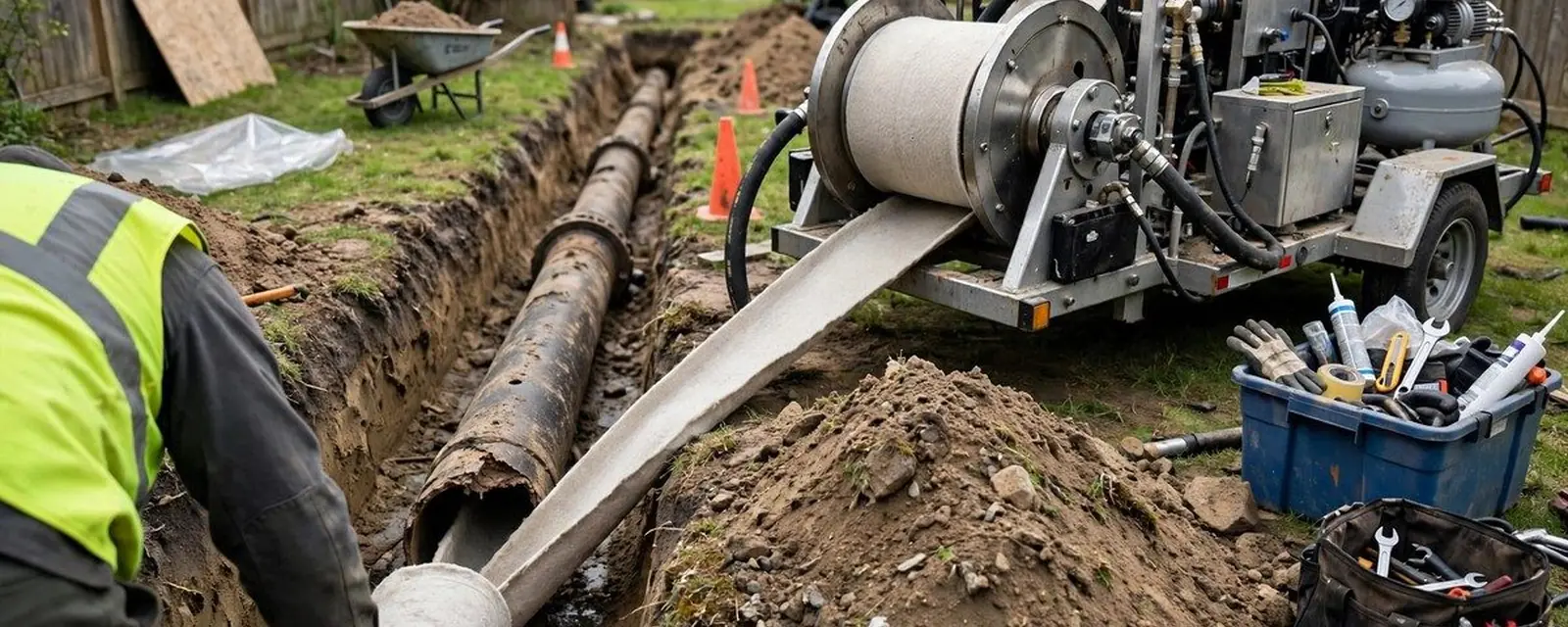
Lining is priced by the job, not by a formula. The main drivers are how long the pipe run is, how wide the pipe is, how hard it is to reach, how much cleaning the old pipe needs first, and what the camera shows inside. We give the price clearly before work starts, and we do not quote numbers in a blog post because every line is different.
Lining is also not right for every pipe. A collapsed section or a badly shifted joint can stop a liner from going through, and in that case digging is the honest answer. This guide explains how to tell the two apart and what each choice means for your yard.
If you own a Rosemount home, there is also a property-line question to settle first. We cover that in the local section below.
How Pipe Lining Works, Start to Finish
A crew first cleans the old pipe so the liner can bond to bare walls. They then run a camera through it to see the cracks, roots and joints. A felt tube soaked in resin is pulled or inverted into the pipe, inflated against the walls and cured until it hardens into a new pipe inside the old one.
When the cure is done, side connections are reopened so branch lines still work. A final camera pass shows the finished surface and confirms the flow. The result is a smooth, jointless pipe with a smaller inside diameter than before, which is why the diameter figure matters.
Because the work goes through existing access points, the lawn, driveway and landscaping mostly stay as they are. Most digging is limited to a small pit at one end.
Lining a sewer pipe is plumbing work under the plumbing standards in Minnesota Rules chapter 4714. Digging the access pits requires a Gopher State One Call locate under Minnesota Statutes chapter 216D, so call 811 before any excavation.
What Moves the Price Up or Down
No two sewer lines match, so the price follows the line. Here are the factors that change the number.
We explain the price before work starts, and the camera findings are what we base it on. If the camera shows the pipe is not a candidate for lining, we tell you so instead of selling you the wrong repair.
When Lining Is a Good Fit
Lining works best on pipes that are old and rough but still in line. These conditions point toward it.
- Cracks and hairline breaks.The pipe has splits but is still round and holding its position underground.
- Root intrusion at joints.Roots enter at the seams. A jointless liner removes those entry points once the roots are cut out.
- Pipe in decent alignment.The camera shows a continuous run without major sags or steps between sections.
- Hard-to-dig locations.The pipe runs under a driveway, patio, mature tree or finished landscaping where digging costs more than the repair itself.
- Repeated stoppages.Cleaning keeps working for a while and then roots return. The line needs a better surface, not another cleaning.
Lining vs Dig and Replace
Both fixes end with a working pipe. They differ in disruption, in what they can repair and in how the project feels for your property.
Trenchless lining.
- Leaves the yard, driveway and landscaping mostly alone.
- Needs a pipe that is intact enough to carry a liner.
- Seals cracks and joints in a smooth new surface.
- Reduces the inside diameter slightly.
Dig and replace.
- Opens a trench along the full path of the pipe.
- Works on collapsed, offset or sagging pipe.
- Lets the crew correct the slope along the run.
- Needs restoration of lawn, hardscape or pavement.
A lined pipe is a repair of the existing path. A replaced pipe is a new path, which means a sag can be fixed and a low spot can be re-graded. If the camera shows a belly where water collects, lining will not remove that belly.
Find out what your pipe can take
A camera pass shows whether lining fits or digging is the answer. Call the dispatch line, ask for the clear price before work starts and talk through the options.
When Lining Is the Wrong Choice
A collapsed pipe is the plainest example. A liner cannot pass through a pipe that has caved in, and forcing it will only block the line. The pipe has to be opened and replaced at that section.
A severely offset joint is the next one. If one length of pipe has shifted so far that the next length no longer lines up, the liner will crease or bridge the gap. The edges also leave a lip where solids catch.
Pipe that has sagged into a bellied low spot is also a poor candidate. Water collects there and the problem returns. An honest contractor says so after the camera pass, and the price of the repair follows the repair that works.
What to Expect Before You Commit
A sound lining decision follows a short sequence. Skipping the early steps is how people end up paying for the wrong fix.
Clear the line.
The pipe is cleaned so the camera sees the real walls, not a coating of grease and roots.
Camera the whole run.
The plumber reviews the footage with you, showing the cracks, the joints and any sags.
Decide on the repair.
Lining, a spot repair or digging is chosen based on what the footage shows.
Get the price clearly.
The price is given before work starts, along with what it covers.
Check the finished pipe.
A final camera pass confirms the liner is smooth, connections are open and water flows.
See how an inspection works on our sewer inspection page. If the camera finds damage, our sewer line repair page explains the repair options.
Rosemount: Where the Owner's Pipe Ends and the City's Begins
The City of Rosemount says homeowners own the private pipe running from the house to the street sewer main. The city runs the public sewer, and the Metropolitan Council treats what the city collects. That means a lining job on the house side is a private project paid for by the owner, and a problem past the property line is a city matter.
The city also camera-inspects its own mains every three years. That inspection covers the public pipe, not yours, so a clean city report does not tell you anything about the pipe under your yard. The only way to know the private side is to camera it.
Any digging, including a small access pit, needs a call to Gopher State One Call at 811 first. Minnesota law requires the call, with at least 48 hours of notice, not counting weekends and holidays. The pit for a lining job is often near where your pipe meets the street, so schedule the locate before the crew arrives.
Source: City of Rosemount Sanitary Sewer page (rosemountmn.gov/243/Sanitary-Sewer): city-run public sewer, Metropolitan Council treatment, homeowner ownership of the private pipe, mains camera-inspected every three years. Gopher State One Call and MN Department of Public Safety (dps.mn.gov, Chapter 216D): call 811 before digging, 48 hours' notice excluding weekends and holidays.
Pipe Condition and Likely Repair
Use this table to see how a camera finding usually points to a repair. Your plumber confirms against the footage.
| Camera finding | Lining a fit? | Likely direction |
|---|---|---|
| Hairline cracks, round pipe. | Usually yes. | Clean, then line. |
| Roots at joints, pipe in line. | Usually yes after cutting. | Cut the roots, then line. |
| Collapsed section. | No. | Dig and replace that section. |
| Severely offset joint. | No. | Dig and replace. |
| Sag holding water. | Not for the sag. | Dig and re-grade. |
| Many branch connections. | Yes, with care. | Line and reopen each connection. |
A table is a starting point. Only your own camera footage settles the repair.
Spot Repair or Full-Run Lining
Sometimes only one section is damaged. A short sleeve can be placed over a single crack, root entry or bad joint, at a smaller scope than lining the whole run.
The tradeoff is that a spot repair leaves the rest of the old pipe as it was. If the camera shows many worn joints, repairing them one at a time can cost more in the long run than lining the full length once. Your plumber should show you both options on the footage and explain which one the pipe supports.
Choosing a Contractor and Asking Good Questions
Ask whether the price includes cleaning, the before and after camera passes, and reopening the side connections. Ask what happens if the camera shows the pipe cannot be lined. A straight answer to that last question is a good sign.
Minnesota requires a plumbing contractor to hold a state license. You can look up a license through the Department of Labor and Industry. Ask for a written scope before work starts, and keep the final video for your records.
Neighbors in Farmington and Inver Grove Heights ask the same questions, and the answers follow the same pipe facts.
Sewer lining questions
It depends on the length, diameter, access, cleaning needs, camera findings and the number of connections. We do not publish a number because the number follows your pipe. You get a clear price before work starts.
Life span depends on the product, the preparation and the install. We do not promise a number of years. Ask any contractor for the product's documentation and for what the warranty covers, in writing.
No. Collapsed pipe, severely offset joints and bellied low spots usually need digging. A camera pass tells you which category your pipe is in.
The liner reduces the inside diameter slightly, but the smooth surface moves water well. For most residential lines the result flows as well or better than the cracked pipe it replaced.
The City of Rosemount says homeowners own the private pipe running from the house to the street sewer main. The city handles the public main. Know where that line sits before you plan any repair.
Yes. Minnesota law requires a call to Gopher State One Call at 811 before any dig, with at least 48 hours of notice, not counting weekends and holidays. The pit for a lining job counts, even if it is small.
A liner removes the open joints where roots enter, so roots have far fewer ways in. Cutting existing roots before lining matters, since leftover roots can still press on the liner.