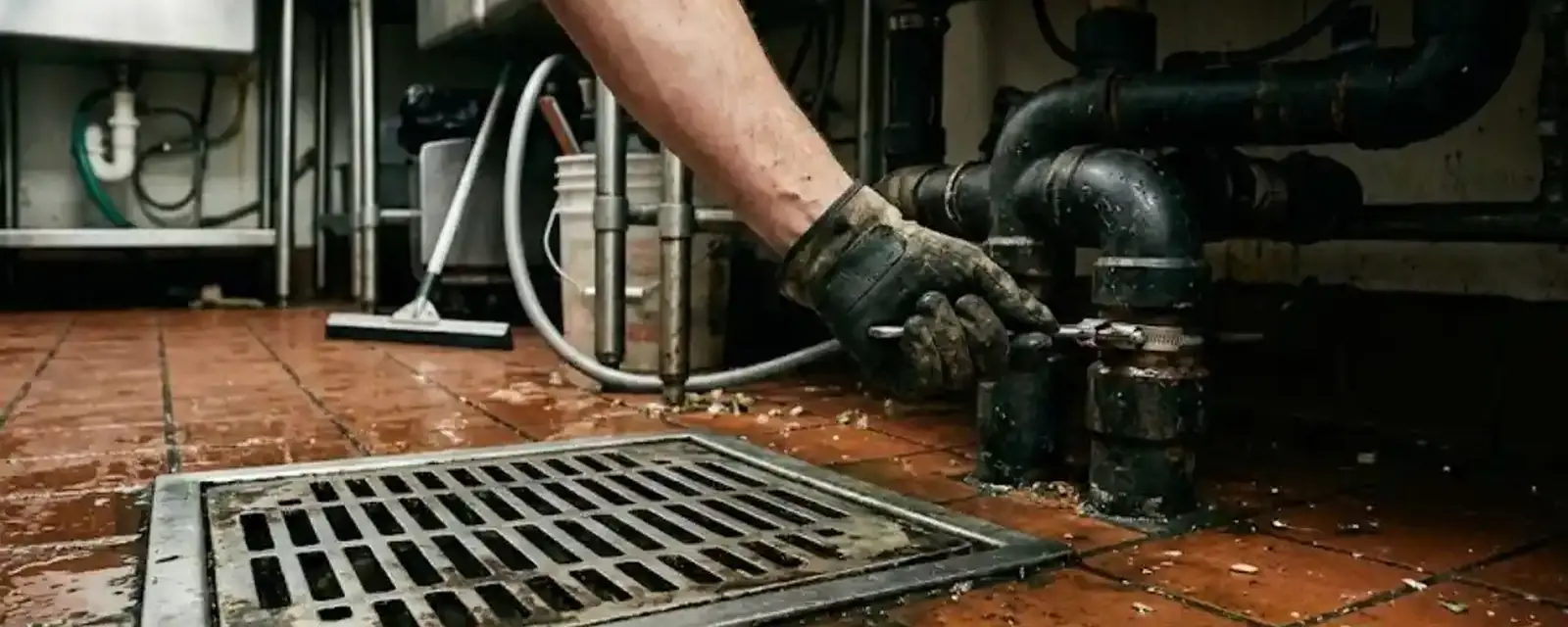
Water through a ceiling or a drain backing up? Close the nearest shutoff and move stock off the floor. Then call us. Our line is answered 24/7, so a leak at closing time or a backup on a Sunday gets the same attention as a weekday call.
Rosemount Express Plumbing serves restaurants, shops, offices and light industrial buildings in Rosemount and nearby towns. Our shop is on South Robert Trail, and we give a clear price before work starts. A business cannot always wait a day, so we treat the first phone call as the start of the fix.
This page covers what to do while you wait, the problems we see in different kinds of buildings, and three topics owners ask about often: backflow prevention, grease interceptors and storm drains. It also covers what pushes the price up or down on a commercial job.
Leak or backup at your business: what to do right now
A calm first ten minutes limits the damage. Walk through these before we arrive.
- Find and close the nearest shutoff.A leaking fixture usually has its own stop valve. If it will not close, shut the main building valve and tell staff which areas have no water.
- Stop using the affected fixtures.Do not flush restrooms or run sinks, dishwashers or floor sinks if the drain is backing up. Added water makes the flooding worse.
- Cut power where water is near equipment.Switch off circuits to wet walk-in coolers, kitchen equipment and outlets at the panel. Do not stand in water to do it.
- Protect stock and records.Move product, paper files and electronics off the floor. Photograph the damage for your own records and your insurer.
- Call the 24/7 line.Tell us the building type, where the water is and what you shut off. We will say whether it needs a visit tonight or can wait for a same-day appointment when available.
If a drain backup brings sewage into a food area, close that area to customers and staff until it is cleaned and checked. Wet restrooms with standing water can also be a slip risk, so use cones or tape.
How a commercial call differs from a home call
A shop or restaurant has more fixtures, longer pipe runs and bigger water heaters than a house. A problem in one restroom can affect a whole row of fixtures, and a floor drain may serve several rooms. We ask who was open, what was running and what changed before the problem started.
Business owners also work against the clock. We tell you early whether a fix can be finished in one visit or needs parts, so you can plan staffing and customers. Commercial buildings often have tenants, landlords and managers, so we will explain who needs to approve what before work starts.
Commercial plumbing in Minnesota follows the Uniform Plumbing Code (UPC) as Minnesota adopted it in Minnesota Rules chapter 4714, and that code addresses backflow protection and grease interceptors. Ask which devices at your building need periodic testing, and keep the paperwork where you can find it.
What goes wrong in restaurants, shops, offices and light industrial buildings
The building type shapes the failures. This is what we see most.
Restaurants and kitchens.
Grease-laden drains back up through floor sinks and prep sinks. Dishwasher lines, hand sinks and water heaters take a beating from constant use.
Retail shops.
Slow restroom drains, leaking supply lines and water heaters in back rooms are the usual calls. A leak above displays costs more than the repair.
Offices.
Restroom fixtures run constantly. Running toilets, leaking faucets and clogged floor drains are common, and they often go unreported until a ceiling stains.
Light industrial buildings.
Floor drains, hose bibs, shop sinks and larger water heaters see hard use. Debris, oil and sediment foul drains faster than in an office.
Floor drains need a trap that holds water. A dry trap lets sewer gas into the building, so we also check that drains in rarely used rooms are primed.
Backflow prevention and testing
A backflow preventer is a valve assembly that stops water from flowing backward from the building into the public water supply. Many commercial buildings have one on the main water line, on a fire line or on equipment such as boilers, carbonated drinks machines and irrigation. If one fails, dirty water can be drawn into clean lines.
These devices generally have to be tested periodically, and a failed test means repair or replacement. We do not state a schedule here, because the schedule that applies depends on your building. Ask the City of Rosemount's Building Permits and Inspections office what applies to your address, then call us for the test or repair.
A preventer that drips from its relief port, has been bumped by a forklift or is exposed to freezing needs attention soon. Our plumbing installation page covers new devices for a tenant fit-out.
Leak or backup at your business?
Close the shutoff, protect stock and call. The line is answered 24/7 for nights and weekends.
Grease traps and interceptors
A grease trap or interceptor catches fats, oil and food solids from kitchen drains before they reach the building's sewer line. It has to be emptied and cleaned on a regular schedule. When it is full, grease passes through and coats the pipe walls downstream.
That coating narrows the line until a backup follows, often at the dinner rush. Backups usually show first at the floor sink nearest the lowest drain. Clearing the line with hydro jetting removes the buildup, but the cause is a trap that is full, undersized or missed on the maintenance list.
We can look at the trap, explain what you see and tell you whether the line past it needs cleaning. Regular pumping costs less than an emergency call on a Friday night.
Storm drains outside your building and the drains you own
The City of Rosemount asks property owners to keep storm drains clear of leaves, snow, ice and other debris. Water in storm drains flows untreated to lakes, ponds and wetlands, so do not wash mop water, oil or grease into a storm inlet. If the drain near your building floods the lot, report it to the city's Stormwater Specialist at 651-322-2075.
Storm drains are separate from the sanitary sewer inside your building. The city runs the public sewer main, and property owners are responsible for backups in the private service line. A floor drain backup inside the building is your line to clear, and we can help with that through sewer line cleaning and sewer line repair.
Source: City of Rosemount, Stormwater and Sanitary Sewer pages.
Common commercial calls and the first move
Here is the first thing to try for the problems we hear about most.
| Problem | What to do first | What we check |
|---|---|---|
| Floor drain backing up | Stop using nearby fixtures and sinks. | The line past the drain and any grease interceptor. |
| Restroom overflow | Close the toilet stop valve. | The fixture, then the shared branch line. |
| Water heater leaking | Shut the water and power or gas supply. | The tank, relief valve and connections. |
| Ceiling leak | Shut the building main and clear the area. | Supply lines, drains and fixtures above. |
| No hot water in a kitchen | Check that the heater's power or gas is on. | The heater, controls and mixing valves. |
If a water heater leaks, the shutoff matters more than the repair. See our water heater repair page for the smaller units.
What drives the price of commercial plumbing work
A shop, a restaurant and a warehouse are very different jobs, so we do not publish figures. These factors move the price.
You hear the price before work starts, with the scope explained, so you can approve it with your manager or landlord. If an insurer is involved, photographs and a written scope help.
Commercial plumbing questions from Rosemount businesses
Yes. The line is answered 24/7. Close the nearest shutoff, move stock off the floor and call us so we can decide how soon to come.
We serve restaurants, shops, offices and light industrial buildings in Rosemount and nearby towns. Call and tell us what the building is used for.
Backflow preventers generally need periodic testing. The schedule that applies depends on your building, so check with the City of Rosemount's Building Permits and Inspections office.
A grease interceptor that is full or missed on its schedule is a common cause. Grease also coats the pipe downstream, which narrows the line until it blocks.
The city says property owners are responsible for backups in the private service line. The city runs the public sewer main.
The city's Stormwater page directs reports to the Stormwater Specialist at 651-322-2075. It also asks property owners to keep storm drains clear of leaves, snow, ice and debris.
Often yes. Tell us when the building is open and we will plan the visit, and a same-day appointment is available when the schedule allows.