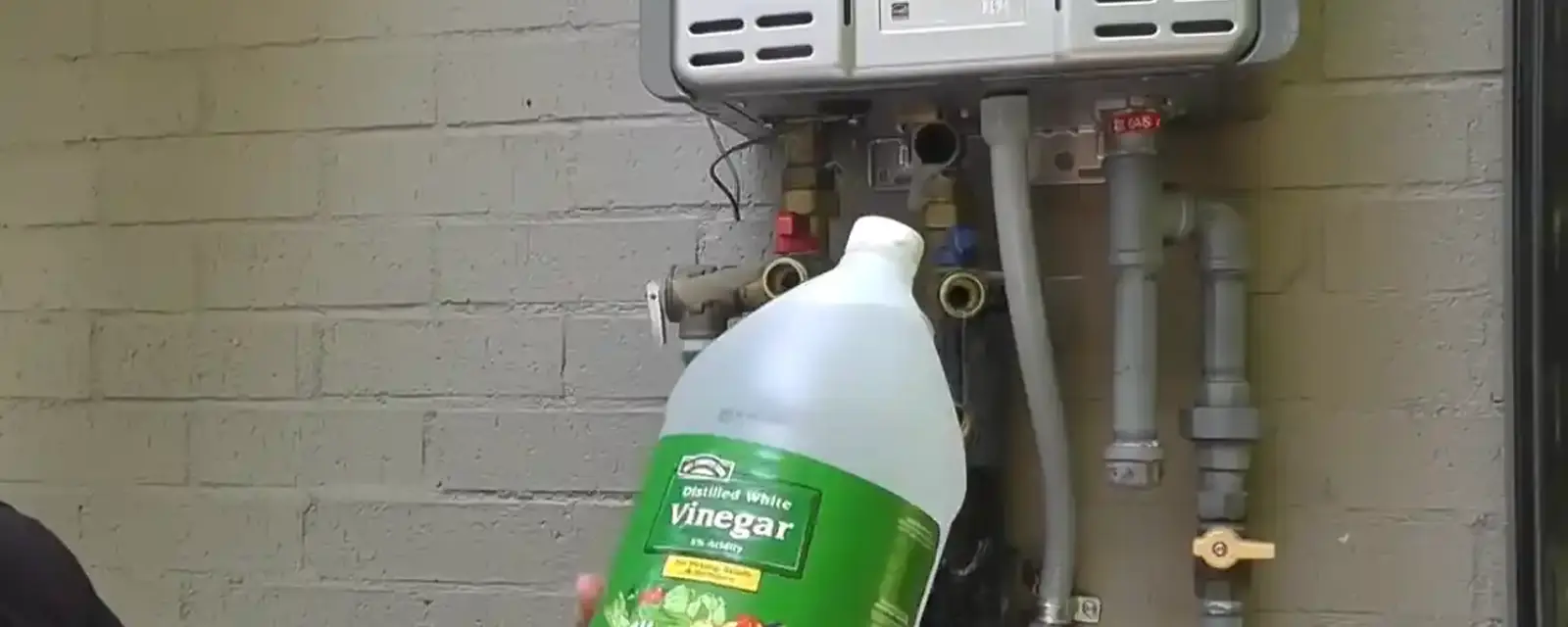
Tankless units have no big tank to hold sediment, so scale builds up inside the heat exchanger instead. That coating makes the unit work harder, slows the flow of hot water and can trigger an error code. A regular flush keeps it clear.
This guide covers each maintenance task, how to set the schedule when your water is hard, and which jobs you can handle yourself and which belong to a plumber. Gas appliances come with safety rules, so those get their own section. Follow your unit's manual first, because models differ.
The maintenance list at a glance
Use this as a quick reference, then read the detail below. Your manual sets the exact schedule.
| Task | Typical timing | Who does it |
|---|---|---|
| Descaling flush. | Yearly as a starting point, more often in hard water. | Homeowner with the right kit, or a plumber. |
| Inlet water screen. | Check at each flush, and any time flow drops. | Homeowner. |
| Intake and exhaust vent look-over. | Yearly, and after storms or nearby construction. | Visual check by homeowner, repairs by a plumber. |
| Error code review. | Whenever a code appears. | Homeowner reads it, plumber diagnoses. |
| Condensate drain check on condensing units. | Yearly. | Homeowner or plumber. |
| Professional inspection. | As the manual recommends. | Plumber. |
Timing is a starting point. The manufacturer's manual sets the real interval for your model.
How a descaling flush works
A flush circulates a mild acid solution through the heat exchanger to dissolve scale. Your unit should have service valves that make this possible.
Turn off the power and the gas supply to the unit.
Follow the manual for how to shut down the unit. Close the gas valve if the manual says to. Do not touch gas fittings beyond that.
Close the water valves and connect hoses.
Shut the inlet and outlet service valves. Connect hoses from a small pump to the service ports and run a return hose back to a bucket.
Circulate the descaling solution.
Fill the bucket with the solution the manual allows and run the pump. Let it circulate for the time the manual lists, then drain it.
Rinse with clean water.
Flush the system with clean water until the rinse runs clear. Close the ports and reopen the service valves.
Clean the inlet screen and restart.
Remove and rinse the screen, then reinstall it. Restore power and gas as the manual directs and run a hot tap to confirm normal operation.
If your unit has no service valves, ask a plumber about adding them. They make every future flush faster and safer.
The inlet screen and flow problems
The inlet screen catches grit before it enters the heat exchanger. When it clogs, hot water flow drops, and the unit may show a code or fail to ignite. It is a small part with a big effect on performance.
Check it at every flush. Pull it, rinse it under a tap and look for scale flakes or debris. If the screen is torn or the mesh is damaged, replace it with the part the manual calls for.
If flow stays weak at every hot tap after cleaning the screen, the heat exchanger may be scaled over. A plumber can confirm the cause before you start swapping parts.
Tankless unit acting up?
Call and describe the error code or the symptom. Same-day appointments are available when the schedule allows.
Why 17 grains per gallon changes your routine
The City of Rosemount lists its water at 17 grains per gallon and calls it hard. That means scale builds steadily inside a tankless heat exchanger, and a flush schedule that works for softer water may be too relaxed for a Rosemount home. Checking the unit's flow and error history gives you a better sign than the calendar.
The city treats softening as the homeowner's choice. Its 2025 water report lists real advantages, such as less scale in pipes, fixtures and water heaters, and real drawbacks, such as added sodium, regular upkeep, the salt itself and some water lost during regeneration. If you soften, you may flush less often. If you do not, plan to flush more often and keep a record.
Residential Rosemount is served by two gas utilities, Minnesota Energy Resources and Xcel Energy, according to the city. The city has a service map that shows which area is which. Know your gas provider before something goes wrong, because it determines who you call.
Source: City of Rosemount Water page and Public Works FAQ (17 grains per gallon, hard). Rosemount 2025 Drinking Water Report, section on the pros and cons of home water softening. City of Rosemount Utilities page (two residential natural gas utilities, Minnesota Energy Resources and Xcel Energy).
Gas safety comes first
If you smell gas, leave the building right away and call from outside. Do not turn lights on or off, and do not try to fix the unit. If Minnesota Energy Resources serves your address, its gas emergency line is 800-889-4970. If Xcel Energy serves you, leave the building and call 911 from a safe place.
Never relight, adjust or open a gas appliance to investigate. Venting work, gas line work and combustion adjustments belong to a licensed professional.
Checking the venting
A tankless gas unit pushes exhaust out through a vent and pulls in air. Blocked or damaged venting causes error codes and can create real safety problems.
- Look at the outdoor terminations.Make sure leaves, nests, snow and ice have not blocked the intake or exhaust opening.
- Check the joints you can see.Look for separated joints, rust streaks, white residue or discoloration on the vent pipe.
- Look for condensate trouble.On condensing models, check that the condensate drain flows freely and is not frozen or clogged.
- Watch for repeat error codes.Venting problems often show up as ignition or exhaust codes that return after resets.
- Do not alter the vent.Venting is a safety system. Changes, repairs and re-routing are for a licensed plumber.
Make the vent check part of your fall routine, before the heating season brings snow and ice around the terminations.
Reading error codes without guessing
Every manufacturer uses its own codes, so your manual is the reference. Here is how to use a code well.
Write down the code.
Note the code and what the unit was doing when it appeared, such as during a shower or at startup.
Look it up in the manual.
The manual explains each code and lists what to check first, such as the inlet screen or the vent.
Try one reset, not ten.
A single reset is reasonable. Repeated resets over days hide a problem that is getting worse.
Keep a short log.
A date and code history helps a plumber see patterns, such as codes that follow cold snaps.
Call when it repeats.
A code that returns after cleaning the screen and checking the vent needs a plumber.
Scale-related codes often appear when the heat exchanger needs a flush, so a flush is a sensible next step when the manual points that way.
Doing it yourself or calling a plumber
A flush and a screen cleaning are within reach if you have service valves and follow the manual. Venting work, gas work and any unit that keeps throwing codes should go to a licensed plumber. Our tankless water heater service covers diagnosis, repair and maintenance in the Rosemount area.
If scale is a constant fight, ask about water softener and filtration options so you can weigh the trade-offs the city's report lists. We also serve Hastings and Farmington, and you get a clear price before work starts.
Tankless maintenance questions
Many manuals call for a yearly flush as a starting point. Hard water can justify flushing more often. Check your manual and watch for falling flow or scale-related codes.
Many manufacturers allow it, but some specify their own solution and amount. Use only what your manual approves, and never mix cleaning products.
Write it down, look it up in the manual and check the inlet screen and the vent. Try one reset. If the code returns, call a plumber.
It is difficult without them. A plumber can add service valves, which makes flushing simple from then on.
The City of Rosemount lists hardness at 17 grains per gallon. That means scale builds steadily in the heat exchanger. A flush schedule and, if you choose, a softener both help. The city's 2025 report lists pros and cons of softening, and it is your decision.
Rosemount residential areas are served by two utilities, Minnesota Energy Resources and Xcel Energy. The city publishes a service map. If you smell gas, leave the building first, then call from outside.
Yes. The line is answered 24/7 for emergencies. If you smell gas, leave the building and call your gas utility or 911 first.