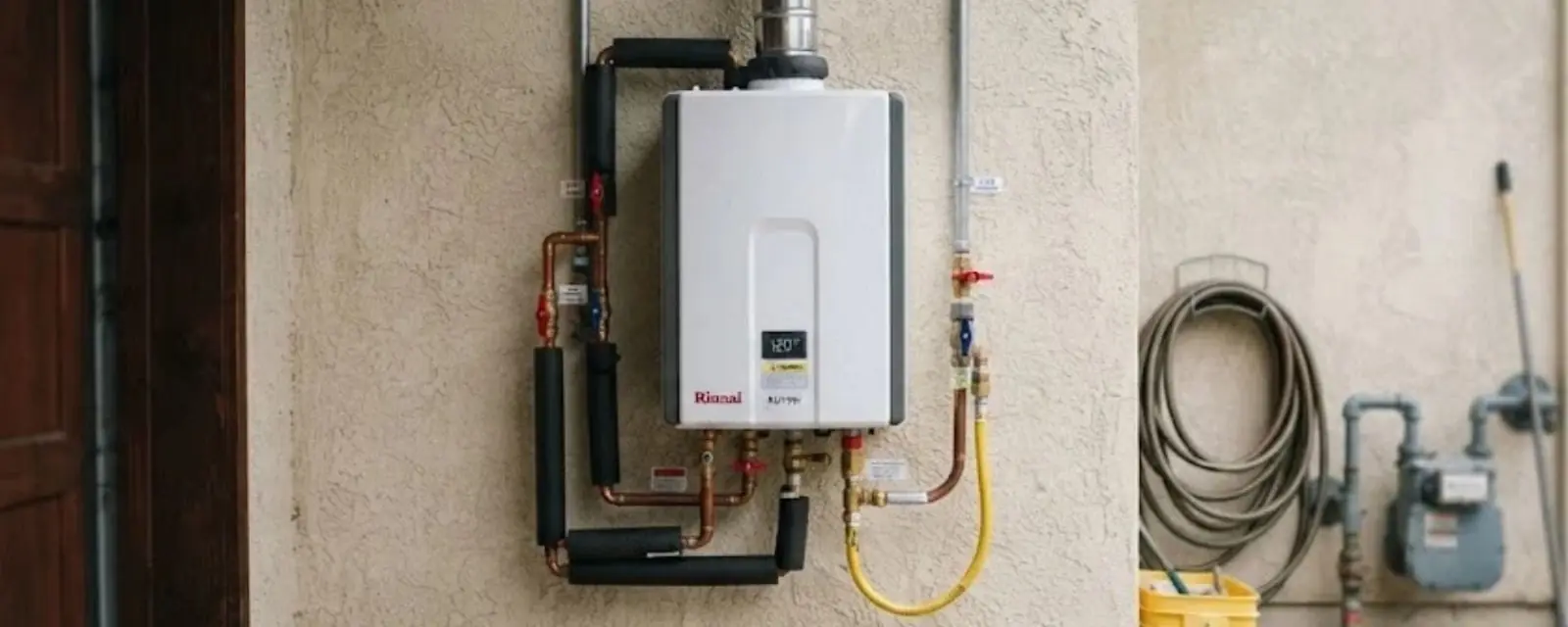
The short answer is a method. Add the flow of the fixtures that could run together, such as a shower and a bathroom sink, and note the temperature you want. Then find the incoming water temperature in your coldest month and subtract. The difference is the temperature rise, and the heater has to deliver your flow at that rise.
We will not give one universal size, because the right unit depends on your fixtures, your incoming water and the heater's own rating chart. The unit's manual shows the flow it can handle at each rise, and a plumber confirms the match before anything is bought.
Minnesota winters make the rise larger than many buying guides assume, so this guide uses a cold-month starting point and walks through gas, venting and electric options.
Start With Gallons per Minute, Not Gallons
A tank stores hot water, so its size is measured in gallons. A tankless heater stores almost nothing and heats as water passes through, so its limit is how much it can heat per minute. That is why the number to know is gallons per minute, or GPM.
Every fixture has a flow rate, often printed on the showerhead, the faucet or the appliance label. Look for it before you shop. If the label is gone, a plumber can measure the real flow with a bucket and a timer.
Adding Up One Bathroom's Demand
Add only the fixtures that can plausibly run together. A one-bathroom home rarely runs everything at once, but it often runs two or three things.
| Fixture | What to check | Counts toward peak demand when |
|---|---|---|
| Shower. | The rated flow on the showerhead. | Always, it is the largest single draw. |
| Bathroom sink. | The rated flow on the aerator. | Someone brushes teeth during a shower. |
| Kitchen faucet. | The rated flow on the aerator. | Someone rinses dishes during a shower. |
| Dishwasher. | The appliance label or manual. | It fills while a shower runs. |
| Washing machine. | The appliance label or manual. | A load starts during a morning rush. |
Hot water use is usually a share of each fixture's flow. Your plumber helps set a realistic peak, and the manual's flow chart sets the final limit.
The Sizing Method in Four Steps
This is the arithmetic a plumber does. It shows why one house needs a bigger unit than the house next door.
Find peak flow.
Add the hot flow of the fixtures you expect to run at once. One shower plus one sink is a common pair.
Choose a set temperature.
Pick the delivered temperature you want at the fixture, then check your safety and scald settings.
Estimate incoming water.
Use your coldest month for incoming water. Subtract it from the set temperature to get the rise.
Compare to the chart.
Open the unit's manual to the flow-at-rise chart. If the unit cannot deliver your peak flow at your winter rise, step up a size.
The heat the unit must add is roughly your flow, times your rise, times a constant of about 500, then adjusted for the unit's efficiency. We show this so you can see how the pieces connect, not so you can skip the manual. Labels, efficiency ratings and rated input vary by model, and the maker's numbers decide.
Let a plumber run the numbers
Give the dispatcher your fixtures and your gas or electric setup. The unit's own manual and a plumber confirm the size before you buy.
Rosemount Winters Raise the Bar
The MN DNR's Twin Cities climate normals for January show average lows of about 9 to 11 degrees Fahrenheit at the airport station. That is air temperature, and it is not Rosemount's own record. It still tells you that January is a long cold stretch, and cold weather generally means colder water coming into the house.
A larger temperature rise means the heater works harder for every gallon. A unit that handles your flow in October may fall short in January, and the result is lukewarm showers when you need hot ones most. Size for the coldest month, not the average one.
Rosemount's city water runs about 17 grains per gallon in hardness, according to the city. That level leaves scale on heat exchangers over time, which is why descaling or flushing appears in most tankless manuals. See the maintenance notes before you choose a unit.
Source: MN DNR Twin Cities Climate Calendar for January, 1991-2020 normals, average minimum, airport station (files.dnr.state.mn.us/natural_resources/climate/twin_cities). City of Rosemount Public Works FAQ and Water page: 17 grains per gallon hardness.
Gas or Electric for a One-Bathroom Home
Both fuels can work. The choice often comes down to what your house already has and what its panel can carry.
Gas tankless.
- Can supply high flow at a large rise.
- Needs a gas line sized for the unit.
- Needs a sealed vent to the outside.
- Condensate drain may be needed.
Electric tankless.
- No gas line or flue needed.
- Draws a large electrical load.
- May require a panel or wiring upgrade.
- Flow at a large rise can fall short.
In a cold climate, an electric unit that runs well for a sink can struggle with a long shower in January. Check its flow rating at your winter rise on the manual's chart, and ask an electrician about the panel before you decide.
Gas Input and Gas Line Size
A gas tankless heater pulls a lot of gas for a short time. The unit's rated input, shown in its manual, has to be available at the appliance along with everything else on the line, such as a furnace, a range and a dryer. If the line is too small, the heater may shut down or fire poorly at full demand.
Line size depends on the pipe diameter, its length, the fittings and the other appliances. A plumber runs those numbers, and we do not give a size here, because the size follows your layout.
Gas capacity also includes the meter and the service from the street. Rosemount residents are served by two gas utilities, Minnesota Energy Resources and Xcel Energy, according to the city. Ask the one that serves your address whether your service can carry the added load. The city's service map shows which utility covers which area.
Venting and Where the Unit Goes
Gas tankless units vent exhaust outside, often through plastic or stainless pipe, and many draw combustion air from outdoors too. The manual lists the allowed vent materials, the longest run and the clearances from windows and walls. Follow it exactly.
A bad vent is a safety problem. If you ever smell gas, leave the building and call from outside. Minnesota Energy Resources customers can call 800-889-4970, and Xcel customers should leave and call 911. Carbon monoxide alarms should be working near sleeping areas, and an alarm that sounds means leave and call 911.
Placement also matters. Units mount on an exterior wall, in a basement or in a utility room, and the vent path, the drain for condensate and the cold spots near exterior walls all affect where one fits.
Before You Buy: Checks That Save Rework
Run through this list before choosing a model. Each item has caused a change order on a real job.
- Read your fixture labels.Know the shower and sink flows instead of assuming.
- Set the coldest-month rise.Size for January, not the average winter day.
- Check the manual chart.Match your peak flow and rise to the model's flow-at-rise table.
- Confirm gas capacity.Ask the utility that serves your address about service capacity, and ask a plumber about line size.
- Plan the vent path.Find a route that meets the manual's clearances.
- Plan for scale.Hard water means descaling. Decide who will do the maintenance and how often.
One Bathroom Now, More Later
If you plan to add a bathroom, size the unit for the future home, not today's. A second shower running with the first changes your peak flow immediately. A larger unit costs more up front but avoids a second install.
Some households add a recirculation setup so hot water arrives faster. Ask whether the model you choose supports one, since that affects both the unit and the plumbing.
Getting the Job Done
Our tankless water heater service covers the unit, the gas or electric supply and the vent. If you are swapping a tank for another tank instead, see water heater installation. We give a clear price before work starts and can often schedule same-day appointments when available.
Neighbors in Apple Valley and Inver Grove Heights go through the same sizing steps. Hardness and winter temperatures differ from town to town, and the manual's chart sorts out the rest.
Ask your city's Building Permits and Inspections office whether the project needs a permit. We will not guess at a local rule.
Tankless sizing questions
It depends on your peak flow and your winter temperature rise. Add the hot flow of fixtures that run together, subtract your coldest incoming water from your set temperature, and match both to the unit's flow-at-rise chart. A plumber confirms the choice.
Often, but check the chart. A single shower plus a sink can still demand more than a small unit delivers at a large winter rise. Size for January conditions.
Sometimes. Electric units draw a large load, and flow at a large rise can fall short. Check the manual chart and ask an electrician about your panel.
Often yes, since the unit pulls more gas than a tank heater does at peak. The right size depends on pipe length, fittings and your other gas appliances. A plumber sizes it.
Hard water leaves scale on the heat exchanger, which cuts efficiency over time. Most manuals call for periodic descaling or flushing. Plan the maintenance when you choose the unit.
The city says two utilities serve residential Rosemount, Minnesota Energy Resources and Xcel Energy. Which one serves you depends on your address. The city's service map shows the boundaries.
January lows average about 9 to 11 degrees Fahrenheit at the Twin Cities airport station, per the MN DNR. Cold weather generally means colder incoming water, so the temperature rise grows and the heater has to work harder. Size for the coldest month.